
As thousands of migrants stormed Spain’s border in Ceuta, Italy’s Giorgia Meloni drew a red line: “we will not yield an inch” on Europe’s security and sovereignty.
Story Snapshot
- Italian Prime Minister Giorgia Meloni warned she is ready to use “extraordinary measures,” including suspending Schengen travel with Spain, after a mass migrant surge into Ceuta.
- Between 2,000 and 3,000 migrants reportedly crossed from Morocco into the Spanish enclave, overwhelming local authorities and forcing Spain to deploy troops and extra police.
- Meloni says shocking images from Ceuta prove uncontrolled illegal immigration is a “real threat” to Europe’s borders and vows Italy “will not stand by and watch.”
- The crisis exposes deep cracks inside the European Union over border control, free movement, and the price ordinary citizens pay for globalist open-border dogma.
Meloni Draws a Hard Line on Europe’s Broken Borders
Italian Prime Minister Giorgia Meloni reacted to the chaos in Ceuta with a message many American conservatives will recognize: when borders collapse, nations are in danger. In a post on X, she warned that Italy is prepared to take “extraordinary measures” to defend its borders and citizens, including suspending the Schengen agreement with Spain if the surge continues. Meloni stressed that Italy “will not stand by and watch,” saying her government refuses to surrender even “an inch” of Europe’s security to uncontrolled migration.
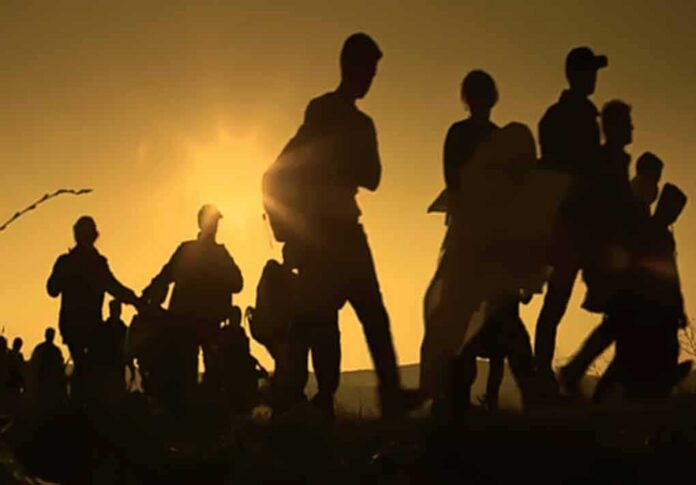
Meloni’s warning did not come out of nowhere; it followed scenes that looked more like an invasion than peaceful travel. Video and reports showed migrants swimming from Morocco to Ceuta using inflatable tubes and flotation devices, while others smashed through border gates and poured into the tiny city in large crowds. Spanish outlets cited estimates of between 2,000 and 3,000 crossings in just a few days, with local services overwhelmed and at least nine people reported dead in the attempt to reach European soil.
Ceuta Crisis: What Happened on Spain’s Doorstep
Ceuta is a small Spanish territory on the North African coast, sharing a land border with Morocco yet counted as part of the European Union’s frontier. Over several days, thousands of migrants, many reportedly from Morocco and sub-Saharan Africa, crossed that frontier at once, by sea or by breaking through border barriers, pushing the enclave into what its regional president called a “humanitarian and social emergency.” Local authorities pleaded with Madrid for help as reception centers filled, security forces struggled, and the situation was declared a national-level crisis.
Spain’s central government eventually responded with force and emergency tools, much like U.S. leaders do when border towns are overwhelmed. The Spanish government deployed army units and extra police to Ceuta’s perimeter, trying to seal breaches and push people back from critical areas. Officials also coordinated with Moroccan authorities to organize fast returns for those who entered illegally, while Prime Minister Pedro Sánchez promised to send all available resources to stabilize the enclave. Even as Madrid tried to contain the surge, the event exposed the fragility of Europe’s southern border and the strain on frontline communities.
Schengen, Sovereignty, and a Clash of Visions Inside Europe
Meloni’s threat to suspend Schengen with Spain goes to the heart of a long-running European fight over open borders versus national control. The Schengen system allows people to travel between member states without routine border checks, a model loved by Brussels bureaucrats and globalists but increasingly questioned by citizens who see rising crime, cultural tensions, and migrant surges. By saying Italy could reimpose full checks on travelers from Spain, Meloni is using one of the few tools national leaders still have to push back on pressure from European Union elites.
Italian Prime Minister Giorgia Meloni has warned her country could suspend the Schengen Agreement with Spain after hundreds of migrants stormed the Spanish enclave of Ceuta from Morocco in chaotic scenes on Thursday. pic.twitter.com/NxLSK0UvBv
— US Viral Faces (@USViralFaces) July 31, 2026
Her stance also fits a broader pattern that should feel familiar to Trump supporters in America: when the political class ignores border chaos, voters look for leaders who treat sovereignty as non‑negotiable. Meloni has already backed tougher detention rules, faster deportations, and even naval blockades against migrant boats headed for Italy, signaling that she sees illegal immigration as a security crisis, not just a humanitarian issue. In the Ceuta case, she argued that the “shocking” images are “striking evidence” that uncontrolled illegal immigration is a concrete threat to Europe’s borders, echoing the way many Americans view surges on the southern U.S. border.
Why This European Clash Matters for American Conservatives
For American readers, especially Trump supporters, this Ceuta showdown is more than a distant European drama; it is a warning about what happens when globalist ideals override common sense border policy. The same elites who pushed “free movement” in Europe promoted mass migration, sanctuary policies, and weak enforcement in the United States, leaving working families to cope with crime, overcrowded schools, and strained social services. Meloni’s refusal to “yield an inch” on border security mirrors President Trump’s insistence that nations must control who enters, or risk losing their identity and safety.
The Ceuta crisis also shows how fast officials can act when they admit a surge is a security problem, not just an administrative one. Spain moved troops, Italy threatened travel limits, and both countries talked openly about national security and human trafficking networks. That kind of urgency stands in stark contrast to years of slow‑walking and political spin from left‑leaning governments on both sides of the Atlantic. As border debates continue in America, this European flash point is a reminder that strong borders, clear laws, and leaders willing to defend them are essential if free nations want to remain free.
Sources:
politico.eu, timesnownews.com, 20min.ch, instagram.com, dw.com, lafm.com.co, youtube.com, alloranews.com, euronews.com