

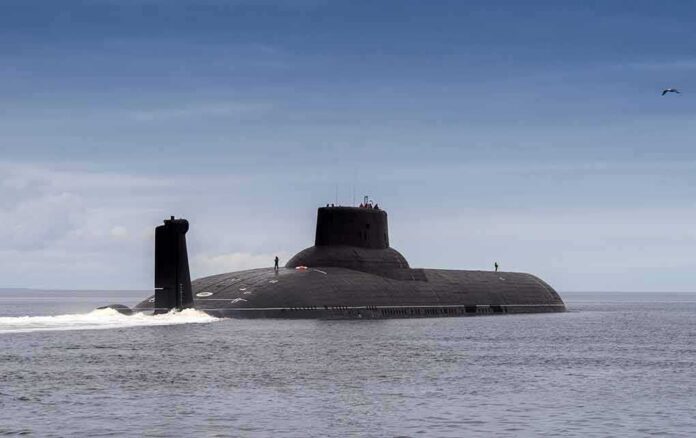
Washington’s 1990s “peace dividend” killed a 29‑submarine plan, left the Navy with three Seawolfs, and a years-long hole in America’s undersea power.
Story Highlights
- The Navy’s Seawolf attack-sub program fell from 29 planned boats to just three.
- The 1992 cancellation created a seven-year gap in submarine authorizations.
- Congress debated full termination and later moved to protect the sub industrial base.
- Billions were already sunk into the program when it was cut.
How a 29‑Boat Plan Collapsed to Three
U.S. Naval Institute records show the Seawolf program started big, then shrank fast. In August 1990, after a major warship and threat review, the plan dropped from 29 boats to 12 authorized through fiscal year 2000. In January 1992, the Department of Defense announced the program would be canceled, with only the first unit completed. By mid‑1990s reporting, Congress agreed to end the class at three submarines, not the dozens first envisioned.
That crash in ambition echoed deeper budget and political fights. A Senate amendment dated August 2, 1991 sought to bar funds for any Seawolf construction, proving full termination was an active option on Capitol Hill. Analysts later tied the decision to post‑Cold War drawdowns, not to technical failure. Supporters of the cut said the Soviet threat faded and money had to be saved. Critics warned that future undersea needs would not fade with it.
The Seven‑Year Submarine Authorization Gap
Contemporaneous reporting documented a hard stop in new attack-sub approvals. After the January 1992 cancellation move, no submarines were authorized for construction from fiscal year 1991 through fiscal year 1997, a gap of seven years. That pause meant lost time for building, training, and design work. It also meant fewer skilled workers on the lines and less surge capacity when new threats returned. The Navy would later lean on follow‑on classes to recover lost ground.
Budget files reveal the Navy and Congress scrambled to keep the industrial base alive. A Congressional Budget Office–linked letter notes that after President George H. W. Bush announced intent to cancel Seawolf in January 1992, Congress retained the second boat and added about $540 million to support the submarine industrial base. The Navy used those funds for long‑lead items for a third Seawolf. Those steps show lawmakers knew the risks of letting yards and suppliers wither.
Costs, Sunk Costs, and What Taxpayers Bought
Public sources put Seawolf’s price in stark terms. A Federation of American Scientists summary cites about $33.6 billion in 1991 dollars for a 12‑boat buy, with per‑hull costs running into the billions. By 1995, Congress ended the program at three boats, locking in a very small, very capable, and very costly class. That outcome delivered cutting‑edge subs but in tiny numbers, which limited combat availability and training throughput across the fleet.
The formal budget trail shows the cut came after work had already begun on later units. A Department of the Navy shipbuilding document records $13.8 million in fiscal year 1992 funds as sunk cost for the SSN‑23 propulsion before truncation. That means taxpayers had already paid for parts of a larger fleet that never sailed. It also signals how stop‑start procurement wastes money and weakens trust with American workers and suppliers.
What Conservatives Should Watch Now
The Seawolf story is a warning about trading long‑term defense strength for short‑term budget optics. In 1990, the plan for 29 boats was cut to 12 after a review. In 1992, the program was canceled, with only the first unit set to finish, and a seven‑year gap followed. Congress fought over termination, then spent to protect the industrial base and fund long‑lead work for a third sub. Those facts show costs drove choices, while capability and capacity paid the price.
Today, President Trump’s team faces similar pressures across the fleet. Waste and delays come from lurching budgets, not steady planning. Conservatives should demand predictable funding, strong oversight, and buys sized to real threats from Russia and China. We must not repeat the 1990s mistake of letting shipyards shrink and skills vanish. America needs enough attack submarines to deter war and, if needed, to win it—without leaving our sailors short and our taxpayers on the hook again.
Sources:
19fortyfive.com, usni.org, man.fas.org