

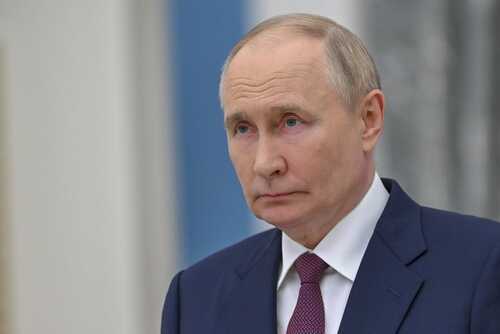
On October 26-27, 2025, Russian President Vladimir Putin announced the successful test of the 9M730 Burevestnik nuclear-powered cruise missile. The missile reportedly completed a 14,000-kilometer flight over 15 hours during an October 21 test.
Story Highlights
- President Putin announced a successful test of a nuclear-powered cruise missile.
- The Burevestnik missile reportedly flew 14,000 km in 15 hours.
- The missile is designed to counter U.S. missile defense systems.
- Concerns raised regarding potential environmental and proliferation risks.
- Russia has indicated plans for operational deployment of the weapon.
Putin’s Strategic Nuclear Announcement
Russian President Vladimir Putin stated that the 9M730 Burevestnik nuclear-powered cruise missile was successfully tested. Chief of General Staff Valery Gerasimov confirmed technical details, highlighting the missile’s ability to bypass existing and future missile defense systems due to its nuclear-powered propulsion.
The Burevestnik is one of six strategic weapons introduced by Putin in March 2018, developed in response to U.S. missile defense initiatives. Its nuclear-powered engine is theoretically capable of unlimited range, allowing for approaches from various directions. This development challenges American strategic defense investments and NATO’s protective measures.
#Russia has completed decisive tests of its new nuclear-powered unlimited-range missile, the #Burevestnik – during the test it covered~14,000 km over 15 hours.
Innovative, unique, “invincible”, capable of bypassing all current and future missile defense systems. pic.twitter.com/WNEYYIMO6F— Russian Embassy in Kenya/Посольство России в Кении (@russembkenya) October 27, 2025
Response to U.S. Defense Infrastructure
Russia developed the Burevestnik following America’s 2001 withdrawal from the Anti-Ballistic Missile Treaty and subsequent expansion of missile defense systems. The weapon’s design aims to target fixed defense installations by enabling attacks from multiple vectors. Putin’s statements suggest that current or future American missile defense systems may not be able to counter this technology.
The missile’s nuclear propulsion system allows for extended flight, unpredictable course changes, and approaches from directions not feasible for traditional ballistic missiles. This capability impacts the assumptions of American missile defense architecture, which relies on predictable flight paths.
Environmental and Safety Concerns
Nuclear proliferation experts, including Jeffrey Lewis from the Middlebury Institute, have expressed concerns about the Burevestnik’s potential environmental risks due to its nuclear-powered flight system. The missile could release radioactive emissions during operation and poses contamination risks in the event of accidents. Previous Russian testing reportedly led to radiation leaks, including the 2019 Nyonoksa accident.
The weapon’s concept is comparable to the abandoned U.S. Project Pluto from 1957, which was discontinued due to environmental and strategic risks.
Implications for Arms Race Dynamics
Putin’s announcement occurs as the Trump administration addresses the implications of Russian nuclear modernization. Russian officials have indicated that the missile will move toward operational deployment, which could present new challenges for American defense planners.
The successful test may influence strategic calculations between nuclear powers and potentially accelerate global arms race dynamics.
Watch the report: Russia Tests New Burevestnik Nuclear-Powered Cruise Missile
Sources:
- Russia says it has tested nuclear-powered Burevestnik missile
- Russia tested new nuclear-powered Burevestnik cruise missile | Reuters
- Russia tests nuclear-powered Burevestnik cruise missile, Vladimir Putin wants to deploy it – ABC News