

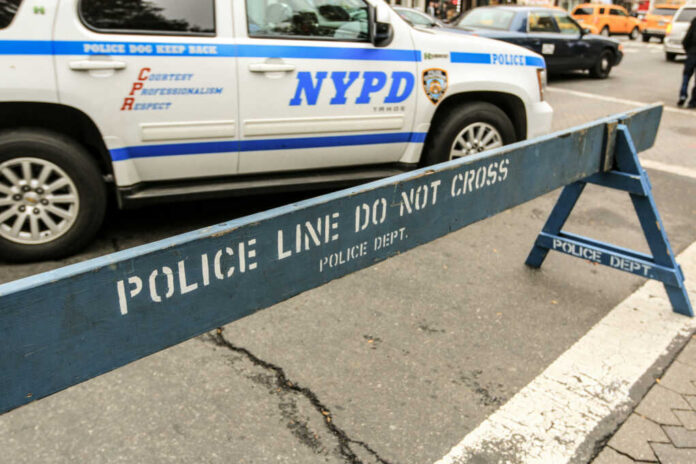
New York City’s new mayor just slammed the brakes on hiring thousands of additional NYPD officers—right as the city debates whether “public safety” means more cops or more bureaucracy.
Quick Take
- Mayor Zohran Mamdani canceled former Mayor Eric Adams’ plan to add 5,000 NYPD officers over several years.
- Mamdani’s preliminary FY 2027 budget holds NYPD staffing around 35,000 and proposes a $22 million cut to the department’s roughly $6.4 billion budget.
- Mamdani says an inherited “budget crisis” forced the shift, while critics warn staffing flatlines can weaken response times and retention.
- NYPD Commissioner Jessica Tisch is being kept in place, signaling operational continuity even as the hiring plan is scrapped.
The Adams hiring plan was phased in—Mamdani voided it quickly
Mayor Zohran Mamdani moved within hours of taking office to cancel Adams-era orders, including a phased NYPD hiring expansion designed to grow the department toward 40,000 officers. The Adams plan contemplated adding roughly 300 officers by July 2026, 2,500 by July 2027, and reaching 5,000 additional hires on the schedule described in reporting. Mamdani’s decision resets the city’s staffing trajectory before the first phase could begin.
The immediate mechanism wasn’t a slow-walk through committees—it was executive action that wiped out a predecessor’s staffing roadmap. That matters because hiring pipelines, academy class sizes, and recruiting incentives often run months ahead. If the policy direction changes after those gears start turning, cities can burn time and money while losing qualified applicants to suburban departments or other states. The research notes concerns about morale and an “exodus” risk voiced by critics and officers.
Budget math takes center stage: flat headcount and a $22 million cut
Mamdani’s preliminary FY 2027 budget holds NYPD headcount at about 35,000—described as flat from current levels—while reducing the department’s budget by $22 million from a total around $6.4 billion. The administration ties the reduction to vacancies and argues the Adams hiring push was not realistically funded. The city is also framing these decisions through a larger fiscal narrative centered on a multibillion-dollar gap spanning FY 2026 and FY 2027.
Mamdani publicly described a projected $12 billion shortfall over that period and later said the gap had been reduced to about $5.4 billion, though the research notes that outside verification of those precise figures is limited in the provided materials. What is clear is the political tradeoff: the administration is choosing to bank savings from unfilled positions rather than build a larger force, and it is also signaling potential tax moves—aimed at wealthy individuals or corporations—if state approval is available.
Public safety policy pivots toward “community safety” programs
The budget posture arrives alongside broader structural ideas that de-emphasize traditional policing. Reporting cited in the research points to plans connected to closing Rikers Island and creating a “Department of Community Safety” focused on prevention and outreach. Supporters argue that a right-sized police force can be paired with alternative responses for non-violent situations. Skeptics counter that replacing sworn staffing with new agencies risks slower response and less deterrence when incidents escalate.
From a conservative perspective, the key constitutional issue is not a direct Second Amendment policy change in this specific budget document, but the practical reality that citizens rely on basic, timely law enforcement for public order. When staffing targets are capped during a period of heavy demands—jails policy shifts, recruitment challenges, and a high-cost city competing for talent—residents often feel pressured to become more self-reliant about safety. The research stops short of quantifying response-time impacts, so outcomes remain uncertain.
Keeping Commissioner Tisch signals continuity, but unions remain wary
Mamdani’s decision to retain NYPD Commissioner Jessica Tisch is a notable complicating fact for the “defund” narrative. The research describes Mamdani crediting Tisch with crime reductions and anti-corruption efforts, while also acknowledging his prior history of harsh rhetoric about the department that he later walked back. Keeping Tisch in place may reduce operational whiplash inside the NYPD, but it does not resolve the staffing disagreement at the heart of the budget fight.
Police unions and critics highlighted in the research argue that freezing headcount can fuel burnout and accelerate departures, especially if officers believe City Hall is prioritizing new social programs over recruitment and retention. Meanwhile, the budget debate is also a governance test: how much control does an incoming mayor have to undo prior executive direction, and how quickly can that be done? In a city the size of New York, those decisions ripple into training, precinct coverage, and community confidence.
Sources:
Mamdani proposes cutting NYPD budget, canceling 5K new officer hires
What NYC Mayor Zohran Mamdani’s public safety agenda could mean for NYPD
Mayor Mamdani details “Adams’ Budget Crisis”
Mamdani proposes millions for racial, gender equity while cutting police funding