

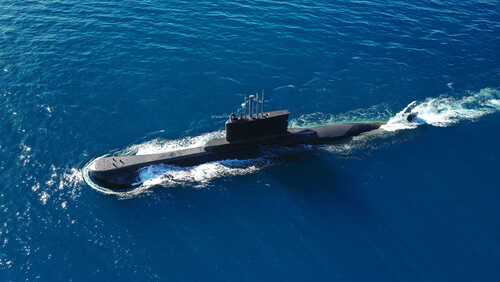
The U.S. Navy’s vaunted SSN(X) attack submarine program has been postponed to 2040, threatening American naval supremacy as adversaries rapidly expand their undersea fleets.
At a Glance
- The Navy’s SSN(X) attack submarine program is delayed yet again, with first procurement now pushed to 2040.
- Budget shortfalls and a shaky industrial base are to blame, threatening U.S. undersea dominance.
- Shipyard workers and suppliers face job uncertainties as production gaps widen.
- Experts warn the delay could embolden adversaries like China and Russia while weakening U.S. seapower.
Strategic Pause or National Failure?
The Navy’s so-called next-generation submarine program, the SSN(X), has now slipped into a dangerous fog of bureaucratic delay. A new Congressional Research Service (CRS) report confirms the inevitable: the first hull won’t be laid down until 2040. Not a single vessel will touch water for at least 15 more years—an eternity in naval terms.
Watch a report: Navy’s Next-Gen Sub Delayed to 2040
The delay means a critical gap is opening in America’s undersea deterrent. While the Navy pours $623 million into research, the actual production timeline is frozen—leaving U.S. adversaries like China and Russia with a golden window to catch up or surpass American capabilities. Beijing is already churning out submarines at record speed, and even a sanctions-choked Moscow continues to upgrade its deep-sea arsenal.
Cracks in the Industrial Backbone
The fallout isn’t limited to strategy. Shipbuilders like Huntington Ingalls and General Dynamics Electric Boat are now staring down a production black hole. Without a smooth transition from the Columbia-class program, critical workforce and infrastructure may be lost. “If you stop building, you stop knowing how to build,” warned one analyst. Welding lines don’t just idle—they rot. And restarting them years later costs billions and erodes hard-won American know-how.
Worse, skilled labor may not be waiting around. Communities that have supported naval production for generations now face layoffs, delays, and uncertainty. It’s not just a supply chain—it’s an economic backbone. These workers aren’t building yachts. They’re building what used to be the quiet core of American deterrence. Without new hulls in the water, readiness fades, response times slow, and the credibility of U.S. power projection sinks with them.
Delayed Power Is Lost Power
The CRS isn’t pulling punches. It calls the SSN(X) delay a “significant challenge” to national security. The Navy is already juggling a shrinking fleet and aging platforms. Delaying the next generation of submarines pushes us toward a crisis in undersea coverage—especially in the Indo-Pacific, where China’s aggressive buildup shows no signs of slowing.
There’s also the cost spiral. Delayed military programs don’t just sit idle—they metastasize. Technology outpaces designs, budgets balloon, and procurement gets political. Every year tacked onto SSN(X) is another year of strategic vulnerability wrapped in fiscal waste. And with each delay, America sends a dangerous message to its rivals: we’re asleep at the wheel.
Until the Navy—and Congress—reclaims urgency, the so-called “silent service” will become just that: silent. Not because of stealth, but because there’s nothing left to launch.