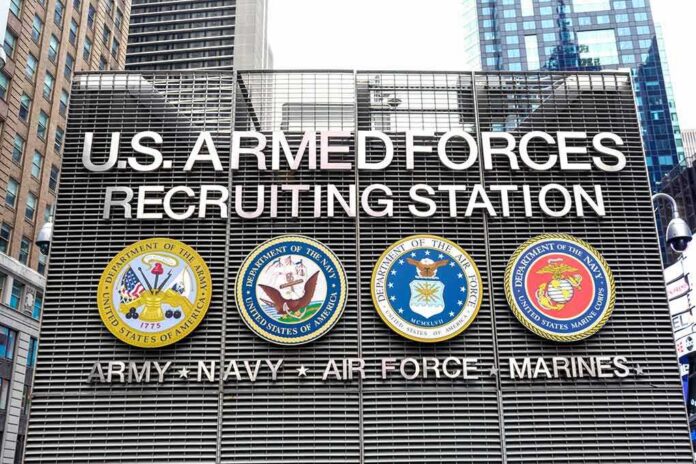
Military recruiters are posting early wins in 2026, and the numbers show a broad turnaround across the force.
Quick Take
- The Army says it met its fiscal year 2026 recruiting goal four months early.
- The Air Force and Space Force reached their goals about five months ahead of schedule.
- Official Pentagon data show several services were already at or above goal by the end of May.
- The record shows strong results, but it does not prove one single cause for the surge.
Army Reaches Its Goal Before Summer Ends
The Army said it met its fiscal year 2026 active-duty recruiting goal after signing contracts with more than 61,500 future soldiers. That milestone came four months before the fiscal year ends on Sept. 30. Secretary of War Pete Hegseth announced the result during a West Point commencement speech, calling it part of a wider recruiting rebound across the joint force.
The Army’s result matters because it came after hard years for military recruiting. The service missed its goals in 2022 and 2023, then hit its 2025 goal as well, according to reporting on Pentagon figures. That recent streak suggests the Army has made real progress in bringing young Americans back into the ranks, especially after years of weak enlistment numbers.
Air Force and Space Force Hit Targets Early
The Air Force and Space Force also reached their fiscal year 2026 recruiting targets months ahead of the deadline. The Air Force said it met its goal of 32,750 active-duty airmen, while the Space Force hit its goal of 730 guardians. The Air Force tied its success to better technology and nearly 400 more recruiting personnel added since 2023, which points to practical changes inside the system rather than slogans alone.
Those early gains matter for more than bragging rights. Air Force officials said the service also built the largest delayed-entry program in more than a decade, with 18,000 recruits waiting for training dates. That shows the pipeline is not just filling on paper. It also shows the services are trying to turn recruiting wins into real boots on the ground and trained airmen in the months ahead.
Pentagon Data Show the Surge Was Broad
Department of War data for May 2026 show the services were already close to, or above, goal across the active component. The Army was at 103 percent of its year-to-date target, and the broader release said the military services were positioned to meet their goals by the end of the third quarter. Secondary reporting also said the Navy, Marine Corps, Air Force, and Space Force were all on track or already over target.
This is the strongest part of the story because it rests on official numbers, not wishful thinking. Multiple outlets reported the same pattern from service or Pentagon figures, including ABC News, Military Times, Fox News, KSL, and Business Insider. That kind of overlap makes the core fact hard to dismiss: the recruiting rebound is real, and it is not limited to one branch.
What the Numbers Do Not Prove
The available sources do not give a clean test showing that pay raises alone drove the surge. They also do not supply labor-market data tying a softer civilian job market directly to enlistment gains. So while officials and reporters have offered likely reasons, the research package does not fully measure which factor mattered most.
Military.com notes that capacity, training, and retention remain the real test after recruiting success. The good news is that the services are no longer stuck in a recruiting crisis. The tougher question now is whether they can keep standards high, train recruits well, and hold onto them long enough to rebuild lasting strength.
Sources:
military.com, army.mil, prhome.war.gov, militarytimes.com, af.mil, foxnews.com, abcnews.com, nationalinterest.org, businessinsider.com, ksl.com