
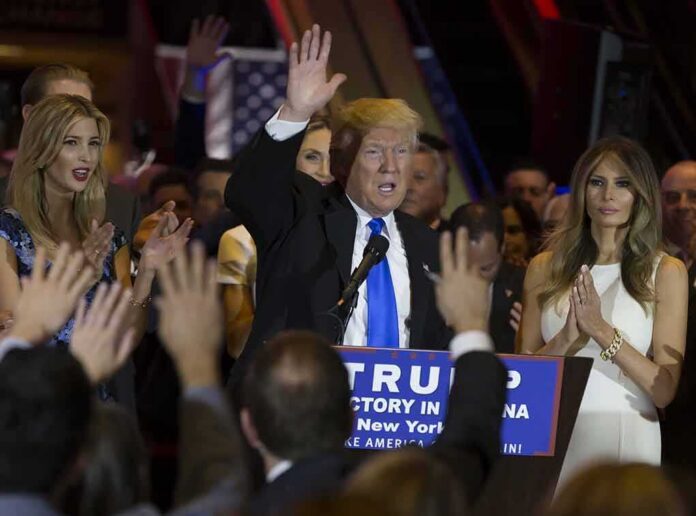
President Trump told Europe to repay the United States for Ukraine aid, putting burden-sharing front and center.
Story Snapshot
- Trump said European allies should compensate the U.S. for past Ukraine military support.
- Trump framed the push as fairness after years of uneven burden-sharing.
- Macron publicly disputed Trump’s “loan” description of Europe’s aid mix.
- EU data shows large European aid with a blend of grants and loans, not a single loan pot.
Trump’s Repayment Push Targets Years of Uneven Burden-Sharing
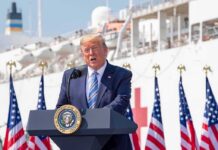
President Trump said the United States will seek repayment from European allies for weapons and support previously sent to Ukraine. He tied the demand to fairness for American taxpayers who covered more than their share during earlier phases of the war, especially before Europe scaled up. Reporting summarized the policy as a request that Europe “pay back” the United States for past support already delivered. Trump has long argued that allies rely on U.S. security guarantees while underinvesting in their own defenses.
Trump’s message landed with a clear goal: reset allied cost-sharing so Americans are not the automatic first payer and last reimbursed. The White House push comes after repeated public remarks where Trump contrasted U.S. outlays with Europe’s approach and asked for compensation to “equalize” the load. While the exact dollar figure and the legal path to collect were not provided in the available reporting, the policy aim is plain: shift more of the financial lift to Europe and recover U.S. costs.
Macron Counters Trump’s “Loan” Framing On Europe’s Aid
French President Emmanuel Macron publicly disputed the idea that Europe’s Ukraine support was mainly a repayable loan. During an Oval Office exchange, Macron said Europe paid a large share and, like the United States, used a mix of grants, guarantees, and loans. His on-camera correction pushed back on Trump’s suggestion that Europe’s aid would simply be repaid later in full. The European Union’s published figures back up the blend of aid types and show significant grant support.
European Union data says the bloc and member states have delivered more than two hundred billion dollars in assistance, with about sixty-five percent as grants or in-kind support and thirty-five percent as highly concessional loans. That mix means no single, simple loan account exists that would automatically repay allied governments, including the United States. This accounting tension helps explain the political clash. Trump stresses equity for U.S. taxpayers; Europe highlights money already paid and the form it took.
What Repayment Could Look Like And Why It Matters For Americans
The reporting does not cite a signed repayment mechanism or treaty. That limits immediate enforcement but leaves room for negotiation. Options could include offset deals, larger European purchases of U.S. weapons, or shared financing that retires past American costs over time. The core test is whether allies agree to convert the fairness argument into practical steps that lighten the U.S. bill while keeping Ukraine supported against Russian aggression.
For American families squeezed by years of high prices and energy shocks, the principle is simple: stop asking U.S. taxpayers to carry more than their share. Trump’s stance aligns with a broader effort inside the alliance to spread costs more evenly. Even allied leaders acknowledge gaps, noting that a small group has carried too much of the load. That recognition creates space to seek real offsets, tighter accounting, and a steadier balance going forward.
Accountability, Not Abandonment: The Policy Through A Conservative Lens
Trump’s move does not end support for Ukraine; it demands accountability from wealthy allies. Washington can protect American strength while insisting on fair splits that do not drain our families or defense stockpiles. Europe’s leaders can dispute labels, but the math still matters in our budget and our factories. A fair deal should tie future commitments to verifiable shares, clear timelines, and payments that reduce America’s net burden without weakening the fight against Russian aggression.
Next steps will hinge on whether Europe translates words into numbers. Concrete actions could include larger direct funding shares, joint replenishment of U.S. munitions, or structured reimbursements linked to deliveries. If talks stall, the administration can steer foreign military sales, prioritize domestic rearmament, and link future packages to allied cost shares. The goal is a stronger West where America leads by strategy, not by writing the biggest check every time.
Sources:
youtube.com, fakti.bg, ednews.net, abcnews.com, yahoo.com