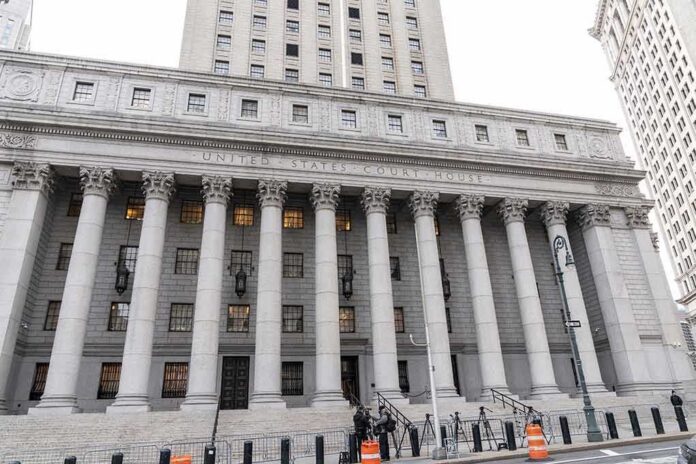
A federal judge confirmed this week that President Trump can finally end Temporary Protected Status for roughly 350,000 Haitians, closing out a legal fight that dragged on for more than a year.
Story Snapshot
- A federal judge confirmed on August 5 that the Trump administration can end Haiti’s Temporary Protected Status, following a Supreme Court ruling in June.
- The Supreme Court held 6-3 in Mullin v. Doe that federal law bars courts from second-guessing the Department of Homeland Security’s decision to end TPS designations.
- The Department of Homeland Security first moved to end Haiti TPS in June 2025, but activist lawsuits and court stays delayed the shutdown for over a year.
- Roughly 350,000 Haitian nationals lose deportation protection and work permits as the program winds down.
Supreme Court Clears The Legal Path
The Department of Homeland Security announced in June 2025 that it was ending Temporary Protected Status for Haiti, saying the designation had run its course and Haitians needed to pursue lawful permanent status instead. Secretary Kristi Noem set an effective end date of September 2, 2025, giving hundreds of thousands of people time to prepare their own affairs.
Left-wing groups sued immediately, and federal courts blocked the shutdown again and again. That changed on June 25 when the Supreme Court ruled 6-3 in Mullin v. Doe that the law does not let judges review the Homeland Security secretary’s decision to end a country’s TPS status. Congressional researchers say the ruling likely makes almost all TPS termination decisions untouchable in court.
Years Of Court Battles Delayed Enforcement
The fight over Haiti TPS shows how activist judges can stall a lawful executive branch decision for years. After the Department of Homeland Security’s original 2025 termination notice, a district court blocked it. The agency tried again, publishing a new Federal Register notice in November 2025 setting a February 3, 2026 end date, only for another judge to freeze that too just one day before it took effect.
A federal appeals court in Washington upheld that freeze in March 2026, keeping protections and work permits alive for more than 350,000 Haitians while the case crawled toward the Supreme Court. A separate Ninth Circuit ruling in January 2026 even found Homeland Security overstepped its authority on a related Haiti TPS action, giving opponents of the policy a temporary win before the high court settled the bigger question.
Judge Confirms The Program’s End
Once the Supreme Court spoke, the legal shield for TPS opponents disappeared. On August 5, District Judge Ana Reyes issued a short ruling confirming the Trump administration is now free to terminate Haiti’s temporary protections, closing the chapter that began with the original 2025 notice. Her ruling means work permits tied to Haiti TPS are no longer valid, and Haitian nationals without another legal status face removal proceedings.
Reuters reported the Supreme Court’s June decision gave President Trump’s hardline immigration approach another major boost, removing one of the last legal roadblocks standing between the administration and its stated goal of restoring lawful immigration limits. Homeland Security has repeatedly said Haiti no longer meets the statutory conditions that justify a “temporary” humanitarian status that, in practice, had lasted more than a decade for many recipients.
What Comes Next For Haitian Nationals
Immigration attorneys and advocacy groups still argue Haiti remains dangerous, pointing to gang control over parts of Port-au-Prince and ongoing instability. Those arguments carried weight in lower courts, but the Supreme Court’s ruling means judges can no longer use those conditions to block a termination decision the law leaves to the Homeland Security secretary alone.
A federal judge yesterday officially allowed the Trump administration to end temporary deportation protection for hundreds of thousands of Haitians, marking the final step, for now, in a months-long case that made its way to the Supreme Court. #TPS #Haiti https://t.co/PA7vfa5LsO
— Melinda Miles (@melindayiti) August 6, 2026
For conservatives, the outcome is a plain vindication of the separation of powers. Congress wrote the TPS statute to keep termination decisions in the executive branch, not the courts, and the Supreme Court simply enforced that text. After more than a year of stays, appeals, and delay tactics, the law is finally being applied the way lawmakers wrote it.
Sources:
federalregister.gov, ogletree.com, dhs.gov, forumtogether.org, nbcnews.com, miamiherald.com, haiti.org