

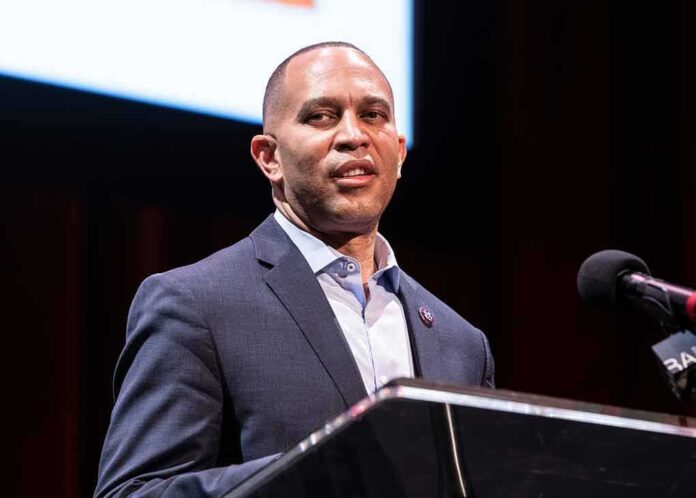
Rahm Emanuel blasted socialist-aligned Democrats for snubbing Hakeem Jeffries in a leadership vote, injecting race into a fight already splitting the Left.
Story Snapshot
- Seven incoming House Democrats publicly opposed Hakeem Jeffries in caucus, most with ties to Democratic Socialists of America.
- House Democrats still nominated Jeffries by a lopsided 251–11 secret-ballot vote, effectively securing his path to Speaker.
- Rahm Emanuel argued the no-votes disrespected African American Democrats as Jeffries stood to be the first Black Speaker.
- Progressives said their opposition was policy-based, citing Medicare for All, immigration, money in politics, and Gaza.
Organized Dissent From DSA-Backed Lawmakers
Reporters at The Hill and The Washington Post said seven incoming Democrats opposed Hakeem Jeffries, and that most of them were backed by the Democratic Socialists of America. They described a coordinated bloc tied to an outside ideological group, not a random fluke. Their move came during a closed-door caucus vote that sets party leadership. The dissenters later issued a joint statement explaining their reasons and confirming their “no” within the formal party process, not just in public comments.
The group framed its demands as mandates from voters. They cited Medicare for All, tougher rules on campaign money, ending what they call immigration enforcement “terror,” and opposition to the Gaza war. They said they had talks with Jeffries but did not get enough commitments to back him. Their message stressed policy and movement goals, not leaving the party label. That keeps pressure on leadership and signals future fights on floor votes and committee priorities.
Jeffries Wins Big Despite Internal Revolt
Despite the protest, House Democrats chose Jeffries by a huge margin. Multiple outlets reported a 251–11 result, which all but locks in his speakership if Democrats have the votes on the floor. That tally shows the far-left bloc is real but small. It also shows party leaders still control the levers, at least for now. The size of the win undercuts claims that Jeffries is in immediate danger from the socialist wing.
Even with that margin, the dissent matters. In a close House, a handful of lawmakers can stall bills, weaponize procedures, and reshape headlines. The Democratic Socialists of America also sets out a program to “end capitalist oligarchy” and build what it calls a “real democracy.” That agenda goes beyond normal intra-party bargaining and signals more primary fights, more purity tests, and more strain on Democratic unity heading into the next Congress.
Emanuel’s Race-Charged Rebuke Raises the Stakes
Rahm Emanuel, a Democratic insider and former mayor, scolded the dissenters on national television. He argued that in the moment Jeffries stood to become the first African American Speaker, Democrats owed “uniform” support. He linked the “no” votes to disrespect of the party’s most loyal voting bloc. That sharp claim came as news outlets widely noted Jeffries’s historic status, which increases the public heat on any visible opposition inside the party.
The evidence does not show the dissenters opposed Jeffries because of his race. Their statement listed policy issues, not identity. But Emanuel’s attack puts them on defense and reframes policy arguments as a snub to Black Democrats. That move pressures wavering members to fall in line next time. It also exposes the Left’s pattern: when socialists push open borders, defund-style ideas, and anti-police rhetoric, party elders answer with identity politics rather than clear limits on extreme policies.
Why This Matters for Conservatives
Democrats are fighting over who runs their party and what it stands for. On one side, leadership wants to look “pragmatic” while still chasing big government goals. On the other, socialist-aligned members demand Medicare for All, softer immigration enforcement, and sweeping campaign rules. Both sides still support higher spending and more control from Washington. The only question is speed and style, not whether government should grow.
For families dealing with high prices and energy costs, this matters. A fractured Left struggles to govern, but it still unites to block border security, gun rights, and fiscal restraint when votes count. The caucus revolt shows the far left feels bold, even when it loses. Conservatives should expect louder demands for policies that would raise taxes, weaken immigration enforcement, and burden small businesses. The fight is inside their tent, but the bill would land on your kitchen table.
Sources:
twitchy.com, thehill.com, freep.com, program.dsausa.org, amsterdamnews.com, us.cnn.com, gothamist.com