
Thailand just handed a convicted political titan an early exit—and the optics are exactly what enrages voters who think the “elites” play by different rules.
Story Snapshot
- Thaksin Shinawatra, Thailand’s former prime minister and telecom billionaire, was released on parole May 11, 2026 after serving about eight months of a one-year corruption sentence.
- Thailand’s Corrections Department cited his age (76) and the short time left on his sentence as reasons for parole, with a four-month probation period and electronic monitoring.
- His release revives questions raised in 2023, when he served time in a hospital setting that critics said looked like preferential treatment.
- The Shinawatra political brand remains potent but polarizing, with supporters celebrating and opponents questioning whether the system treats powerful families differently.
What Happened at the Prison Gates
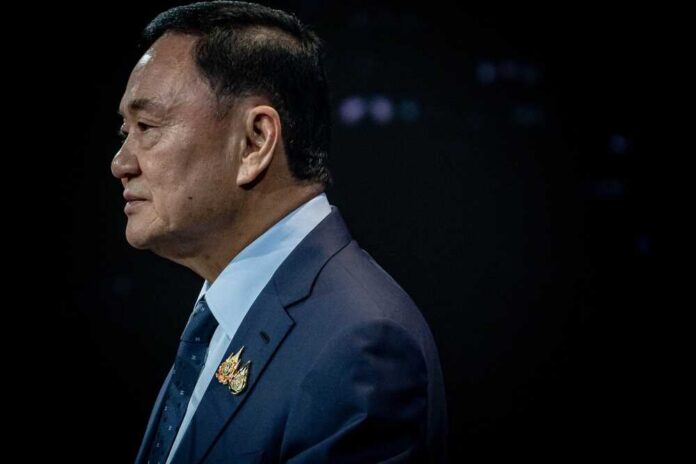
Thailand’s Corrections Department released Thaksin Shinawatra on parole from Bangkok’s Klong Prem Central Prison at around 7:40 a.m. local time on May 11, 2026. The 76-year-old former prime minister exited in a simple white shirt with closely cropped hair and was met by family members, including his daughter Paetongtarn Shinawatra, along with hundreds of supporters chanting outside. Thaksin later told reporters he felt “relief” after “hibernation for eight months.”
Thai authorities said the parole decision rested on standard criteria: advanced age and the fact that his remaining sentence was less than one year. Under the terms described in reporting, Thaksin must wear an electronic monitor and remain under a four-month probation period. While those conditions limit movement, they also allow the most important political asset he possesses—his visibility—to return quickly, at a moment when his family’s influence is being tested.
A Long Political Arc: Elections, Exile, and a Corruption Sentence
Thaksin’s release lands at the end of a two-decade saga that still shapes Thai politics. He rose through electoral wins in 2001 and 2005, then was ousted by a military coup in 2006 and spent about 17 years in exile. When he returned in August 2023, he was sentenced to eight years for corruption and abuse of power. A royal pardon later reduced that term to one year, setting the stage for today’s parole fight.
The details of how that one-year term was served are central to why many Thais distrust the system’s neutrality. After returning in 2023, Thaksin was held in a hospital rather than a conventional prison setting, fueling claims that a well-connected figure was receiving special treatment. In September 2025, Thailand’s Supreme Court ruled that his hospital time was not valid as time served, and he was transferred to Klong Prem Prison to complete the sentence.
Why the “Special Treatment” Narrative Won’t Go Away
Thaksin’s parole is being framed by officials as a rules-based decision applied to large numbers of elderly prisoners, but the political context makes that reassurance hard to sell. The same figure whose hospital stay sparked controversy is now out after roughly eight months, greeted by cameras and cheering supporters. For skeptics, this sequence reinforces a broader, familiar grievance: powerful insiders can rely on procedural off-ramps that ordinary citizens rarely get.
That grievance is not limited to any one ideology, which is why this story resonates beyond Thailand. In the United States, conservatives and many disaffected liberals share a frustration that justice can look selective—lenient for the connected and harsh for the unconnected. The Thai case highlights how quickly public trust erodes when judicial outcomes align, repeatedly, with the interests of a politically dominant class. The reporting does not prove a backroom deal; it does show why suspicions persist.
What Thaksin’s Release Means for Thailand’s Next Political Chapter
Thaksin’s freedom immediately raises the question of whether he returns as an active power broker or as a symbolic figurehead. Reporting outlines real constraints: a four-month probation period and electronic monitoring, with no confirmed plans for a formal political role. Yet his family network remains central to the Pheu Thai Party, and the public spectacle of his release can energize supporters who view him as a champion of populist policies and rural voters.
At the same time, the country he returns to is not the same Thailand he left. Analysts cited in coverage point to a nation that may have “moved on” from the peak of the Shinawatra era, even while acknowledging he remains a heavyweight with the potential to polarize. With his daughter Paetongtarn previously removed from the premiership in 2025, Thaksin’s return to public view could either stabilize his camp or deepen the old Red Shirt–Yellow Shirt divide ahead of future elections.
Sources:
Thailand’s former prime minister Thaksin released on parole
Thailand’s ex-PM Thaksin released from prison
Thailand’s former PM Thaksin Shinawatra released from prison