

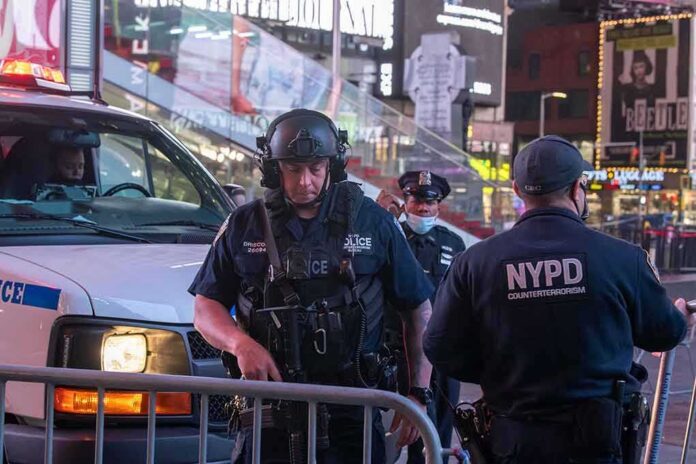
Despite a sweeping security plan and “no specific threats,” at least eight people were shot or stabbed around Brooklyn’s West Indian Day festivities.
Story Snapshot
- City leaders promised heavy security, checkpoints, and an earlier end time for the parade.
- Officials said there were no known credible threats before the event.
- Police deployed thousands of officers, drones, and barricades along Eastern Parkway.
- Violence still broke out nearby, injuring multiple people across separate incidents.
Officials Roll Out Largest Parade Security In Years
New York City leaders held a Friday briefing to lay out a comprehensive safety plan for J’Ouvert and the West Indian Day Parade. The Mayor and Police Commissioner said uniformed and plainclothes officers would line Eastern Parkway and the surrounding blocks. Leaders stressed there were no known specific or credible threats, but they would surge staffing anyway. The plan included more checkpoints, earlier street closures, and a hard stop for parade activities before evening hours.
Police and partner agencies pledged a visible, zero-tolerance posture to deter guns, knives, and open alcohol. Reports before the holiday detailed thousands of officers along the two-mile route, backed by helicopters and drones. Barricades created a buffer between marchers and crowds. Media briefings and local outlets also highlighted 13 screening points, bag restrictions, and metal detectors, mirroring the city’s New Year’s Eve approach for high-risk gatherings with large, dense crowds.
Parade Logistics Tightened To Limit Risk Windows
City advisories explained tighter timing and traffic rules to cut late-day risks. The parade route stepped off late morning and was set to end earlier than in past years. Street closures began the night before to control access, and police emphasized alcohol and weapon bans at entry points. The message was clear: enjoy the celebration, but expect firm rules to keep order. Organizers and police framed the moves as lessons learned from prior years’ violence.
Officials described the strategy as layered security combined with community outreach. The Office of Community Safety, the Police Department, and anti-violence groups coordinated to keep tensions low. Leaders said the city has repeatedly added staff, lighting, cameras, and fencing at this event after past shootings. The goal was to prevent conflicts at choke points and keep crowds moving. Authorities said they wanted families to feel safe along Eastern Parkway during peak hours.
Violence Erupts Nearby Despite Heavy Presence
Multiple people were shot or stabbed around the festivities in separate incidents, leaving at least eight injured, according to initial media tallies. Local coverage described scattered attacks near the route, even as police stood watch along the main corridor. The reports underscored a stubborn pattern: leaders expand security after prior bloodshed, but opportunistic violence on side streets still finds space. That cycle has defined the event’s safety debate for years.
City leaders’ briefings were accurate on one point: they had no specific, credible threat beforehand. But the broader risk was never a single plot. It was the mix of massive crowds, late-summer celebrations, and past rivalries that can flare. Conservative readers know this truth from big-city crime trends. Routine crackdowns and earlier end times can help, yet they cannot replace sustained street-level enforcement against illegal guns and repeat violent offenders between the holidays.
Sources:
nypost.com, brooklyn.news12.com, youtube.com, abc7ny.com, apnews.com, thestkittsnevisobserver.com