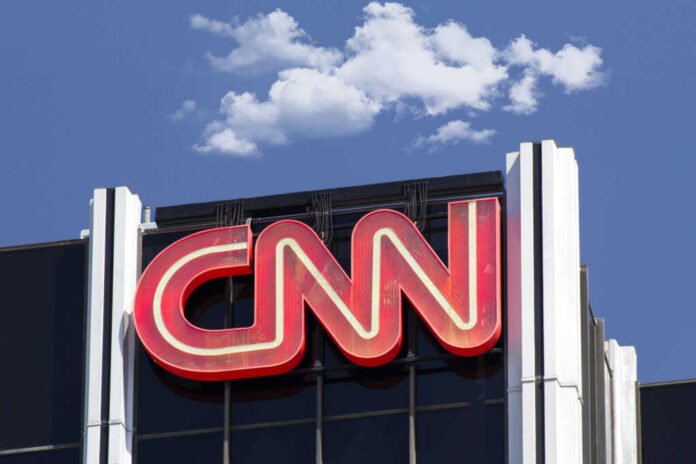
President Trump’s explosive accusation that CNN aired fabricated Iranian propaganda during sensitive ceasefire negotiations reveals a troubling pattern of mainstream media potentially amplifying enemy disinformation while American troops remain in harm’s way.
Story Snapshot
- Trump accuses CNN of broadcasting a false Iranian “victory” statement allegedly traced to a fake Nigerian news site during active US-Iran conflict
- CNN defends airing Iranian regime statements as essential wartime journalism, citing similar coverage by international outlets
- White House escalates feud by calling for authorities to investigate the network for acting as a “mouthpiece” for a hostile regime
- Incident occurs amid fragile two-week ceasefire negotiations mediated by Pakistan, with US military objectives reportedly achieved
Trump Challenges Network’s Credibility During Active Conflict
President Donald Trump unleashed a blistering attack on CNN via Truth Social on April 8, 2026, accusing the network of broadcasting a fraudulent Iranian statement claiming “victory” following ceasefire announcements. Trump alleged the statement originated from a fake Nigerian news website, escalating his longstanding criticism of CNN as “fake news” into wartime territory. The White House Rapid Response team amplified the president’s message by sharing screenshots of the disputed Iranian claim. Trump called for authorities to investigate CNN’s editorial decisions, marking an unprecedented escalation in executive pressure on media outlets during active military operations.
Network Defends Editorial Judgment Amid Wartime Pressures
CNN responded forcefully to Trump’s allegations, insisting the Iranian statement carried “obvious news value” as audiences monitored developments in the US-Iran conflict. The network noted that similar Iranian regime communications had been broadcast by Sky News and Al Jazeera, positioning its coverage within standard international journalism practices. CNN’s defense highlights a fundamental tension in wartime reporting: the network argues its responsibility includes presenting adversarial perspectives, while critics contend this amounts to amplifying enemy propaganda. This latest confrontation follows a pattern of White House denunciations, including Communications Director Steven Cheung’s comparison of CNN to Soviet-era “Pravda” just days earlier after the network aired an interview with a former Iranian negotiator.
Ceasefire Negotiations Complicate Media-Government Relations
The dispute erupted against the backdrop of delicate ceasefire negotiations mediated by Pakistan following 39 days of US-Iran military confrontation. Trump detailed a two-week suspension of US attacks, contingent on Iran opening the Strait of Hormuz and potentially involving Israel in a triple-sided agreement. The ceasefire followed Iran’s submission of a 10-point proposal after rejecting an initial 45-day pause, with Pakistan’s Prime Minister Shehbaz Sharif and Field Marshal Asim Munir facilitating direct talks. Trump stated US military objectives had been met or exceeded, referencing the conflict’s escalation following an Israeli airstrike that killed Ayatollah Ali Khamenei, succeeded by his son Mojtaba as Supreme Leader.
Pattern of Confrontations Raises Press Freedom Concerns
This incident represents the third major White House attack on CNN’s Iran coverage within days. The Trump administration previously denounced the network for airing four minutes of Supreme Leader Mojtaba Khamenei’s statement, despite the speech being widely available through Iranian state television and international broadcasters. White House officials characterized CNN’s coverage as broadcasting “uninterrupted Iranian state TV” from a “psychotic regime.” CNN veteran correspondent Jane Ferguson defended the network’s editorial judgment, stating that airing remarks from hostile leaders is “absolutely newsworthy” and that government officials shouldn’t dictate coverage standards. The confrontation underscores mounting tensions between executive authority and journalistic independence during wartime, with potential implications for press freedom.
The feud reveals deeper anxieties about information warfare and media credibility at a time when Americans deserve transparent, verified reporting from conflict zones. Trump’s unverified claim about a “fake Nigerian site” remains independently unconfirmed, yet his broader criticism resonates with citizens frustrated by media outlets that seem more interested in sensational enemy statements than rigorous fact-checking. Whether CNN’s editorial decisions constitute responsible journalism or reckless amplification of adversarial propaganda remains hotly contested, but the incident crystallizes growing public distrust of establishment media during critical national security moments when accuracy matters most.
Sources:
Trump Administrxation Denounces CNN for Airing Messages from Iranian Leaders – KSAT