Family policy just became a proxy war for who gets to define motherhood, work, and the American future.
Story Snapshot
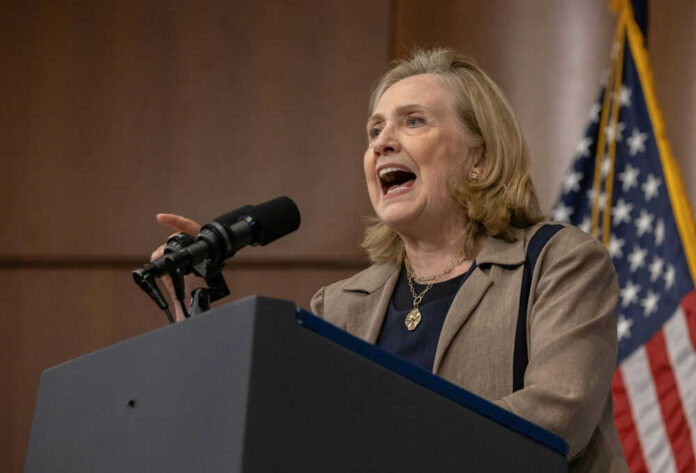
- Hillary Clinton used a New York Times op-ed to blast national Republicans and Vice President JD Vance for focusing on birthrates while, she argues, overlooking the day-to-day costs of raising kids.
- Clinton labeled the GOP approach “substantively and politically brain-dead,” tying it to “nostalgia and misogyny” and warning against a cultural rollback for women.
- The White House answered fast, with spokesman Kush Desai framing Clinton’s attacks as a recurring hobby and touting the administration’s family-policy wins.
- The fight tees up a clean 2026 contrast: Democrats selling a “kids agenda” centered on affordability, Republicans highlighting pro-family incentives and cultural priorities.
Clinton’s “brain-dead” charge aims at a specific Republican target
Hillary Clinton didn’t lob a generic partisan insult; she aimed her critique at what she described as a Republican obsession with birthrates, naming Vice President JD Vance and right-leaning groups as prime movers. Her central claim: politicians can lecture Americans about having more children, but families won’t expand if they can’t afford groceries, housing, child care, and health costs. Clinton wrapped that argument in moral language, calling the approach misogynistic and backward-looking.
Clinton’s framing matters because it tries to redefine what “pro-family” means in 2026. She treats affordability as the master key and casts cultural messaging about marriage, gender roles, or national demographics as a distraction at best, and as an attack on working women at worst. Readers over 40 have seen this movie before: a policy argument delivered with a cultural accusation attached, designed to make the other side defend motives instead of debating line items.
The White House response stakes out a competing definition of “helping families”
The Trump administration’s response, delivered through spokesman Kush Desai to Fox News Digital, didn’t accept Clinton’s premise that Republicans ignore family burdens. Desai dismissed her criticism as a favorite pastime and pointed to administration actions and priorities presented as family-forward: lowering fertility drug costs, expanding child tax credit benefits, and supporting school choice. The rebuttal signals a strategic posture—don’t argue about tone, argue about results—and it dares Democrats to explain why those policies don’t count.
That clash of definitions is where voters often live, especially older Americans watching their adult kids struggle. Clinton’s “kids agenda” leans into direct supports: child tax credits, paid family leave, early-childhood investments, health care protections for children, and guidance for the online world kids inhabit. The administration’s counter-message emphasizes a mix of tax relief, fertility-related cost reductions, and parent-driven education options. Both claim to be the adults in the room; neither wants to concede the “family” label.
Why this argument keeps returning: affordability versus culture, policy versus posture
Birthrate talk lands differently depending on what a voter hears behind it. Some hear economics and demographics: a warning that shrinking families can strain communities and programs. Others hear social engineering, or pressure aimed at women and young couples already underwater. Clinton exploited that second interpretation by linking Republican rhetoric to a bygone order where women “knew their place.” The political advantage is obvious; the factual burden is harder, because motives vary across a coalition.
Conservative common sense usually starts with a basic question: will a proposal measurably help families, and will it do so without building a dependency trap or punishing work? Tax credits can help, but design matters. Paid leave polls well, but funding and mandates can hit small employers. Child care assistance can reduce pressure, but government programs can inflate prices or reduce choice if poorly structured. The smartest voters ignore the name-calling and focus on mechanisms, eligibility, and who ultimately pays.
The shadow of 2016: Clinton’s sharp rhetoric energizes allies and hardens opponents
Clinton’s critics argue she repeats a familiar pattern: sharp-edged phrasing that rallies her side while alienating persuadable voters. The comparison that hangs in the air is 2016’s “basket of deplorables,” when she described a portion of Trump supporters in sweeping moral terms, later expressing regret about quantifying it as “half” while defending the broader critique. The 2026 op-ed avoids labeling voters directly, but it still paints Republican leadership as morally suspect rather than merely mistaken.
That strategy can work inside a party that wants a clear villain and a clear message, especially in an election year when attention spans are short and outrage travels fast. The risk is that older swing voters—many of whom have raised kids, endured layoffs, and navigated childcare without hashtags—tune out when arguments move from “here’s how we’ll cut your costs” to “here’s what your neighbors secretly believe.” Politics becomes theater, and families become props.
What to watch next as 2026 family policy becomes a ballot-line issue
Clinton’s op-ed and the White House’s rebuttal mark an early-stage messaging brawl, not a finished policy debate. The open question is whether either side will translate slogans into transparent plans: how large the child tax credit should be, whether it phases out, how paid leave gets financed, what counts as meaningful fertility-cost relief, and how school choice intersects with local budgets. The party that explains the tradeoffs like adults usually wins the middle.
Families aren’t asking for ideology; they’re asking for arithmetic that works. Voters will hear Clinton’s “misogyny” charge and the administration’s “hobby” jab, but they’ll decide based on monthly bills, job flexibility, and whether their communities feel stable. The political trap for both sides is mistaking cultural applause for practical credibility. The next months will show who can talk about kids without treating parents like a focus group.
Sources:
Hillary Clinton accuses GOP ‘politically brain-dead’ on family affordability