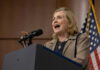


Governor Tim Walz’s call for a special legislative session after the Annunciation Catholic Church shooting in Minneapolis signals an aggressive pivot toward sweeping gun restrictions in Minnesota.
At a Glance
- Two children were killed and 21 others injured in a mass shooting on August 27 at a Minneapolis church-school.
- Governor Walz is demanding a special legislative session for major gun control reforms.
- The shooting is under federal investigation as a hate crime and domestic terrorism.
- Proposed laws include bans on assault weapons and high-capacity magazines.
- Gun rights groups and faith communities are mobilizing strong opposition.
Tragedy Ignites Political Showdown
The massacre at Annunciation Catholic Church and School has become a lightning rod for political action in Minnesota. On August 27, a 23-year-old gunman opened fire during morning Mass, killing two children and injuring 21 parishioners, including elderly congregants. The attacker, who later died by suicide, exploited the church-school’s open structure—firing through stained glass and blocking exits—to maximize devastation.
Governor Tim Walz responded within hours, announcing plans for a special legislative session to fast-track what he described as a “very comprehensive” gun control package. Though details remain sparse, measures reportedly under consideration include bans on assault-style weapons, restrictions on magazine capacities, and expanded background checks.
Watch now: Gov. Tim Walz weighs calling special session on guns in wake of Annunciation mass shooting
The urgency of the governor’s move has polarized Minnesotans, igniting both support from gun control advocates and alarm among constitutional conservatives who view the move as political exploitation of tragedy.
Faith, Freedom, and Fallout
The choice of target has further intensified emotions. The Annunciation shooting—one of the deadliest hate-motivated attacks on Catholic institutions in U.S. history—is being investigated as both a hate crime and an act of domestic terrorism. Federal officials from the FBI and ATF are collaborating with local authorities to determine whether the perpetrator had anti-religious motives or ideological affiliations.
For many in the faith community, the attack reflects broader national trends of hostility toward religious institutions. Church leaders and school administrators now face heightened security demands, with additional patrols and lockdown protocols reshaping daily routines. Victims’ families are demanding both justice and structural safeguards, while conservative voices urge caution, warning that reactionary legislation risks trampling constitutional liberties.
Public opinion remains sharply divided. Some see the governor’s push as long-overdue policy reform. Others interpret it as an opportunistic strike against the Second Amendment and religious autonomy.
Capitol Clash Looms Large
Walz’s power to call a special session is not in dispute, but the success of any proposed legislation depends on navigating a sharply divided state legislature. Democratic lawmakers are expected to largely support the package, but Republicans and some rural Democrats are signaling resistance, citing constitutional concerns and doubts about policy efficacy.
Gun rights organizations such as the Minnesota Gun Owners Caucus and national groups like the NRA are mobilizing against what they describe as legislative overreach. Meanwhile, student-led protests and community vigils are sustaining pressure on lawmakers to act.
With the shooter’s motive still under investigation and emotions running high, the political calculus remains unpredictable. Minnesota’s response to this tragedy may set a national precedent for how states balance safety, religious liberty, and individual rights in an era of rising domestic threats.