

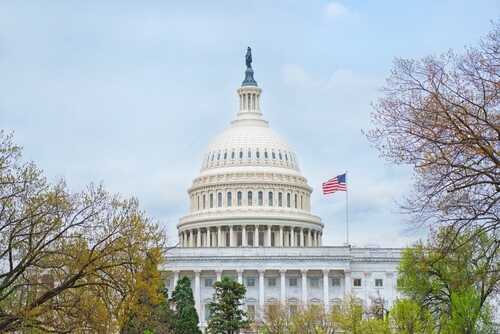
A bipartisan push to erect a permanent statue of Charlie Kirk inside the U.S. Capitol has reignited fierce debate over national values, legacy, and the role of public commemoration.
At a Glance
- Rep. Anna Paulina Luna leads the proposal to honor Kirk posthumously
- The statue would require full legislative approval under the CWA
- Committees began formal review in mid-2025 with hearings expected
- Debate reflects broader conflict over who deserves national honors
- Kirk was assassinated in 2024 and is seen as a conservative icon
Capitol Controversy Over Commemoration
A new legislative effort in Congress is pushing for a permanent statue of Charlie Kirk inside the U.S. Capitol, prompting both support and backlash across party lines. Spearheaded by Rep. Anna Paulina Luna and backed by a bipartisan coalition of lawmakers, the initiative seeks to establish Kirk’s memorial as a “permanent testament” rather than a temporary or symbolic act. Kirk, a conservative commentator and activist, was assassinated in 2024.
Congress often memorializes figures of national significance through monuments and building dedications. But under the Commemorative Works Act of 1986, such efforts must pass through rigorous legislative procedures, including committee approvals and expert consultations. The Kirk bill is undergoing preliminary review by the House Committee on Natural Resources and its Senate counterpart. Advocates argue that Kirk’s legacy in championing conservative values and constitutional freedoms warrants permanent recognition.
Watch now: Rep. Anna Paulina Luna wants to put a statue of Charlie Kirk in the U.S. Capitol
Legislative Path and Political Ramifications
The push for a Kirk statue began in earnest in early 2025, with a formal proposal submitted to Congressional leadership in February. Authorizing legislation followed in spring, triggering committee reviews. Hearings are scheduled for late 2025, with expected testimony from historians, policy experts, and Kirk’s family members. In line with CWA procedures, input from the National Park Service and the National Capital Memorial Advisory Commission will also guide the review.
While bipartisan, the initiative comes amid intense national discourse over whose legacy should be physically enshrined in federal spaces. Supporters frame the move as a defense of conservative ideals such as individual liberty, limited government, and resistance to progressive overreach. Critics, meanwhile, question whether Kirk’s legacy meets the threshold of “enduring historical significance.” Political observers note that the outcome could set precedent for future partisan memorials, further politicizing the Capitol’s symbolic landscape.
Conservative Icon or Culture War Flashpoint?
Kirk’s potential enshrinement in the Capitol may signal a broader shift in national memory politics. If authorized, the statue would join a small group of Capitol memorials reserved for figures considered to have rendered exceptional service. For many conservatives, Kirk’s inclusion would affirm their place in the national story. For others, it reflects a deeper reckoning with how America defines heroism and whose values are immortalized.
Supporters emphasize the potential educational and civic impacts of the statue, including increased tourism and enhanced public awareness of conservative thought. Still, the initiative arrives amid broader scrutiny of national monuments and their role in shaping collective identity. Whether seen as an overdue tribute or a controversial insertion, the Kirk statue proposal ensures that debates over memory, ideology, and representation remain central to America’s political discourse.
Sources
Congressional Research Service
Congressional bill texts and resolutions
FY2025 Emergency Military Construction on the Barry M. Goldwater Range