
A 15-year-old survived days on an overturned skiff in the Bering Sea, while two loved ones died in the freezing water.
Story Highlights
- The United States Coast Guard found a teen alive atop a capsized 18-foot skiff near St. Lawrence Island.
- Two others from the same trip were recovered from the water and later declared dead.
- Rescuers reported the survivor showed signs of hypothermia after days adrift.
- Cold-water survival limits in the Bering Sea are short without proper gear, underscoring the risk.
Rescue Near St. Lawrence Island: What Authorities Confirmed
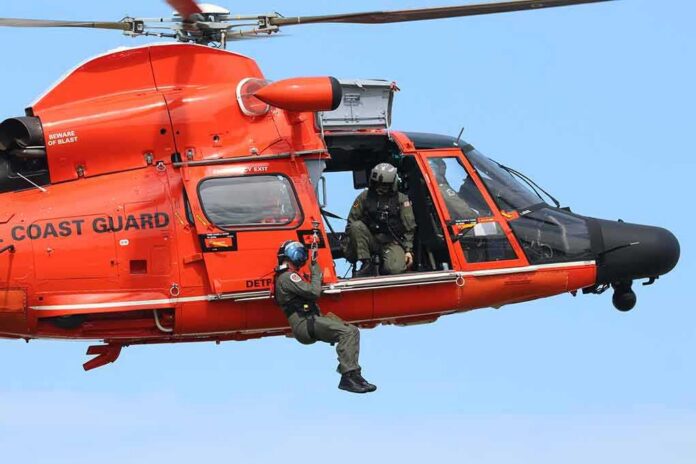
The United States Coast Guard said an overdue 18-foot fishing skiff left Savoonga on St. Lawrence Island and did not return as expected. Searchers focused east of the island, where an aircraft crew spotted a teen sitting on the overturned hull. Responders pulled the survivor to safety and reported hypothermia symptoms. Two other boaters were recovered unresponsive from the water and later pronounced dead, according to service updates that ended the search phase after the finds.
Media reports matched the Coast Guard account and placed the rescue after roughly two days adrift. Outlets described the survivor’s position atop the capsized skiff and the grim recovery of the other two boaters. Reports identified the boat as a small open vessel and noted the location in the Bering Strait between Alaska and Russia, near the remote island community of Savoonga. The events drew national attention due to the teen’s endurance and the deadly conditions in that part of the Bering Sea.
Why Cold Water Turns Tragedy Fast
Federal safety records show why small-boat capsizes in the Bering Sea often end in death within hours. The National Transportation Safety Board found that in near-freezing water, expected survival without an immersion suit can be between 30 and 90 minutes. With an immersion suit, time may stretch to a few hours, but not much more. Swift rescue or a way to stay out of the water can mean the difference between life and death in these waters.
Past investigations of Bering Sea losses list common triggers: freezing spray that adds ice weight, overloaded boats, poor stability data, crew fatigue, and open hatches that speed flooding. These risks can cause a sudden roll and capsize with little warning. Once a boat flips, cold exposure and limited flotation make survival depend on quick detection and response. The pattern explains why the teen’s position on the hull, not in the water, likely extended his survival window.
The Human Cost and the Lessons Ahead
Local families now grieve two lives lost, while a young survivor faces a long recovery from exposure and trauma. The Coast Guard’s coordination with Alaska State Troopers and local searchers shows the value of strong rescue networks in rural Alaska. The incident also highlights common-sense steps for small vessels in cold regions: check weather and sea state, avoid overloads, carry working communication gear, and keep cold-water survival gear ready and fit for every person aboard.
Policy debates can wait; basic safety cannot. The data on cold-water survival is not political. It is physics and time. Families who fish for food and income deserve clear guidance and reliable response. This rescue shows what works: watchful communities, fast alerts, air and sea crews who launch without delay, and the grit to hold on. As the nation prays for the families, leaders should press simple fixes that save minutes in places where minutes decide everything.
Sources:
washingtontimes.com, abcnews.com, alaskapublic.org, publications.gc.ca