NATO’s growing footprint around Ukraine is pushing Moscow and the West closer to a clash neither side can afford.
Story Highlights
- NATO surged forces to its eastern flank after Russia’s invasion, raising contact risks.
- Moscow raised nuclear alert levels early in the war, signaling hard red lines.
- NATO leaders insist support to Ukraine is defensive and aims to prevent wider war.
- Analysts warn miscalculation, not intent, could spark dangerous escalation.
NATO Force Buildup Increases Contact Risks on the Frontier
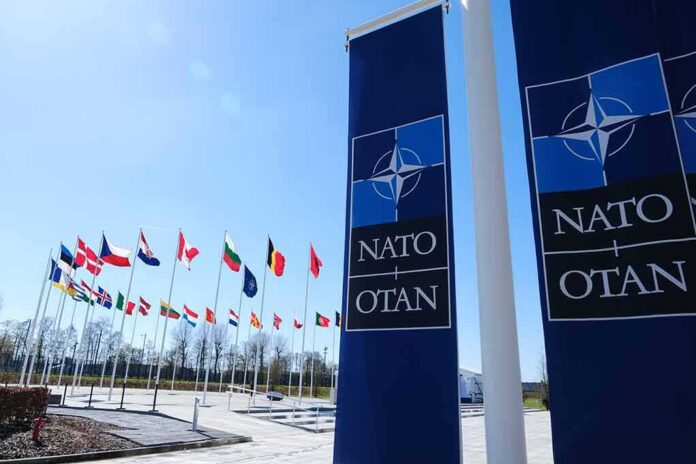
Alliance leaders activated defense plans and moved large forces east after the 2022 invasion. NATO placed about 40,000 troops, plus air and naval units, under direct command along its eastern flank. Those moves aimed to deter more Russian aggression and reassure allies bordering the war. More troops, planes, and ships also mean more chances for a near miss or a hot incident. That is the hard truth of military physics in tight spaces near a live war zone.
Russia’s leaders answer buildup with sharper nuclear talk and alerts. Early in the conflict, the Kremlin raised its nuclear forces’ readiness, citing what it called aggressive statements from Western capitals. That signal raised the stakes for every decision around Ukraine. When nuclear forces move higher, even routine steps carry more danger. The gap for error narrows, and the cost of a mistake climbs for everyone involved.
NATO Says Support Is Defensive and Bounded to Avoid War
NATO officials frame aid to Ukraine as lawful support for self-defense. They argue helping Kyiv fight off invasion deters future attacks and keeps the war from spreading west. They also draw clear lines against steps that would cross into direct fighting. They say no to sending combat troops into Ukraine and no to a no-fly zone, because those would put NATO pilots and soldiers against Russia’s forces.
Leaders also stress two aims: help Ukraine now and stop escalation beyond its borders. They say stronger defenses on the eastern flank reduce the risk of misread signals. Clear strength is meant to prevent recklessness, not provoke it. The message is simple: do not test the alliance. That stance reflects a cold lesson from history. Deterrence works best when the lines are bright and forces are ready.
The Real Risk: Miscalculation in a Nuclear Shadow
Strategists warn the most likely path to a wider war is a mistake, not a plan. A strike that hits the wrong target. A drone or missile that crosses a border. A radar picture that looks like a threat. In fast-moving fights, small errors can snowball. Research on the Ukraine war flags several routes to accidental escalation, including hits on systems tied to nuclear command and control. That is where cooler heads and tight control matter most.
Conservative readers know tangled wars drain wallets at home and risk our troops. They also know peace comes from strength with clear limits. President Trump’s team must hold allies to hard guardrails that keep NATO out of direct combat. It must press Europe to carry a fair share, secure borders, protect energy supplies, and avoid blank checks. Support for Ukraine should deter aggression, not slip into a forever-commitment that invites mission creep and drives inflation here.
What to Watch Next: Guardrails, Burden-Sharing, and Exit Paths
Watch for any move that blurs the no-troops, no-fly red lines. Track deployments near hotspots, air defense changes, and naval patrol patterns in tight seas. Look for stronger hotlines to manage incidents fast. Demand real burden-sharing from European capitals and a clear plan that links aid to goals, timelines, and audits. NATO says its measures are preventive and proportionate. That promise must hold under stress, or the risk curve will bend the wrong way.
Bottom Line for America’s Families
A wider European war would hit our economy, our energy bills, and our sons and daughters first. The mission is plain: keep the fight out of NATO territory, help Ukraine stand on its own feet, and close off paths to miscalculation. That means firm deterrence, tight rules, and real diplomacy. It also means saying no when a step would drag our troops in. Strong borders at home and strong lines abroad protect our freedom, our families, and our future.