

A new Iran deal is stirring a familiar fear: the administration may be asking the public to trust promises before the hard parts are settled.
Quick Take
- Secretary of State Marco Rubio reportedly opposed the deal in its current form.
- The memorandum of understanding gives the two sides 60 days to negotiate a final agreement.
- Iran’s promise not to seek nuclear weapons is in the text, but key details are still open.
- Supporters point to a ceasefire and Strait of Hormuz reopening as major gains.
Rubio’s silence and the blame game
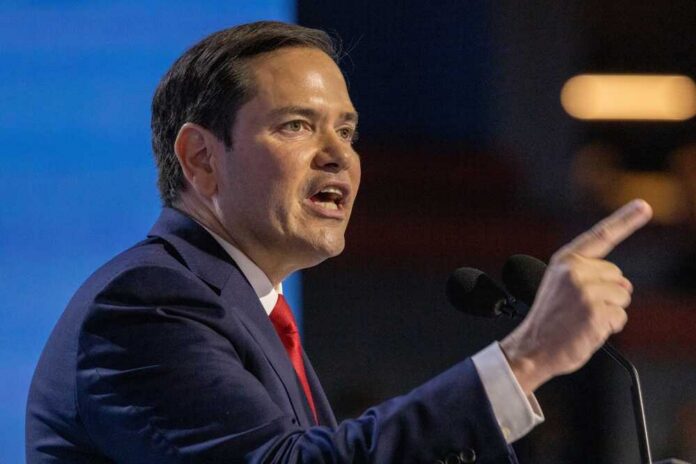
Secretary of State Marco Rubio stood stone-faced behind President Donald Trump as the Iran deal came under new scrutiny. Trump joked that Vice President JD Vance could take the blame if the agreement falls apart. The scene captured the political split around the deal. It also showed that the Trump team is not speaking with one voice while critics press harder for answers about what Iran actually agreed to do.[1][2]
According to reporting on the negotiations, Rubio privately argued against the deal in its current form. Sources said he believed intelligence showed Tehran was unlikely to give up its nuclear ambitions.[1][2] That concern matters because the agreement still depends on later talks to settle the most technical parts. For conservatives who want strength, not wishful thinking, a paper promise without tight enforcement invites trouble.
What the memorandum actually says
The published memorandum is not just vague talk. It says the parties will negotiate a final agreement within 60 days, and it says Iran “reaffirms its commitment not to develop or procure nuclear weapons.”[4][7] The text also lays out a process for handling enriched material and future nuclear talks. Supporters can fairly say this is a structured diplomatic process, not a blank check. But it is still a process, not a finished settlement.
That point is where the criticism lands hardest. Reuters reported that an Iranian official described the arrangement as a suspension of further enrichment while talks continue.[6] Other reporting says the deal leaves key technical questions unresolved, including the fate of stockpiled material and the exact inspection setup.[4] That means the public record does not yet show a complete, verified system that fully locks down Iran’s nuclear path. It shows a framework that still needs teeth.
Why the Strait of Hormuz matters
The deal also reaches beyond nuclear issues and into maritime security. Reports say it includes a ceasefire-style end to military actions and a move to reopen the Strait of Hormuz.[1][2] That matters because the strait is a choke point for global shipping and energy flows. If the agreement truly lowers the risk of conflict there, that is a real gain for American interests. But the same reports say some parts of the shipping commitments are limited and temporary.[1][2]
Sen. Marco Rubio’s 2016 criticism of the Obama-era #Iran nuclear deal, questioning the wisdom of releasing billions that could fund terrorism.
Fast-forward to 2026: The #Trump administration’s new Memorandum of Understanding (MOU) with Iran includes a proposed $300 billion… pic.twitter.com/or9RRT0iYH— Mahalaxmi Ramanathan (@MahalaxmiRaman) June 18, 2026
That limits the victory lap. Axios reported that Iran agreed only to return commercial traffic to prewar levels “to do its best,” and to avoid a toll system for 60 days.[1] That is not the same as a durable peace mechanism. It is a short window for calm, backed by promises that still have to be enforced. If the maritime side slips, the whole deal could quickly look weaker than its supporters claim.
Why the fight is not over
The real problem is not that the administration tried diplomacy. It is that the public text still leaves major questions open. Reports say sanctions relief, access to restricted funds, and future implementation terms depend on compliance and follow-on talks.[1][4][5] That leaves critics room to argue the United States is handing over leverage too early. It also gives supporters room to say the pressure stays in place. The truth is that the final balance is still unclear.
That is why Rubio’s criticism is politically important. He has long tied any Iran deal to verifiable limits, inspections, and real control over enrichment stockpiles.[4][6][18] The current framework says those issues will be worked out later. For voters who remember past Middle East promises that collapsed under weak enforcement, that is a familiar warning sign. The deal may reduce immediate tension, but it has not yet proven it can stop Iran from playing the same game again.
Sources:
[1] Web – Rubio lets Vance take the fall as Iran deal questions mount…
[2] Web – READ: Full text of U.S.-Iran memorandum of understanding – Axios
[4] Web – Read the Full Text of the 14-Point Agreement Between the U.S. and …
[5] Web – US releases official agreement with Iran. Read the 14-point text | CNN
[6] Web – What’s in the Iran deal Trump says he’s ready to sign – Axios
[7] Web – What the US and Iran say is in the memorandum to end the war
[18] Web – VIDEO: In Senate Floor Speech, Rubio Opposes Iran Deal – Facebook