Israel didn’t have to break the US-Iran ceasefire to shatter its promise—Lebanon showed how a “truce” can still leave a war fully alive.
Quick Take
- Israel hit Lebanon on April 8, 2026, with its heaviest strikes of the current war, killing at least 254 and injuring more than 1,165.
- The US-Iran two-week ceasefire started less than a day earlier, but Israel and the US said it did not cover Israel’s campaign against Hezbollah in Lebanon.
- Pakistan and some European voices pushed the opposite claim: a ceasefire that excludes Lebanon isn’t a ceasefire that matters.
- Hezbollah fired rockets into northern Israel the next day, framing it as retaliation for Israeli violations.
The April 8 strikes turned a “two-week truce” into a semantic fight
Israel’s April 8 air campaign in Lebanon landed like a legal argument delivered by explosives: the US-Iran ceasefire had begun, yet Israeli jets and missiles still struck Beirut, Tyre, Saida, and other southern areas. Reports described up to 100 strikes in about 10 minutes, evacuation orders, and bridges bombed. The result, according to Lebanese figures cited in reporting, was at least 254 dead and more than 1,165 injured.
The spoiler question hangs on one simple tension. Pakistan’s leadership and Lebanese officials wanted the ceasefire to apply “everywhere,” including Lebanon. Israel’s leadership answered with equal simplicity: the truce excluded Lebanon because Hezbollah remained an active threat. That split matters because it reframes intent. One side sees deliberate sabotage of de-escalation; the other sees continuity in a separate war that never paused.
What “spoiling the truce” would look like—and what the facts actually show
Spoiling a truce usually means undermining a deal you’re bound by: violating agreed terms, provoking the other signatory into breaking, or sabotaging enforcement. Here, it cuts both ways. The timing—less than a day after the US-Iran pause—invites suspicion. But Israel publicly argued the ceasefire did not apply to Lebanon, and the Trump administration reportedly backed that framing. If the truce language truly excluded Lebanon, Israel didn’t violate it; it exploited it.
That distinction may sound like lawyerly hair-splitting, but it’s the core issue. A ceasefire that leaves the most combustible militia-front untouched may reduce pressure on one channel while intensifying another. Diplomats calling for Lebanon’s inclusion weren’t nitpicking; they were pointing at a predictable mechanism: when civilians die in large numbers and infrastructure falls, militias respond, and wider war becomes easier to ignite than to contain.
Why Israel would keep Lebanon “out of scope” even during a US-Iran pause
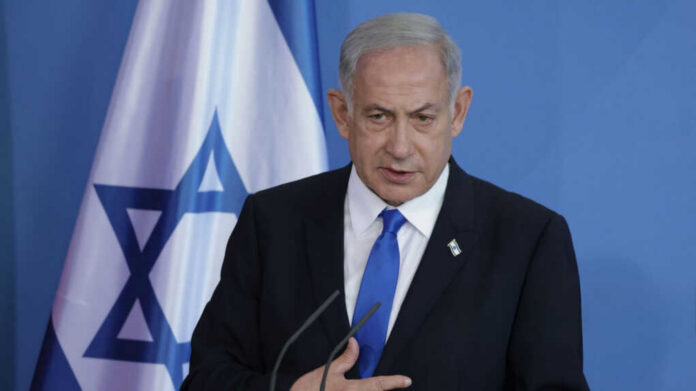
Israel’s stated logic tracks a long-standing posture: treat Hezbollah as an Iranian proxy but not identical to Iran’s state apparatus. That posture allows Israel to accept or benefit from a US-Iran ceasefire while continuing strikes on Hezbollah targets—or what Israel says are Hezbollah targets—inside Lebanon. Netanyahu’s message that the “battle in Lebanon” continued signaled to domestic audiences that Israel would not trade northern security goals for a separate diplomatic track.
From a conservative, common-sense lens, a government has a duty to protect its citizens and deter cross-border rocket fire. Israel’s argument appeals to that instinct. Yet common sense also demands second-order thinking: if an operation produces mass casualties, displacement, and destroyed bridges, it can create the very conditions that make deterrence harder. Tactical continuity can still produce strategic blowback, even when the paperwork says “allowed.”
Hezbollah’s retaliation and the trapdoor under the ceasefire narrative
Hezbollah fired rockets into northern Israel early Thursday, framing the salvo as a response to Israeli attacks and violations. Reporting said no injuries were reported from that rocket fire. The sequence matters because it undercuts simplistic claims that Israel acted in immediate response to a new Hezbollah escalation that day. It also tightens the open loop: even if Israel’s campaign was “separate,” the region’s actors don’t behave like separate compartments. They respond to blood and rubble.
Lebanon’s internal reality makes escalation easier. More than a million people reportedly stood displaced in the south, and repeated strikes isolated areas by destroying bridges and key routes. When the state cannot reliably move ambulances, supplies, and people, Hezbollah fills some gaps, and the “militia versus state” line blurs on the ground. That’s how localized strikes become a broader legitimacy contest—one that ceasefire architects underestimate at their peril.
The bigger pattern: Israel-Lebanon history makes timing feel like intent
The Israeli-Lebanese conflict isn’t a new fever; it’s a chronic condition with periodic flare-ups—1978, 1982, occupation until 2000, and renewed tensions tied to the Gaza war since 2023. When violence spikes right as diplomacy claims momentum, ordinary observers assume the worst because they’ve seen the movie before. That doesn’t prove Israel aimed to spoil anything, but it explains why “excluded from the truce” lands as a provocation, not a technicality.
One of the sharper warnings comes from what infrastructure attacks do: they don’t just punish a militant group; they reshape civilian life for months. Seven bridges reportedly went down. That’s not just a military detail—it’s a forecast of supply disruptions, slowed aid, and more displacement. When politicians promise a “pause” in regional war while civilians watch roads crumble, the credibility gap widens and cynicism becomes combustible.
So did Israel attack Lebanon to spoil the truce, or to define it?
The most defensible answer from the available facts is narrower than either camp wants. No public evidence proves Israel’s intent was to sabotage the US-Iran ceasefire itself; Israel said the opposite, arguing Lebanon sat outside the deal. At the same time, the operational reality—strikes of unprecedented scale during the first day of a regional pause—functionally undermined the spirit of de-escalation and made retaliation more likely.
The real takeaway is unsettling: modern truces often operate like selective umbrellas, covering headline actors while leaving the most violent subcontractors in the rain. That might satisfy diplomats chasing a signature, but it rarely satisfies people dodging missiles. If the goal was regional calm, leaving Lebanon out didn’t just preserve a separate war—it advertised a loophole, and loopholes invite everyone to test the edges.
Sources:
Israel attacks kill 254 in Lebanon despite US-Iran truce