
A Trump-appointed watchdog says DHS leaders blocked investigations—raising a constitutional red flag that no serious voter should ignore.
Story Snapshot
- House Judiciary Democrats say the DHS Inspector General reported obstruction of multiple DHS investigations by department leadership.
- Kristi Noem’s tenure was also tied to scrutiny over lethal-force incidents involving U.S. citizens and rhetoric labeling at least one victim a “domestic terrorist,” according to lawmakers.
- A $143 million DHS advertising contract to “Safe America Media” drew questions about vetting, experience, and political self-promotion with taxpayer dollars.
- President Trump announced Noem would depart at the end of March and nominated Sen. Markwayne Mullin as her successor amid a DHS funding lapse.
Inspector General Obstruction Claims Put Oversight at the Center
House Judiciary Democrats say the DHS Inspector General—appointed during Trump’s time in office—told Congress that DHS leadership obstructed the watchdog’s independent work. The public details remain limited because the underlying IG documentation referenced by lawmakers has not been fully released. Still, the allegation matters because inspectors general exist to prevent agencies from policing themselves behind closed doors, especially when use-of-force and contracting decisions are involved.
The same lawmakers describe a wider pattern of friction between DHS and outside oversight, including claimed resistance to congressional access and criticism tied to court proceedings. Those claims are serious, but readers should separate what is firmly documented from what is still primarily asserted in hearing rhetoric and press materials. Even so, an obstruction allegation from an internal watchdog is a bright-line issue: if true, it undercuts lawful supervision of an agency with extraordinary power.
Use-of-Force Incidents and “Domestic Terrorist” Labels Drive Political Fire
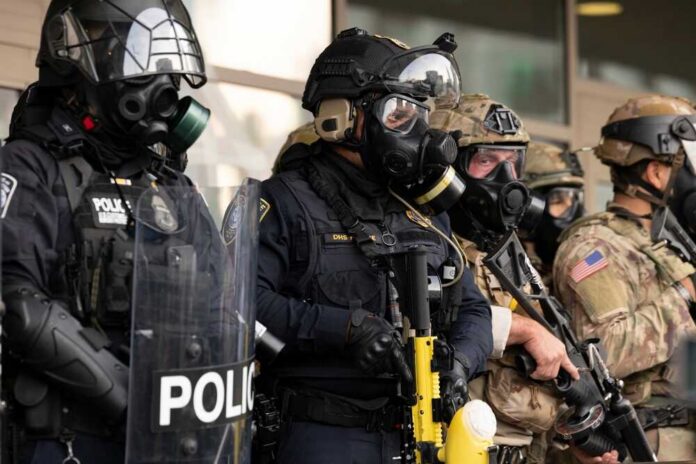
Congressional critics link the oversight fight to several controversial operations during Noem’s tenure, including incidents in which U.S. citizens were killed by DHS personnel and public messaging that branded at least one victim a “domestic terrorist” soon after a fatal shooting. Those are consequential claims because they touch core constitutional concerns: due process, accurate public statements from government officials, and limits on federal law enforcement. Public reporting cited by lawmakers describes intense committee questioning across consecutive hearing days.
Some key factual questions remain open to public verification: exactly what DHS policies governed those operations, what specific evidence supported any “domestic terrorism” characterization, and what internal reviews found about compliance with use-of-force standards. That uncertainty is not an excuse for complacency. It is precisely why transparent investigations and prompt disclosure to Congress and the public matter when federal power is used on U.S. soil.
The $143 Million Ad Contract Raises Contracting and Taxpayer-Trust Questions
Another major flashpoint is DHS’s $143 million advertising effort routed through a little-known contractor, Safe America Media. The firm had no prior federal contracting history and was described as lacking basic markers of an established operation, while also being linked to political figures tied to Noem’s circle. Noem’s prominent appearance in the ads fueled questions about whether taxpayer funds were being used for public information—or political image-building.
Contracting controversies are not just “inside baseball.” They go directly to how Washington treats working families’ tax dollars, especially after years of overspending, inflation pressure, and public distrust. If a contractor was selected without adequate vetting—or if agency leaders impeded scrutiny into how that deal was awarded—then the real damage is institutional. It teaches bureaucracies that political connections can matter more than competence, and that accountability can be negotiated away behind a press strategy.
Trump’s Leadership Reset Comes During a Shutdown-Style Funding Lapse
President Trump announced that Noem would step down at the end of March and named Sen. Markwayne Mullin as his pick to lead DHS. The change comes as DHS faced a funding lapse with most employees continuing to work unpaid under “excepted” status, underscoring how budget fights in Washington can land hardest on frontline public servants. Trump also publicly denied approving the major ad spend after Noem indicated he had signed off on it, deepening the personnel rupture.
Mullin’s confirmation process is likely to revolve around two competing imperatives that matter to conservative voters: restoring order at the border and inside DHS operations, while also reestablishing credibility that the department follows the law and respects oversight. Strong enforcement can coexist with constitutional guardrails, but only if leaders welcome transparent review rather than trying to wall it off. With the IG obstruction allegation now central to the narrative, the next DHS secretary will inherit a trust deficit that must be addressed.
Sources:
Judiciary Democrats Torch DHS Secretary Kristi Noem for Corrupting the Agency, Brutalizing Americans
Trump to fire DHS Secretary Noem, selects Mullin as successor