
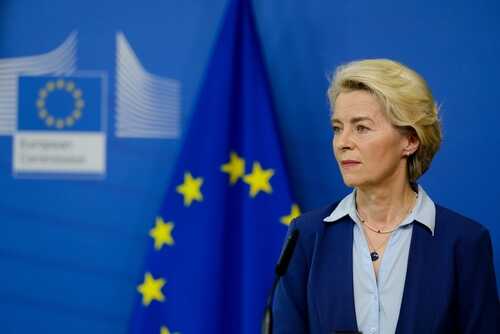
Ursula von der Leyen struck a fragile trade truce with President Donald Trump that secures common ground on confronting China’s steel glut but leaves Europe exposed to sweeping U.S. tariffs.
At a Glance
- Washington and Brussels vow to collaborate against China’s subsidized steel and aluminum overcapacity
- U.S. will retain 50% tariffs on EU steel and aluminum, potentially being replaced by a quota system
- EU exports—including autos, pharmaceuticals, and chips—face a new 15% U.S. tariff affecting about 70% of trade
- In return, the EU commits to purchase $750 billion in U.S. energy products and invest $600 billion in the U.S. economy
- Many trade provisions remain unresolved, with details still under negotiation
Alliance Against Chinese Overcapacity
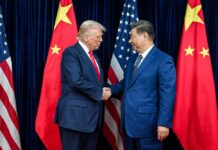
During their pivotal hand‑shake in Scotland in late July 2025, von der Leyen and Trump agreed to a joint strategy targeting global overcapacity in metals—implicitly focused on Chinese steel and aluminum. The plan includes the formation of a “metals alliance” with aims to manage excess production and stabilize markets for both regions. Despite ongoing talks, a proposal to replace punitive tariffs with quota-based margins is under discussion.
Watch: What’s in the EU‑US Trade Deal: Von der Leyen’s Full Remarks · DW News
This shared antipathy toward China’s state‑supported steel sector is the rare point of convergence in an otherwise fraught transatlantic relationship.
What Europe Gives Up
The deal imposes a U.S. tariff of 15 percent on approximately 70 percent of EU exports—including major lines like autos, pharmaceuticals, and semiconductors—while industrial purchases and energy imports from the U.S. are significantly expanded. This arrangement averts a threatened 30 percent tariff scenario but still imposes a sharp escalation from historical norms.
Critics in Europe decry the deal as imbalanced. Strategic commodities such as steel and aluminum remain locked into 50 percent tariffs, with no immediate roadmap for reduction. The package includes vague pledges from the EU to purchase U.S. energy and defense goods totaling $750 billion, as well as $600 billion in investments—terms lacking legal enforceability according to EU officials.
Fallout and Fractures
The agreement has sparked sharp backlash across European capitals. France’s Prime Minister described it as capitulation, claiming Brussels yielded to coercive pressure. Germany offered relative praise for averting immediate economic disruption—but noted longer-term growth risks. Internal divisions among member states underscore broader discomfort with concessions made for short‑term political stability.
Financial markets reacted with muted enthusiasm: indexes like the STOXX 600 initially rose on relief, then tempered gains amid concerns over inflation and slower expansion. Sectors trading under zero‑tariff terms—such as aircraft parts—saw modest boosts, while broader sentiment remains cautious.
What Happens Next?
President Trump’s self‑imposed deadline of August 1, 2025 looms over negotiations. Commerce Secretary Lutnick confirmed that decisions on trade deals with the EU and China are expected by that date. Pending agreements may address unresolved clauses around digital services, pharmaceutical tariffs, and quota mechanisms for metals.
Brussels continues to insist many key terms remain vague—and negotiable. But opponents warn that without firmer safeguards, Europe may have traded long-term sovereignty for short‑term respite.