
Iran’s Revolutionary Guard is turning the Strait of Hormuz into a wartime “toll booth,” and American families are the ones who feel it first at the gas pump.
Story Snapshot
- Iran has named six countries—China, Russia, India, Pakistan, Iraq, and Bangladesh—whose ships can transit the Strait of Hormuz after coordination with Iranian authorities.
- The IRGC has implemented a controlled-passage system that multiple reports describe as a de facto toll regime, with payments reportedly made in yuan.
- Iraq is seeking permission for oil tankers to move through Hormuz as its exports face disruption, while also pursuing backup routes like the Kirkuk–Ceyhan pipeline.
- Energy markets remain on edge: it cites oil price spikes above $104 Brent and above $90 WTI as the conflict disrupts shipping.
Iran’s “Whitelist” Signals Control, Not a Reopening
Iranian authorities have announced that only select nations’ vessels can pass through the Strait of Hormuz, provided they coordinate with Iran, even as other traffic is restricted as part of the ongoing Iran-Israel-U.S. war. The practical result is a partial blockade with exceptions, not a return to normal commerce. Weekly transits reportedly reached their highest level since the war began, but that increase appears tied to controlled access rather than restored freedom of navigation.
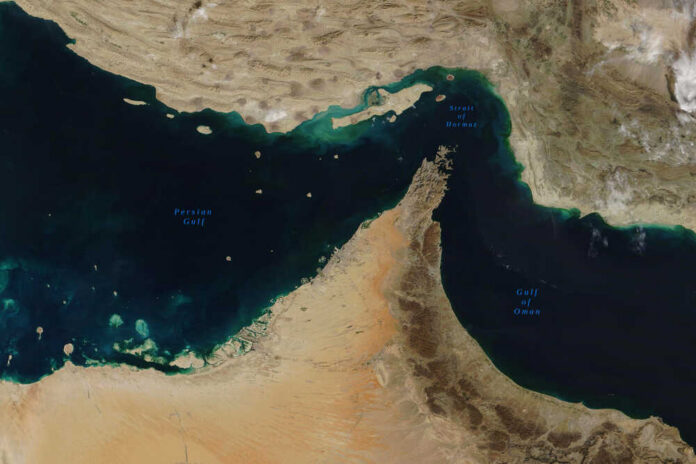
For U.S. consumers, the key point is leverage: a 21-mile-wide maritime chokepoint that typically carries roughly one-fifth of global oil and gas trade can move prices quickly when it becomes a war zone. It indicates attacks and disruptions have already rattled energy markets and driven price spikes. That is why even limited “safe passage” for a small list of countries can still translate into volatility, higher shipping costs, and more pain for working families.
The IRGC Toll System Adds a New Price Layer to Global Energy
It describes an IRGC-run, tolled passage arrangement—effectively a gatekeeper model where Iran’s Revolutionary Guard decides who moves and under what terms. Lloyd’s List Intelligence is referenced as calling it a “de facto toll booth regime,” and it notes at least two payments made in yuan. Iran’s parliament is also drafting a law that would formalize a transit fee reported at about $2 million per ship, though it was not yet described as fully enacted.
Even without a finalized law, the concept matters: when a military force turns international trade routes into pay-to-pass corridors, the cost tends to cascade. Shipping insurers reassess risk, freight rates rise, and energy importers bid up replacement supply. It also flags the political signal in yuan-denominated payments, suggesting that wartime workarounds can push trade away from the dollar at the margins—an outcome that complicates American economic influence without firing a shot.
Iraq’s Oil Tanker Push Shows How Neighbors Get Squeezed
Iraq has publicly indicated it is in contact with Iran to allow some oil tankers through the strait, reflecting the reality that geography can become destiny when conflict tightens around a single route. It also points to Iraq’s interest in reviving alternatives such as the Kirkuk–Ceyhan pipeline to reduce dependence on Hormuz access. In other words, even governments that are not central players in the war are being forced into damage control simply to keep exports moving.
This is where many America First voters see the warning light: the war’s consequences do not stay “over there.” When regional exporters scramble, the shock travels into global benchmarks and household budgets. It notes elevated crude prices during the disruption, and that aligns with the lived reality of voters who are already worn down by inflation and high energy costs. The less predictable the route, the more American families pay for everything shipped by truck.
Where the Politics Break: U.S. War Aims vs. Voter Limits
MAGA voters are divided on deeper involvement, and the Hormuz toll dynamic highlights why. It frames the strait as restricted to “enemies and their allies,” which underscores how quickly U.S. alignment choices can collide with economic consequences at home. If freedom of navigation becomes contingent on a hostile force’s permission and fees, it pressures Washington to respond—yet voters who backed Trump to avoid new wars now see the costs and mission creep risks piling up.
It also includes Gulf criticism that restrictions violate sea freedoms under the UN framework, reinforcing that this isn’t just a regional spat—it’s a challenge to how the global commons is supposed to function. For constitutional conservatives, the domestic takeaway is about accountability: any escalation that expands executive war powers, spending, surveillance, or emergency authorities should face hard scrutiny in Congress.
Sources:
https://www.iranintl.com/en/202603178279