

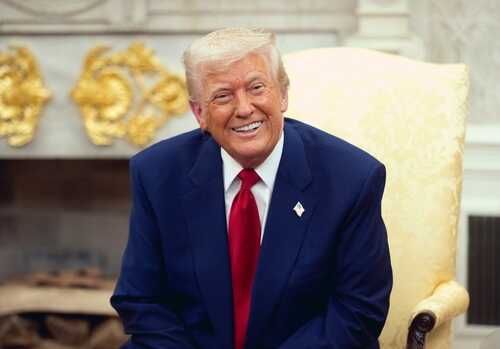
As the Supreme Court prepares to rule on President Trump’s emergency tariffs, the battle over executive power and constitutional limits could reshape America’s economic and political future.
Story Snapshot
- The Supreme Court is hearing a landmark challenge to Trump’s use of emergency powers for sweeping global tariffs.
- Trump’s invocation of the International Emergency Economic Powers Act (IEEPA) for tariffs is unprecedented.
- Industry, states, and importers argue the tariffs harm commerce and overstep constitutional boundaries.
- The Court’s decision may redefine the balance between presidential authority and congressional oversight in trade policy.
Supreme Court Faces Historic Test Over Emergency Tariffs
On November 5, 2025, the Supreme Court will hold oral arguments in consolidated cases questioning whether President Trump’s use of the International Emergency Economic Powers Act (IEEPA) to impose tariffs on imports from Canada, China, and Mexico is constitutional. The legal contest centers on whether Congress delegated too much power to the president, potentially undermining the separation of powers. This marks the first time in nearly fifty years that IEEPA has been used for broad global tariffs rather than targeted sanctions, setting the stage for a potential judicial reckoning over executive authority in economic policy.
Trump’s decision to invoke emergency powers for tariffs in February 2025 triggered immediate backlash from importers, states, and industry groups. The Court of International Trade ruled against the administration in May, finding the tariffs exceeded presidential authority. Enforcement was paused in July, with appeals leading to a split decision in the Federal Circuit. By September, the Supreme Court had fast-tracked review, highlighting the urgency and national significance of the dispute. The case consolidates challenges from twelve states and major importers, all arguing the move disrupts trade, increases costs, and lacks congressional oversight.
President Trump has invoked emergency powers to impose tariffs on other countries and, ultimately, Americans. Those powers reside with Congress, not the president.https://t.co/A4xTvluly9
— Rand Paul (@RandPaul) November 3, 2025
Constitutional Questions and Stakeholder Showdown
At the heart of the Supreme Court’s review is the constitutional question of how much power Congress can delegate to the executive branch. Trump and the Department of Justice defend the tariffs as necessary tools for economic leverage and national security, insisting the IEEPA’s emergency powers are broad enough to address contemporary threats. On the opposing side, importers and states argue that unchecked presidential authority threatens the constitutional balance, bypassing legislative oversight and harming American businesses and consumers. This tension between executive action and legislative intent resonates deeply with conservatives concerned about government overreach and the erosion of constitutional safeguards.
The stakes are high for a broad array of stakeholders. Importers and manufacturers face financial uncertainty, disrupted supply chains, and increased prices. States with significant export and import economies warn of long-term damage, while industry groups lobby for legislative reform. The Supreme Court’s decision could set a defining precedent, either curbing presidential emergency powers or opening the door for future unilateral executive action in trade and beyond.
Supreme Court Confronts Trump and His Tariffs in Test of Presidential Power https://t.co/d5qKBMaPlS
— #NARNShow (@NARNShow) November 3, 2025
Long-Term Implications for Liberty, Commerce, and Constitutional Order
A ruling upholding Trump’s tariffs under IEEPA would strengthen the presidency’s hand in economic emergencies, potentially at the expense of congressional authority. Critics warn this could destabilize the carefully constructed separation of powers, undermining democratic checks and balances. Legal scholars note that IEEPA was never intended for broad tariff imposition, and a dangerous precedent may emerge if the Supreme Court fails to draw clear limits. For conservative Americans, the outcome will either vindicate the principle of decisive leadership against global threats or raise alarms about unchecked executive overreach that jeopardizes individual liberty and economic stability.
Analysts suggest the Supreme Court could issue a narrow ruling, preserving emergency powers for targeted threats while restricting blanket executive action. Regardless of the outcome, the ruling will impact billions in trade, influence global supply chains, and shape the future of U.S. economic governance. For families, businesses, and defenders of constitutional order, the case marks a pivotal moment in the ongoing struggle to uphold conservative values and safeguard America’s foundational principles against ever-expanding government power.
Watch the report: Supreme Court Confronts Trump and His Tariffs in Test of Presidential Power
Sources:
Supreme Court Showdown on Tariffs Shaping Up as Landmark Case
Supreme Court: Trump’s Emergency Tariffs
Federal Circuit Court Opinion on Trump Tariffs
What’s at Stake in the Supreme Court Tariffs Case