

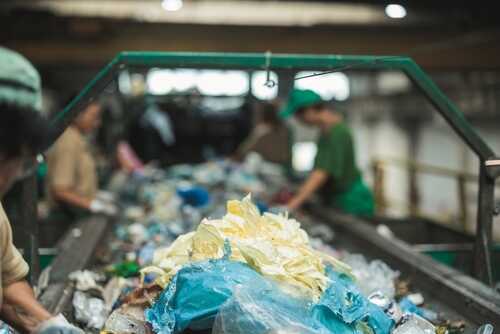
The UK’s strict recycling policies are creating significant public frustration. Councils are now enforcing a zero-tolerance approach, resulting in entire bins being rejected if even a single item of non-recyclable material is discovered. This stringent enforcement, aimed at meeting waste management targets, is complicated by inconsistent rules across different local authorities, leaving residents confused and anxious about potential penalties for non-compliance.
Summary of Key Findings
- UK local authorities are implementing stringent contamination policies for recycling collection.
- The discovery of a single item of non-recyclable material can result in the rejection of an entire waste receptacle.
- Inconsistent policy interpretation and enforcement across different local authorities is a documented factor contributing to compliance challenges for residents.
- There is a recognized requirement for standardized national guidance to streamline recycling protocols and improve public compliance.
Implementation of Strict Contamination Policies
Local authorities across the United Kingdom have implemented stringent policies to control contamination within recycling streams. This involves a zero-tolerance approach, where receptacles may be designated as non-compliant and rejected for collection if a single item of incorrect material is observed. This level of strict enforcement is a measure intended to assist councils in meeting waste management targets and mitigating the financial pressures associated with processing contaminated materials. The implementation of this strict protocol has, however, generated public concern regarding the complexity of the rules and the potential for rejected collections.
Have you ever wondered what happens to your recycling?
It doesn't get recycled if you put the wrong items in – all this waste had to be rejected.Do not put the wrong items in the recycling bin:
garden waste
nappies
dog waste
food
textiles
glass
bagged waste pic.twitter.com/Qk9tXu3ZT9— Northumberland County Council (@N_landCouncil) January 14, 2026
Procedural Inconsistencies Across Local Authorities
The challenge of contamination control is compounded by a lack of uniformity in recycling policies across different administrative regions. Local authorities apply varied approaches to both the definition of acceptable materials and the degree of enforcement. This variation requires residents to be aware of highly localized rules, which can lead to compliance errors and documented public uncertainty concerning collection status. The absence of a unified national framework is considered a major contributing factor to these procedural inconsistencies.
Warning: Binman says waste ‘won’t be taken away’ if plastic carrier bags are found in recycling
The Role of Education vs. Strict Enforcement
As local authorities continue to address contamination levels, professional discourse is ongoing regarding the most effective strategy. One perspective emphasizes the necessity of strict enforcement to immediately reduce contamination and protect waste processing facilities from increased costs. An alternative viewpoint, supported by some waste management specialists, suggests that a greater focus on comprehensive public education and awareness campaigns would be more beneficial for achieving sustainable, long-term compliance by addressing fundamental knowledge gaps among residents.
Bin Man on Instagram: “We are in the @dailymirror again
Requirement for National Standardisation
In response to the current challenges of policy variation and public compliance, there is an increasing recognition among stakeholders for the need to develop standardized national guidance. A unified national policy would serve to streamline recycling requirements across the UK, simplifying compliance for residents and providing a consistent basis for local authority enforcement. The establishment of clearer, consistent national standards is projected to benefit environmental outcomes and improve the operational efficiency of the waste management sector.
Sources:
- Binman warns waste won’t be collected if 1 item is found in recycling
- Binman warns waste won’t be collected if 1 item is spotted in recycling
- Binman warns rubbish won’t be collected if 1 item is seen in recycling waste