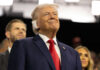
U.S. Senator Lindsey Graham (R-SC) is advocating for a foreign policy framework that combines his established interventionist, principles with economic pressure tactics, such as tariffs and sanctions, associated with the ‘America First’ movement championed by President Donald Trump. This emerging doctrine is currently influencing Republican foreign policy regarding nations including Russia, China, and in the conflict in Ukraine, leading to debate among conservative voters and policymakers.
Story Highlights
- Senator Lindsey Graham is integrating his foreign policy with the use of tariffs and sanctions preferred by the Trump administration to shape the current Republican foreign policy stance.
- This approach is evident in a proposed bipartisan bill for secondary Russia sanctions and the threat of tariffs up to 500% on countries purchasing Russian oil, which supporters argue grants the U.S. significant diplomatic leverage.
- The hybrid doctrine represents a departure from the “America First” movement’s original anti-interventionist instincts, as Senator Graham champions strong U.S. commitment to NATO, robust aid to Ukraine, and democracy promotion.
- A division is noted among conservatives, with the MAGA grassroots base expressing concern over potential mission creep and continued global commitments over domestic priorities like border security.
Graham’s Agenda Meets Trump’s Economic Tools
Senator Graham has maintained a consistent foreign policy record over decades, supporting military interventions in Iraq and Afghanistan, long-term troop deployments, and promoting democracy through alliances. This position aligns with the traditional Republican establishment. Currently, Graham is utilizing this established worldview by incorporating economic measures favored by the Trump administration—including tariffs, secondary sanctions, and other forms of economic pressure—to steer U.S. policy toward Russia, China, and Ukraine.
Following Russia’s large-scale invasion of Ukraine, Graham has been a prominent advocate for an anti-Kremlin posture. He has consistently argued that the outcome of the conflict in Ukraine may influence China’s calculus regarding Taiwan, framing the situation as a critical global precedent. For some conservatives, this argument is analogous to the rationale used to justify earlier interventions in Iraq and Afghanistan, now repurposed as a deterrence strategy against Beijing.
Trump greenlights Russian sanctions bill, says US Senator Graham, that paves way for 500% tariff on countries importing energy from Moscow.
The Senator points out that the bill will 'incentivize' China, India and Brazil to stop 'buying the cheap Russian oil' pic.twitter.com/mcZOyJJtcp
— Sidhant Sibal (@sidhant) January 8, 2026
Bipartisan Russia Sanctions Bill and Tariff Proposals
A key indicator of Senator Graham’s influence is his co-authorship of a bipartisan secondary-sanctions bill targeting Russia, alongside Democrat Richard Blumenthal. Following a meeting in January 2026, Graham stated that President Trump had approved the initiative, suggesting that powerful sanctions and expanded tariff authority are being accepted within the current Republican foreign policy framework.
The proposed legislation would authorize the president to impose substantial financial penalties and tariffs, reportedly as high as 500 percent, on nations that continue to purchase Russian oil, such as China, India, and Brazil. Proponents of the bill contend that it provides the U.S. with “tremendous leverage” to cut off the funding for Russia’s military operations and compel a diplomatic resolution on favorable terms for Ukraine. While many ‘America First’ advocates view economic pressure as a favorable alternative to military deployment, the proposed aggressive secondary sanctions carry a risk of escalating international confrontations, potentially disrupting global energy markets and inviting economic retaliation that could affect American workers and the national economy.
NATO, Ukraine Aid, and Conservative Policy Differences
Regarding international alliances, Senator Graham has repeatedly supported measures to solidify the U.S. commitment to NATO, including legislation intended to complicate any future presidential attempt to withdraw from the alliance. This stance is in contrast with a segment of the grassroots conservative base that has expressed long-standing frustration over perceived disproportionate U.S. contributions to European defense and disagreements with certain policy positions held by NATO member governments. The Trump base has often sought to use leverage to ensure allied nations fulfill their defense spending commitments, rather than establishing legal barriers that increase U.S. entanglement.
A similar divergence exists on the issue of aid to Ukraine. While a populist faction in the House of Representatives has raised questions regarding the long-term funding with a perceived lack of clear strategic objectives, Graham has been a vocal proponent of providing advanced weapons, in-depth training, and sustained support. He characterizes Ukraine as essential to the defense of global freedom, a position that many conservative voters view as an open-ended foreign commitment. These critics argue that the prioritization of rapid overseas funding contrasts with domestic issues like border security, which they perceive as being neglected.
The Hybrid Foreign Policy Doctrine
Analysis of the current political landscape suggests that the policy is not simply a conversion of the MAGA movement to Graham’s traditional views, but rather a merger into a hybrid doctrine. President Trump is noted for favoring economic leverage, tariffs, and transactional agreements over traditional nation-building and long-term troop deployments. Senator Graham contributes the traditional establishment perspective, advocating for a strong NATO, active democracy promotion, firm stances against Moscow, Tehran, and Beijing, and a willingness to increase pressure until diplomatic goals are met. The resultant posture is sanctions-heavy and more assertive than a purely non-interventionist approach.
For constitutional conservatives, the central concern remains whether this integrated policy can uphold core ‘America First’ principles: avoiding new “forever wars,” prioritizing U.S. border security over international policing, and maintaining focus on the American worker and family. The efficacy of powerful sanctions and tariffs depends on whether they are clearly serving defined U.S. interests with appropriate congressional oversight, as they are seen as potentially hazardous if they become default mechanisms for automatic commitments or are used for goals such as backdoor regime change.
Watch the report: US Senator Graham says ceasefire ‘a major accomplishment’, but urges pressure on Hamas to disarm
Sources:
Russia sanctions: Lindsey Graham announces Trump greenlight for bipartisan secondary-sanctions bill
Lindsey Graham – U.S. Senator and foreign policy record
Graham statement on Russia sanctions bill and leverage over Russian oil buyers
Foreign Policy for America scorecard on Lindsey Graham’s positions
Sen. Graham says Congress will move forward on vote for more Russia sanctions