

President Trump’s “not sure” comment on Ukraine’s Patriot missile production shows he is weighing U.S. security first, even after earlier promises to help Kyiv build the system.
Story Snapshot
- Trump told the Financial Times he is “not sure” about licensing Ukraine to make Patriot missiles, stressing the weapons’ sensitivity.
- His caution comes only weeks after he publicly vowed to let Ukraine produce Patriot interceptors at the NATO summit in Turkey.
- Ukraine’s President Zelenskyy has already been telling the world Trump “accepted” giving the licenses, even as U.S. experts say details are far from settled.
- Defense experts warn Patriot production in war-torn Ukraine would take years, major investment, and strict controls on U.S. technology.
Trump’s Patriot License Pledge Meets National Security Caution
President Trump’s latest comments on Ukraine’s Patriot missile ambitions show the clash between helping an ally and guarding American technology. In a phone interview with the Financial Times, reported by outlets like the Kyiv Post and The Guardian, Trump said he is “not sure” whether the United States will grant Ukraine a license to produce Patriot interceptor missiles. He called Patriots “a very extraordinary weapon” and said the U.S. must be “a little bit careful of who we license it to,” adding that America does not typically license such equipment.
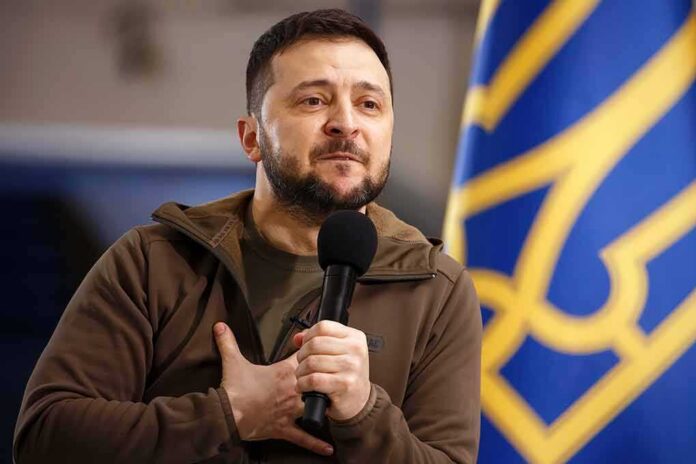
These remarks came just days after Ukrainian President Volodymyr Zelenskyy met Trump at the White House and told reporters the talks on domestic Patriot production were productive. Zelenskyy said Trump had “accepted that he will give us licences” and that Ukraine was already working with U.S. defense companies on possible joint production. That public optimism from Kyiv sits beside Trump’s more cautious language, suggesting he wants room to adjust terms before locking in a deal that sends one of America’s most advanced air defense systems into foreign factories.
Earlier Summit Promises Raised Expectations in Kyiv and the Media
The uncertainty is striking because Trump had just weeks earlier appeared to give Ukraine what it wanted on the global stage. During a NATO summit in Ankara, Turkey, Trump told Zelenskyy the United States would grant Ukraine the right to make Patriot missiles and interceptors, comments carried by major outlets and video clips. He joked that by letting Ukraine build Patriots itself, Zelenskyy “can’t complain that we’re not giving him enough,” and said, “Make them yourself,” in front of cameras. Those lines sounded like a clear green light, and many in the media treated them as a major policy shift toward stronger support for Ukraine’s defense against Russia.
Reports from Reuters, Deutsche Welle, and others described Trump’s Ankara promise as a “victory” for Zelenskyy and a significant gesture of support. Analysts noted that allowing domestic production of Patriots would move Ukraine beyond just receiving shipments and toward building its own high-end interceptors for long-range air defense. Some stories also pointed out that, before Kyiv, only close allies like Germany and Japan had been trusted with Patriot production licenses, highlighting how big a step it would be to add a frontline war zone to that list. These earlier portrayals raised expectations that Trump’s administration had firmly decided to share Patriot technology despite the risks.
Industry, Experts, and the Long Road From Promise to Production
While headlines focused on Trump’s bold pledge, defense experts and industry details painted a slower and more complicated reality. Reuters and ABC News reported that Trump had not yet informed manufacturers like Lockheed Martin and Raytheon, the U.S. companies behind the Patriot system, about any licensing decision. Specialists warned that building Patriot missiles in Ukraine would take years, not months, requiring new plants, secure supply chains, and strict protection of sensitive components. Even with strong political will, they said, starting Patriot PAC-2 or PAC-3 interceptor production inside an active war zone would not solve Ukraine’s near-term missile shortage.
Ukrainian officials have tried to stay upbeat while admitting the road ahead is long. Zelenskyy has spoken about technical teams “hammering out the details” and his desire to start production “as soon as possible” on Ukrainian soil. At the same time, he has stressed that Ukraine still needs Patriot missiles from the United States and European partners right now, and has said more PAC-3 interceptors should arrive in the coming days. His envoy in Washington, Olha Stefanishyna, welcomed the White House’s “readiness to cooperate” but clarified that no firm, detailed commitments had been made yet. That careful wording matches Trump’s own step-back, suggesting the two sides are still negotiating how to balance Ukraine’s urgent needs with U.S. security limits.
Sources:
insiderpaper.com, theguardian.com, youtube.com, reuters.com, abcnews.com, dw.com, bbc.com, nytimes.com