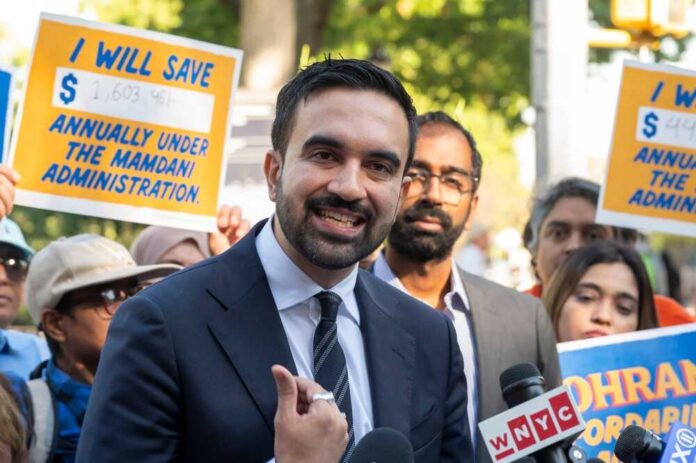
New York City’s mayor just staged a faith-forward photo op inside Rikers—while many law-abiding New Yorkers are asking who, exactly, City Hall is prioritizing in a public-safety crisis.
Quick Take
- Mayor Zohran Mamdani visited Rikers Island on March 20 to break his Ramadan fast (iftar) with Muslim detainees, joining prayer and sharing a meal with corrections leadership and a city councilmember.
- The visit was billed by Mamdani as a dignity-focused moment and part of his broader push to close Rikers and move to borough-based jails.
- Backlash surged from critics—including law-enforcement voices—who argued the mayor is sending the wrong message on crime and neglecting victims.
- Reporting notes Rikers holds detainees, meaning not everyone there has been convicted; however, the jail’s violent reputation fuels public outrage over symbolic gestures.
What Happened at Rikers, and Why It Hit a Nerve
Mayor Zohran Mamdani visited Rikers Island on March 20 to observe Ramadan with Muslim detainees, breaking his fast at an iftar meal, praying with inmates, and speaking with them in a secured setting. Department of Correction Commissioner Stanley Richards and Councilman Yusef Salaam joined the event. Mamdani described the night as deeply meaningful and framed the gathering around community and dignity—language that immediately collided with public frustration over crime and disorder.
Critics responded by arguing the mayor’s symbolism landed on the wrong side of a basic civic expectation: government’s first duty is public safety. Some commentary highlighted that Rikers is notorious and that many families of victims rarely see public leaders show comparable attention to their suffering. The strongest factual point in the criticism is not about religion—it’s about optics and priorities. The coverage shows the mayor chose a high-profile moment inside a jail as outrage over violence remains prominent.
Detainees vs. “Criminals”: A Real Distinction, But Not a Full Answer
Multiple reports emphasize that Rikers houses detainees, meaning a portion of the population has not been convicted and may be awaiting trial. That distinction matters in a constitutional system built on due process, and it should temper careless language that paints every inmate as guilty. At the same time, it also underscores Rikers’ long-standing reputation for violence and serious charges. For voters focused on law and order, that context makes any celebratory or uplifting imagery politically explosive.
The event was also unprecedented in the sense that it was described as the first mayoral iftar at Rikers, making it more than a private act of faith. Mamdani has said his Ramadan observance is part of being a “Muslim New Yorker,” and coverage places this visit among other public religious appearances during the month. The controversy is less about whether a mayor can practice his faith and more about whether City Hall is using official attention to elevate offenders—or alleged offenders—over the people trying to live safely.
How This Fits Mamdani’s Push to Close Rikers and Reshape Policing
The Rikers visit didn’t happen in a vacuum. Coverage ties it to Mamdani’s larger agenda to close Rikers and transition to borough-based jails, an effort driven by prior city mandates and now reinforced by new executive attention. Reports also describe staffing and structural moves to accelerate the transition, including a new public safety leadership approach intended to limit police involvement in some 911 responses. Even if no policy changed because of the meal, the event signaled what this administration wants the public to see.
That signaling matters because criminal-justice policy is not merely administrative; it directly affects constitutional expectations of equal protection and the basic right of families to live without fear. It does not establish that the iftar itself changed jail conditions or sentencing outcomes, but it does show a political strategy: using highly visible moments to reframe the moral narrative around incarceration. For conservatives who remember years of “soft on crime” messaging, the worry is that symbolism often precedes policy—and policy can be hard to reverse once violence rises.
The Backlash, the Media Loop, and What We Still Don’t Know
By March 23, outrage had intensified on social media and in commentary, driven in part by the mayor’s own posted imagery and the broader national debate over crime, policing, and cultural messaging. The sources describe sharp language from critics, including law-enforcement voices, and a wave of online condemnation. What remains unclear from the published accounts is the underlying case mix of the inmates present, including their specific charges, which limits the public’s ability to judge the moment beyond symbolism.
NYC Mayor Zohran Mamdani Visits Criminals on Rikers Island for Ramadan https://t.co/XOYWSuVT7u
— Twitchy Updates (@Twitchy_Updates) March 24, 2026
The other missing piece is whether City Hall has paired these gestures with equally visible support for victims, reforms that speed up case processing, or measurable steps to restore order. The reporting reviewed focuses on the visit and the backlash rather than comprehensive outcomes. For a city that has endured years of ideological experimentation, voters are likely to demand proof that compassion messaging does not come at the expense of accountability. Symbolic events can unify communities, but they can also deepen distrust when public safety feels optional.
Sources:
NYC Mayor Faces Backlash for Ramadan Meal at Rikers Island
New York City mayor celebrates Ramadan with inmates at Rikers Island
Mamdani ignites social media outrage after photo op at notorious NYC jail: ‘F-ing ridiculous’