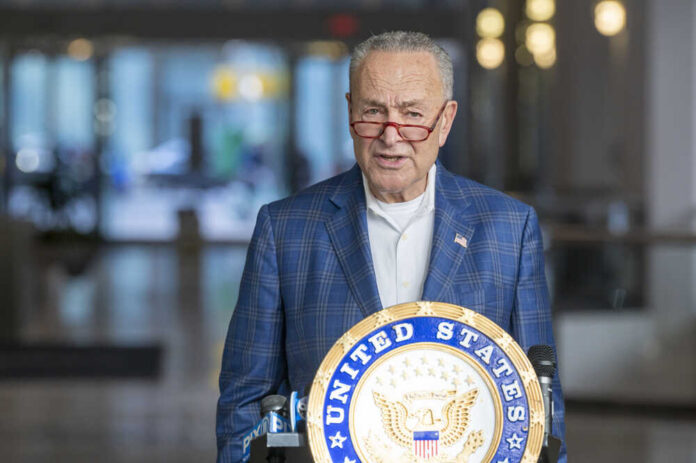
Senate Minority Leader Chuck Schumer is under intense pressure from within his own party to resign after supporting a Republican-led spending bill to avert a government shutdown, prompting factions across the Democratic base to question his leadership fitness and direction.
At a Glance
- Nearly 90% of “Our Revolution” grassroots members say Schumer should relinquish his position.
- Schumer became minority leader on January 3, 2025, after Democrats lost Senate control.
- Notable progressives, including AOC, have publicly called for new leadership.
- Schumer defended his vote on a stopgap funding measure, citing federal stability.
- Internal tensions emerge amid several Democratic retirements ahead of 2026.
Grassroots Revolt Against Schumer
A survey of more than 9,000 members of the progressive group Our Revolution revealed that 89% support Schumer stepping down, and 86% back primary challenges to Democrats who voted for the GOP fiscal deal. The vote, seen as capitulating to Republican demands, has infuriated Democratic base voters who feel abandoned on key progressive priorities. And the passage of President Trump’s “Big, Beautiful Bill” has only aggravated the schism.
Leaders including Rep. Alexandria Ocasio-Cortez and Rep. Glenn Ivey condemned Schumer’s vote and called for a leadership overhaul. Schumer defended his decision by arguing that failing to pass the bill would have allowed Donald Trump and Elon Musk to weaponize shutdown powers across federal agencies—a view outlined in The Guardian.
Watch a report: Democrats Call for Schumer to Step Aside
Institutional Tension And Political Turmoil
Schumer insists he won’t resign, saying his vote was necessary to preserve basic governmental operations in the face of escalating executive overreach. Yet internal opposition is growing louder, with even establishment figures questioning whether his leadership style fits the current political moment.
A report from Fox Baltimore notes that multiple Democratic retirements have further strained confidence in the Senate caucus, as members signal the need for generational change and sharper political contrast heading into the 2026 midterms.
What Comes Next
Schumer’s fate now rests on how deeply the backlash spreads. His defenders warn that a leadership shake-up could destabilize an already fragmented party. But reformers argue that holding the line under Schumer risks alienating voters who want bold opposition to Trump-era policies.
The party’s next steps will reveal whether it doubles down on establishment leadership—or risks internal upheaval in pursuit of a renewed mandate. Either way, the clock is ticking as 2026 looms.