
Italy’s refusal to let U.S. military aircraft refuel in Sicily is a warning sign that America’s Iran operations are colliding with allied parliaments—and with the patience of a war-weary conservative base at home.
Quick Take
- Italy denied some U.S. military aircraft permission to land at Sigonella Air Base in Sicily while the jets were headed toward the Middle East.
- Italian reporting said the landing request arrived after the aircraft had already departed the United States, leaving no time for required parliamentary authorization.
- Prime Minister Giorgia Meloni’s government framed the decision as case-by-case procedure, not a rupture with Washington.
- Italy’s rules draw a bright line between routine logistics and missions connected to kinetic operations, which require parliamentary approval.
- Spain signaled a similar posture, saying it would not authorize bases or airspace for actions related to the Iran war.
Italy’s “No” at Sigonella and Why Timing Mattered
Italian authorities refused permission for U.S. military aircraft bound for the Middle East to land at Naval Air Station Sigonella, a key U.S. logistics hub in Sicily. Reporting indicated the request was submitted after the aircraft had already taken off from the United States, which prevented Italian leaders from obtaining parliamentary authorization in time. That procedural detail matters: it suggests Italy viewed the stopover as outside routine, pre-cleared military transits and therefore subject to stricter rules.
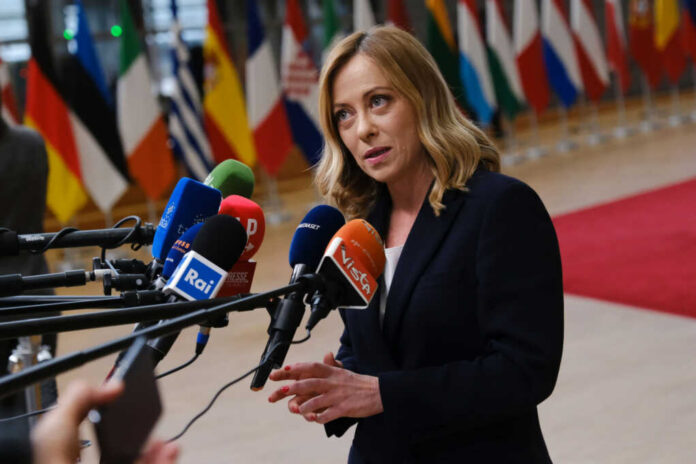
Prime Minister Giorgia Meloni’s office responded by emphasizing continuity rather than confrontation, saying each request is examined “attentively, case by case,” and insisting there was “full and loyal cooperation” with the United States. That language is diplomatic, but it also signals a real constraint: even friendly governments may be unwilling—or legally unable—to rubber-stamp U.S. movements when operations are tied to a widening Iran conflict that raises political risks at home.
The 1954 Base Agreements: Logistics Allowed, “Bombing” Requires Parliament
Italy’s decision rests on how Rome interprets long-standing basing agreements that date back to 1954 and have been updated by successive governments. In parliament, Meloni described the standing authorizations as covering “technical” logistics and “non-kinetic operations” that do not involve “bombing.” Other uses require parliamentary approval. The immediate dispute, then, is less about NATO membership and more about mission classification—what the aircraft were supporting and whether that support crossed Italy’s legal threshold.
Because the available reporting does not identify the specific aircraft type or the precise mission, it is not possible to verify whether the flight was carrying weapons, supporting a strike package, or performing a purely logistical function. What is verifiable is the mechanism: Italy’s system demands political sign-off for non-routine, potentially combat-linked use of bases. When Washington submits requests late—after departure—Rome may have no lawful pathway to approve them quickly.
Spain’s Hard Line Adds Weight to Europe’s Iran-War Skepticism
Italy was not alone in signaling limits. Spain’s defense minister publicly said neither Spanish bases nor Spanish airspace would be authorized for actions related to the war in Iran, calling the conflict “profoundly illegal” and “profoundly unjust.” Whatever one thinks of that characterization, it demonstrates that European governments are willing to use domestic law and political messaging to distance themselves from U.S.-linked military activity, even while remaining allied on paper.
For the United States, that matters operationally. Sigonella and other Mediterranean facilities can shorten flight routes, simplify refueling, and reduce strain on aircrews and maintenance schedules. When access becomes conditional or uncertain, planners have to reroute and lean harder on other nodes—creating friction, added cost, and slower tempo. The broader point for American voters is straightforward: once a conflict expands, “limited” operations often demand more logistics, more permissions, and more political capital than advertised.
What This Means for the Trump Administration—and a Divided MAGA Coalition
President Trump’s second-term administration now owns the practical consequences of federal action abroad, including the diplomatic blowback that follows. Many conservative voters over 40 who spent years opposing globalist bureaucracy, inflationary spending, and weak borders are also increasingly skeptical of open-ended foreign entanglements—especially those that look like another slow-walk into a regional war. Italy’s denial doesn’t prove a policy collapse, but it highlights how quickly allies can hit the brakes when missions appear connected to kinetic escalation.
Italy refused to allow the U.S. to use Sigonella Air Base. But there’s more that is not being said.
The news was first published by Corriere della Sera and later by other news outlets including La Repubblica. The Government sources later confirmed the episode, saying it happened… pic.twitter.com/659EBLlIxJ— The Aviationist (@TheAviationist) March 31, 2026
From a constitutional perspective, foreign military operations that expand in scope raise familiar questions about transparency, mission definition, and democratic consent—both in allied parliaments and in America’s own system. The reporting also underscores a practical lesson: even close partners will prioritize their legal processes when the stakes rise. For U.S. leaders, the most durable strategy is clarity—clear objectives, clear limits, and clear communication with both Congress and the public before logistics and escalation begin driving policy.
Sources:
Italy turns away Middle East-bound US military aircraft from Sicily stopover
Italy denied use of its base to some US aircraft headed to Middle East