
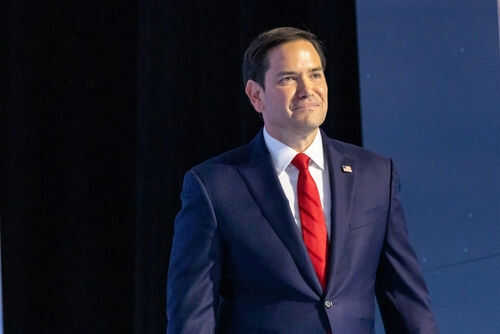
Secretary of State Marco Rubio delivered a powerful message to European allies in Munich, declaring that America will no longer serve as “polite caretakers of the West’s managed decline” while demanding Europe step up to defend itself and secure its borders against mass migration threats.
Story Highlights
- Rubio’s February 14, 2026 speech at Munich Security Conference signals Trump administration’s demand for European self-reliance on defense spending and border security
- Secretary of State rejects globalist “rules-based order” in favor of national sovereignty, reindustrialization, and supply chain independence from China
- Speech calls mass migration an “urgent threat to civilization” while pressing NATO allies to end complacency and invest in their own defense
- Trump’s diplomatic approach offers partnership for “civilizational renewal” but makes clear U.S. will no longer subsidize European welfare states at expense of defense
Rubio Draws Red Line on European Dependence
Secretary of State Marco Rubio addressed the Munich Security Conference on February 14, 2026, delivering President Trump’s vision for a fundamentally restructured transatlantic alliance. Rubio told European leaders the United States refuses to continue as passive observers of Western decline, demanding instead that allies take responsibility for their own security, borders, and economic independence. The 3,000-word address covered critical issues including UN reform, European defense capabilities, migration control, supply chain sovereignty, and the ongoing Russia-Ukraine conflict. Rubio’s message was clear: the old arrangement where America bankrolls European security while allies neglect defense spending must end.
Sovereignty Over Globalism Defines New Alliance Terms
Rubio rejected the notion that a “rules-based global order” should supersede national interests, arguing that decades of this approach have left Western nations vulnerable to threats from China, Russia, and uncontrolled mass migration. The Secretary emphasized that European welfare states have grown at the expense of defense capabilities, leaving the continent dependent on American military protection. This represents a concerning erosion of self-determination that undermines both European sovereignty and American interests. Rubio stressed that borders represent civilization’s first line of defense, calling mass migration an existential threat that European leaders have failed to address while hiding behind guilt over their own heritage and accomplishments.
Reindustrialization and Supply Chain Independence Priorities
The Trump administration’s vision centers on reversing Western deindustrialization caused by outsourced manufacturing to China and other adversarial nations. Rubio called for reshoring critical supply chains to protect both American and European economic security from foreign manipulation. This approach prioritizes national control over production capacity rather than globalist efficiency models that have left Western nations vulnerable during crises. The Secretary argued that true alliance strength requires each partner maintaining robust industrial capabilities rather than depending on hostile powers for essential goods. This economic sovereignty directly supports the broader goal of reducing European dependence on American subsidies while strengthening the West’s competitive position against China.
Diplomatic Tone Delivers Tough Medicine on Self-Reliance
Rubio’s speech adopted a more diplomatic approach than Vice President JD Vance’s sharper 2025 Munich address, which warned bluntly about cultural erosion from mass migration. Analysts described Rubio’s delivery as “a spoonful of sugar” helping European leaders accept hard truths about their security complacency and migration failures. Despite the softer tone, the substance remained unchanged: Europe must invest in its own defense, secure its borders, and stop relying on American taxpayers to fund security while maintaining generous welfare programs. Rubio assessed the Russia-Ukraine situation during his Q&A session, noting that while Russia shows no signs of compromising on objectives, the U.S. pursues a “just and sustainable” peace alongside maintaining sanctions pressure.
The Munich speech marks a definitive policy shift toward conditional partnership rather than unconditional commitment to European security. Trump’s administration positions America as willing to collaborate on civilizational renewal but unwilling to subsidize decline through endless defense spending while allies neglect their responsibilities. This approach defends American interests and constitutional principles of limited government by refusing to continue unsustainable foreign policy commitments that drain resources without reciprocal burden-sharing. The message resonates with Americans frustrated by decades of footing the bill for European defense while facing inflation and fiscal mismanagement at home, offering instead a vision of true partnership built on mutual strength rather than one-sided dependency.
Sources:
One sentence in Rubio’s Munich speech revealed Trump’s ‘red line’ for Europe – Fox News
Secretary of State Marco Rubio at the Munich Security Conference – U.S. Department of State
West vs West: Munich Security Conference – Chatham House
Rubio Speech Munich – Responsible Statecraft