
The Trump administration is weighing a massive special operations raid to seize Iran’s weapons-grade uranium stockpile, potentially deploying thousands of American troops in what could become the largest commando mission in history—raising alarms among MAGA supporters who voted to end endless Middle East wars, not expand them.
Story Snapshot
- US military briefed Trump on plan to seize 1,000 pounds of Iran’s 60%-enriched uranium buried under rubble at fortified nuclear sites
- Operation could require Delta Force, Army Rangers, 82nd Airborne, and weeks of excavation amid Iranian defenses
- Trump publicly denies committing to raid while Iran refuses to negotiate handover of material capable of producing 11 nuclear bombs
- Mission risks significant American casualties and oil market disruption, testing Trump’s promise to avoid new regime-change wars
The Mission That Breaks Campaign Promises
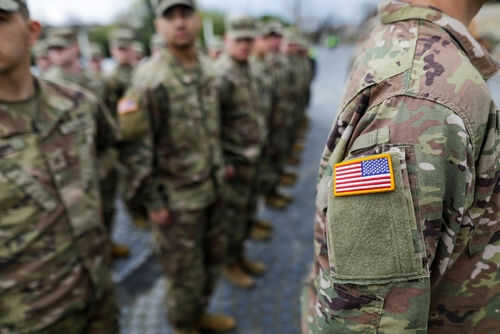
President Trump requested and received military briefings in March 2026 on a special operations plan to seize approximately 450 kilograms of Iran’s highly enriched uranium, currently buried beneath rubble at nuclear facilities like Isfahan following June 2025 airstrikes. The mission would involve elite Joint Special Operations Command units including Delta Force and Army Rangers, supported by the 82nd Airborne Division, establishing beachheads or temporary airstrips to airlift heavy excavation equipment. Former NATO commander James Stavridis described the potential operation as the largest special forces mission in history, requiring weeks of meticulous digging under fire to extract material Iran stockpiled to near weapons-grade purity.
The uranium in question represents Iran’s pre-war accumulation of 440 kilograms at 60% enrichment—just short of the 90% weapons-grade threshold—alongside 200 kilograms at 20% purity, far exceeding any civilian nuclear program needs and providing sufficient material for roughly 11 nuclear devices. US and Israeli strikes in June 2025 destroyed centrifuges and buried this stockpile under collapsed tunnel complexes at fortified underground sites, halting Iran’s enrichment activities. Iranian Foreign Minister Abbas Araghchi confirmed the material remains inaccessible under debris, stating Tehran has no plans to recover it and refuses negotiations while under military pressure, a stance complicating Trump’s reported openness to diplomatic solutions including potential Iranian handover or on-site dilution with International Atomic Energy Agency oversight.
Operational Risks and Strategic Contradictions
Former defense officials warn the operation would prove “slow, meticulous, and extremely deadly,” requiring mine-clearing operations, sustained air superiority, and protection of excavation teams against Iranian drone and missile retaliation for extended periods. Secretary of State Marco Rubio cryptically told Congress that securing the material would require personnel to “go and get it,” while Trump himself told Fox News “no, not at all” when asked directly about the seizure plan, contradicting reports from the Wall Street Journal and Washington Post detailing active military planning. The mission’s scale would dwarf historical precedents like Israel’s 1981 Osirak reactor strike or the 2011 Osama bin Laden raid, potentially involving over 1,000 American troops in sustained combat operations deep inside hostile territory.
The Trump administration faces a strategic dilemma that directly contradicts the America First mandate from voters exhausted by two decades of Middle East interventions. Supporters who cheered Trump’s 2016 promises to avoid nation-building and regime-change wars now watch thousands of Marines and 82nd Airborne paratroopers deploy to the region for what could escalate into prolonged ground combat. The operation carries additional risks beyond combat casualties: seizing Kharg Island to disrupt Iranian oil exports, as Trump suggested separately, would spike global energy prices already straining American household budgets. This echoes the fiscal mismanagement and globalist entanglements conservatives rejected at the ballot box, raising questions whether preventing Iran’s nuclear breakout justifies mission creep into another generational conflict draining American blood and treasure.
Constitutional and Strategic Concerns Mount
The plan’s consideration alongside ongoing US-Israel military coordination reveals a decision-making process that bypasses meaningful Congressional debate over committing American forces to offensive ground operations inside Iran. While neutralizing a nuclear threat aligns with national security imperatives, the mission’s unprecedented scope and uncertain duration demand transparency with the American people who gave Trump a mandate to prioritize domestic concerns over foreign adventurism. Former operators note the weeks-long excavation timeline would establish semi-permanent American forward operating bases on Iranian soil, crossing thresholds that distinguish limited strikes from sustained occupation-style missions historically requiring formal war authorizations and straining constitutional checks on executive military power.
Trump’s dual-track approach—maintaining plausible deniability publicly while military planners draft detailed operational orders—mirrors the foreign policy establishment’s pattern of incremental escalation that MAGA voters specifically rejected. If executed, the raid could denuclearize Iran and set deterrence precedents for future proliferators, but success hinges on flawless execution against a weakened yet defiant adversary fighting on home terrain. The alternative diplomatic track, persuading Iran to surrender material it claims is civilian under international supervision, appears stalled by Tehran’s refusal to negotiate under fire and its continued calls for Israel’s destruction. As equipment and personnel flow into theater, the window for choosing between these paths narrows, testing whether this administration will honor its core promise to keep America out of new wars or repeat the interventionist mistakes that bankrupted conservative trust in Washington’s foreign policy elite.
Sources:
US Weighing Operation to Seize Iran’s Enriched Uranium – Iran International
US military briefs Trump on plan to seize Iran’s buried uranium stockpile – Anadolu Agency
Seizing Iran’s uranium could take ‘largest special forces operation in history’ – Times of Israel
Iran war: US Delta Force and 82nd Airborne Division plan raid – The Times
US and Israel discuss special forces mission to secure Iran’s nuclear material – Axios