The Trump administration’s latest Iran move is forcing a hard question many MAGA voters didn’t expect to face again: how do you punish a hostile regime without sliding back into another forever war?
Quick Take
- Secretary of State Marco Rubio announced the U.S. is revoking immigration privileges, including green cards, for relatives of Iranian senior officials tied to regime activity.
- Officials framed the move as denying America’s immigration system to people who “profit” from Iran’s repression and alleged support for terrorism.
- The policy reportedly includes enforcement actions that can escalate to arrests, deportation proceedings, and removals—even for some permanent residents.
- The announcement lands as conservatives debate U.S. involvement in Middle East conflict, rising energy costs, and Washington’s track record on regime-change wars.
Rubio’s message: visas are a privilege, and green cards aren’t a shield
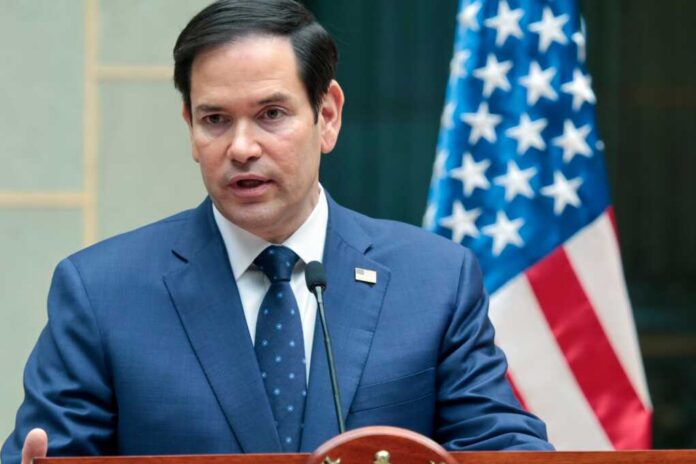
Secretary of State Marco Rubio announced that the Trump administration is moving to revoke immigration privileges for family members and relatives of Iranian senior officials, including people with lawful permanent resident status. Rubio’s public message was blunt: the administration is “determined to deny or revoke your visa if you’re here to support terrorists,” while warning that deportation can follow even when someone holds a green card. The State Department described the effort as active and ongoing.
How the policy is being justified inside the administration
State Department messaging has framed the revocations as part of a broader counterterrorism and human-rights posture toward Tehran. In the language provided, officials argued that people connected to Iran’s ruling apparatus should not be able to “benefit from our immigration system” while allegedly profiting from repression at home. Another statement attributed to a senior official said regime members and relatives should not be able to take advantage of American visa pathways while Iran suppresses citizens seeking basic rights.
The confirmed piece is the policy direction: revocations of visas and potentially green cards for relatives of Iranian senior officials, with possible deportations. What is not confirmed is how broadly “relatives” is defined, how far the government will go beyond immediate family, and what standards will be used for determining who “profits” from regime oppression.
International pressure increases as Europe designates the IRGC
The announcement comes amid increased international pressure on Iran, including a European Union designation of Iran’s Islamic Revolutionary Guard Corps (IRGC) as a terrorist organization, described as tied to serious human-rights violations during crackdown activity and Tehran’s support for Russia’s war against Ukraine. In practical terms, coordinated pressure can tighten travel and financial restrictions across allied jurisdictions, limiting safe havens for people connected to security organs and sanctioned networks.
It also references coordinated strikes by Israel and the United States that reportedly weakened Iranian missile, nuclear, and proxy networks, but it does not supply operational details or independent verification. That gap is important in 2026 because many Trump-aligned voters supported tough deterrence, yet remain skeptical of steps that expand into open-ended conflict. Without clearer facts, it is difficult to measure whether this immigration crackdown substitutes for military escalation—or simply accompanies it.
Why this lands differently with MAGA voters in 2026
For a conservative audience that is already angry about inflation, high energy costs, illegal immigration, and bureaucratic overreach, the optics are complicated. On one hand, cracking down on regime-linked immigration looks like a long-overdue correction after years when Americans watched border enforcement stall and screening systems strain. On the other hand, the Iran file is where many voters fear Washington’s “mission creep” the most—especially after decades of interventions sold as limited, only to become generational commitments.
It does not contain polling on Republican divisions, but it does describe the policy context: Washington tightening immigration controls while the Middle East remains volatile. That combination is why the story resonates: it touches border credibility, national security vetting, and the constitutional concern that permanent residents still deserve a clear legal process before life-altering enforcement actions. Conservatives can support firm action against hostile regimes while still demanding transparent standards and lawful procedure.
What to watch next: enforcement scope, court fights, and spillover at home
The next phase will hinge on specifics: how many green cards are being targeted, whether arrests are happening at ports of entry or through interior enforcement, and what legal pathways are offered to challenge revocations. Any broad sweep that treats family ties as automatic guilt would invite backlash, not only from civil-liberties critics but also from Americans who remember how fast “national security” can become a catch-all excuse for sloppy government work.
If the administration’s goal is maximum pressure on Tehran without another major war, then the policy’s legitimacy will rest on narrow targeting, clean evidence, and consistent due process—especially when permanent residency is involved. Conservatives who care about border integrity and the rule of law should insist on both: decisive action against regime networks and clear constitutional guardrails at home, so the tools used against adversaries don’t become precedents turned inward later.
Sources:
https://www.state.gov/briefings/department-press-briefing-march-28-2025