

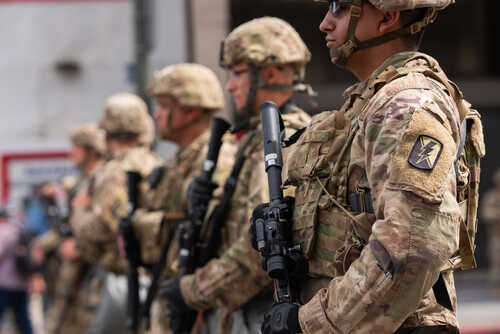
President Trump’s deployment of 400 Texas National Guard troops to Illinois and Oregon without the consent of state authorities has initiated a constitutional discussion regarding the balance of federal and state power.
Key Developments:
- President Trump authorized the deployment of the Texas National Guard to states including Illinois and Oregon.
- Illinois Governor JB Pritzker described the federal action as an “invasion” and indicated potential legal challenges.
- The deployment has raised questions about federal authority versus state sovereignty.
- The Illinois Attorney General is preparing legal action concerning the troop deployment.
Federal Authority and State Opposition
President Trump authorized the deployment of 400 Texas National Guard members to Illinois, Oregon, and other unspecified locations to safeguard federal assets and personnel. Governor JB Pritzker of Illinois stated he learned of the deployment through Illinois National Guard channels rather than direct federal communication. This action is consistent with the administration’s stated commitment to maintaining order and protecting federal interests. Democratic governors, however, have expressed opposition, viewing the deployment as an overreach of government authority.
🚨Trump has federalized the Texas National Guard and is sending them to Oregon, Illinois, and other locations according to Illinois Governor JB Pritzker. Trump did not notify him. Trump is, once again, deploying the military against American citizens. pic.twitter.com/IZl7jLC5TD
— Harry Sisson (@harryjsisson) October 6, 2025
Democratic Governors Respond
Governor Pritzker characterized the troop deployment as an “invasion” and announced his intention to legally challenge the federal action. California Governor Gavin Newsom also criticized similar deployments, referring to them as “un-American.” In contrast, Texas Governor Greg Abbott supported President Trump’s decision, emphasizing the need to ensure federal safety. Illinois Attorney General Kwame Raoul has announced plans for legal action, asserting that the deployment violates constitutional law. Federal authority regarding National Guard deployments during emergencies has been established by existing precedent.
Constitutional Basis for Federal Deployment
The federal government possesses constitutional authority to deploy National Guard units across state lines when the protection of federal assets and personnel is deemed necessary. Prior deployments during periods of civil unrest have established legal precedent supporting federal intervention, even in the face of state-level political opposition. Legal experts note that while governors can influence public opinion and pursue legal challenges, federal authority over National Guard deployments during national security concerns remains constitutionally sound, particularly when protecting federal facilities and ensuring law enforcement continuity.
Potential Long-term Implications for Federal-State Relations
This deployment highlights ongoing discussions between federal security responsibilities and state political preferences under the current administration. Pending legal challenges from Illinois and potentially other states may establish precedents regarding the scope of federal authority in domestic security operations. While some governors frame this as an overreach, the deployment aligns with federal protocols for protecting government assets and personnel during heightened security concerns.
Watch the report: Trump Seeks Texas National Guard Deployments to Illinois and Oregon, Says Illinois Governor
Sources:
- Pritzker: Trump ordering 400 Texas National Guard troops to Illinois, Oregon
- National Guard Chicago: Trump plans to federalize 300 troops in Illinois
- Pritzker says Trump is ordering Texas National Guard members to Illinois