

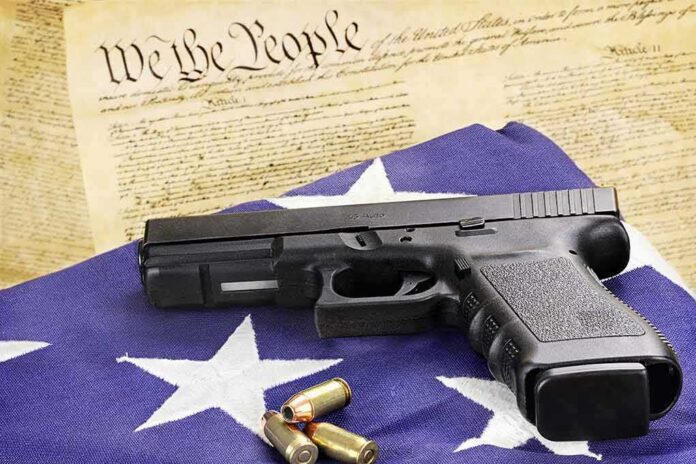
Congress is weighing a bill to let qualified special operations veterans carry concealed nationwide under a federal credential modeled on retired police rules.
Story Highlights
- The House and Senate bills would add “qualified special operators” to the federal concealed-carry framework for retired officers.
- Backers say elite training and strict IDs through Defense and Veterans Affairs will verify eligibility.
- The Senate version adds yearly firearms qualification and a Justice Department-approved use-of-force course.
- Opponents warn it could override state rules and expand carry into more “sensitive places”.
What The Bills Would Do And Who Qualifies
House Bill H.R. 8332 and Senate Bill S. 5208 would change federal law to include “qualified special operators” next to retired law enforcement officers for concealed carry across state lines. The core purpose in the text is to provide concealed-carry privileges to that defined group. Sponsors say eligible service members and veterans come from named special operations units, hold certain ranks, and meet honorable service requirements, creating a narrow class rather than a broad expansion. Supporters frame it as parity with retired officers, not a new national permit.
Backers model the plan on the Law Enforcement Officers Safety Act, which already lets qualified retired officers carry despite conflicting state laws, with limits. The House and Senate materials both cite that statute, 18 United States Code section 926C, as the anchor they seek to amend. A recent federal appeals decision confirmed that the law gives compliant retirees an enforceable right to carry, which explains why sponsors see this path as workable at the federal level.
Verification, Training, And Safety Guardrails
Supporters stress verification first. The House sponsor says the bills direct the Department of Defense and the Department of Veterans Affairs to stand up a photo identification program within 180 days. That would let officers in the field confirm status quickly, reducing fraud risk. The Senate sponsor goes further on training, adding yearly, state-standard firearms qualification and a Justice Department-certified “Concealed Carry Use of Force in Society” course before carry is allowed. Those steps aim to show a safety-first design.
Rep. Pat Harrigan says these veterans’ firearms standards match or exceed those of retired officers. He argues permanent, nationwide authority is justified by their training and record of service. The bills’ unit lists and pay-grade filters signal a tight scope that includes Army Special Forces, Rangers, Navy Sea, Air, and Land Teams, Marine Raiders, and other special operations communities. That fine-grained eligibility is intended to avoid a free-for-all and focus on those with proven weapons discipline.
Where The Process Stands In Congress
The House bill was introduced on April 16, 2026, and sent to the committees on Armed Services, Judiciary, and Veterans’ Affairs, placing it on the standard track for debate and amendments. The Senate companion was introduced on August 3, 2026, and posted on official platforms, signaling bicameral engagement. Named co-sponsors and public bill texts give the measure structure and visibility, though no committee markups or cost scores have been released in the record we reviewed.
New bills would give qualified SEALs, Green Berets and other special operations veterans nationwide concealed-carry privileges. https://t.co/C36O3KHwTJ
— Military.com (@Militarydotcom) August 14, 2026
The House and Senate summaries differ on training specifics. The House description emphasizes credentialing without an added federal requalification layer, while the Senate bill demands annual qualification and a national use-of-force course. That split will need reconciliation. A unified standard would help local officers verify compliance and reduce confusion during traffic stops or checks. Clarity on sensitive-places rules and private property rights will also matter to smooth enforcement with state and local partners.
Why It Matters For Rights, Safety, And Federalism
Supporters see this as a targeted win for the Second Amendment and public safety. They argue that men and women trained for the nation’s hardest missions should not face a patchwork of bans when traveling with their families. They point to the existing federal model and a court record that recognizes national carry rights for qualified retirees as proof the framework can work with proper IDs and training. The Senate’s added courses speak to responsible carry in civilian spaces.
Opponents raise preemption and safety concerns. A leading gun-control group warns the concept could prevent states from enforcing their carry rules, open more sensitive places, and create friendly-fire risks with police. A House-floor critic of a related reform warned about broad overrides for places like transit and parks and said training windows could be too long if not strictly annual. Those arguments will press drafters to tighten definitions, spell out off-limits locations, and lock in clear, frequent qualifications.
What To Watch Next
Committees will decide whether to adopt the Senate’s training and use-of-force requirements, refine the unit list, and direct Defense and Veterans Affairs to deploy secure, hard-to-forge identification. Clear rules on verification at a traffic stop will help officers and veterans alike. If Congress aligns the two versions, the bill would mark a focused expansion of carry rights for a small, proven group, using a federal model courts already recognize for retired officers. Careful drafting will decide how cleanly it works on the street.
Sources:
military.com, relevote.com, harrigan.house.gov, sheehy.senate.gov, foxnews.com, ourcongress.us, quiverquant.com