President Trump’s sweeping crackdown has transformed the U.S. southern border into a militarized fortress, driving illegal crossings to record lows—but unleashing a storm of legal challenges, human consequences, and political backlash.
At a Glance
- Border encounters dropped over 90 percent since 2024, reaching historic lows.
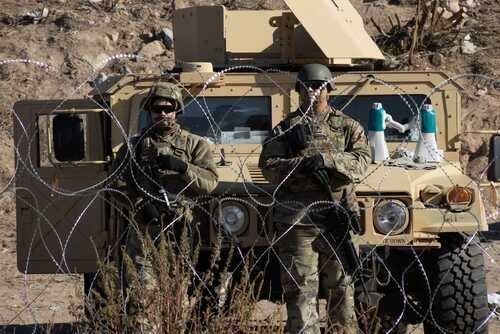
- Over 10,000 U.S. troops now control key southern border zones.
- Border wall construction has resumed, including floating barriers on the Rio Grande.
- Green cards for refugees and asylees are suspended under new Executive Orders.
- Extreme vetting protocols and a new travel ban are reshaping immigration policy.
Military Takeover: Fortress America?
Within hours of his inauguration, President Trump declared a national emergency, unleashing a blitz of executive orders that put the military in command of border enforcement. Proclamation 10886 and Executive Order 14167 handed sweeping authority to the Department of Defense, which swiftly deployed thousands of troops, drones, and surveillance systems. More than $376 million has already been spent fortifying the border, with new National Defense Areas expanding military control across swaths of U.S. soil, as reported by the National Immigration Forum.
The border wall, once deemed politically dead, is roaring back to life—not just on land, but in the water. New floating barriers on the Rio Grande are fast-tracked for completion, symbolizing an aggressive posture unseen in modern U.S. history. Detractors warn that the militarization veers dangerously close to martial law, but the administration counters with results: border encounters have plunged, illegal crossings are at a near standstill, and the chaos of prior years is gone.
Watch a report: US Military Extends Authority at Southern Border
Immigration Overhaul: Vetting, Bans, and Bureaucratic Freeze
Beyond border fortification, the Trump administration has reengineered the legal immigration system. Executive Order 14161 reinstated extreme vetting, demanding exhaustive scrutiny of applicants’ social media, ideological affiliations, and digital footprints. A proposed travel ban now targets over 40 countries, many of which face potential full entry bans, according to the New York City Bar.
Green card processing for refugees and asylees is suspended, leaving thousands in limbo. Immigrant advocates warn that these measures weaponize immigration law to exclude based on political beliefs, particularly against those branded as “Marxist” or similarly suspect. The administration insists these steps are necessary for national security, but critics decry them as draconian and discriminatory.
Legal Battles and Conservative Doubts
Legal challenges are surging, with blue-state attorneys general and civil rights groups mounting lawsuits to halt or overturn key executive orders. Already, one order faces a temporary restraining order, setting the stage for prolonged court fights, as outlined by Docketwise.
Even some conservatives express unease. While many applaud the drastic reduction in border crossings, concerns are mounting over the precedent of deep military involvement in domestic affairs. Policy analysts caution that a framework born of emergency powers could reshape governance in ways that outlast any single administration, a dynamic explored in depth by the Washington Post.
For now, Trump’s border crackdown has redrawn the landscape—both physically and politically. Whether this heralds lasting reform or a temporary fortress under siege remains an open question, but the battle over America’s borders—and its identity—is only just beginning.