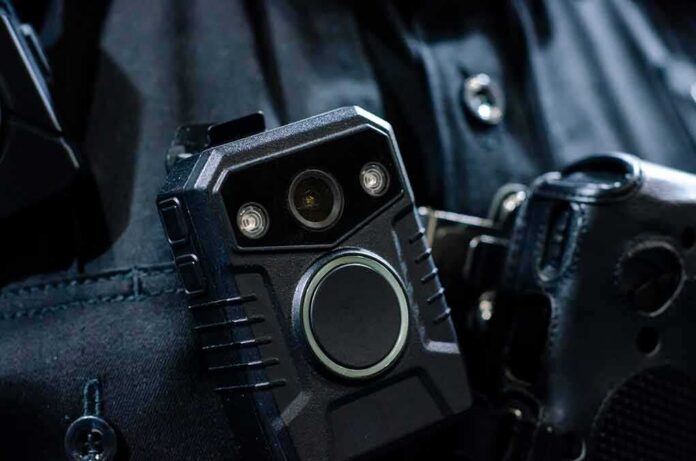
ICE will finish a nationwide body-camera rollout this month, tightening accountability while critics keep vilifying the officers who enforce laws Congress passed.
Story Highlights
- ICE leadership says body cameras will be active nationwide by month’s end, including for vehicle stops.
- Officials say cameras were bought and training launched; a shutdown delayed deployment earlier.
- Congress funded body cameras for immigration enforcement, signaling public-safety support.
- Homan says agents enforce laws Congress wrote, rejecting claims they are “secret police”.
ICE Sets Camera Deadline To Boost Transparency And Evidence
Reuters reported that the United States Immigration and Customs Enforcement will complete body-camera deployment to field officers by the end of August, with recordings required during vehicle stops. Acting Director David Venturella confirmed the schedule. Border czar Tom Homan said the policy aims at clarity in high-risk encounters while agents carry out their duties under federal law. The move follows fatal shooting scrutiny and seeks to add clear records of what happened in fast, tense operations.
Homan earlier said the cameras had already been purchased and that “they’re training the trainer” to deploy the devices nationwide. Those steps show planning was underway before the final mandate. He also tied earlier delays to the recent government shutdown, which stalled delivery and slowed field training cycles. That explanation matches reports that procurement and distribution were disrupted, then restarted as operations stabilized across field offices.
Congress Backed Cameras With Dedicated Dollars
Lawmakers funded body-worn cameras for immigration enforcement this year, showing bipartisan recognition that video helps reveal facts in difficult cases. Reports described a $20 million Department of Homeland Security allocation for cameras, with added support this spring. That money covers devices, training, data storage, and policy work. The funding picture confirms that oversight tools are not an afterthought; Congress is putting taxpayer dollars toward technology that records what officers and suspects actually do.
Officials also connected new recording rules to lessons from use-of-force cases. Agencies often add cameras to capture critical moments, protect due process, and speed internal reviews. The Department of Homeland Security’s policy push created a framework, while Immigration and Customs Enforcement set its own activation rules to fit its mission. Cameras are not a cure-all, but they reduce confusion after dangerous incidents and can deter false claims that erode trust and waste resources.
Homan’s Message: Enforce The Law, Reject Smears
Homan has argued that agents are enforcing laws Congress passed and funded, while enduring attacks that label them “Nazis” or “fascists.” He says such rhetoric puts officers and families at risk and undermines cooperation. He points to internal steps like bringing in internal affairs agents and clarifying chains of command after local problems. His case is straightforward: hold people accountable with facts, not slogans; keep enforcement strong and consistent within the law.
Critics claim Immigration and Customs Enforcement lacks transparency and should be reined in or even abolished. Those claims have gained media attention, especially after shootings. But the camera rollout directly answers a core demand: record the work. Devices running during stops and operations will document encounters in real time. That helps good officers prove they followed policy and helps discipline anyone who did not. It is a practical fix rooted in standard police practice, not politics.
What The Cameras Will And Won’t Settle
Experts and watchdogs say cameras matter most when activation, storage, redaction, and release rules are clear and enforced. Some outlets reported that the agency will control how much footage the public sees, raising debate over transparency versus investigative needs. That debate will continue. Still, full deployment is a concrete step. It gives supervisors, inspectors general, and prosecutors more evidence to judge cases fairly and protect the rights of citizens and lawful residents alike.
One claim tied to this debate deserves care. Some supporters cite dramatic rescue and seizure stories to defend enforcement. The materials here do not include case files or public releases that verify a specific child rescue or fentanyl seizure linked to Homan’s recent remarks. That lack does not erase past cases by Homeland Security investigators, but it means those particular examples cannot be confirmed in this record. Readers deserve precise facts, so this article focuses on documented policy steps and on-the-record quotes.
Sources:
theguardian.com, abcnews.com, youtube.com