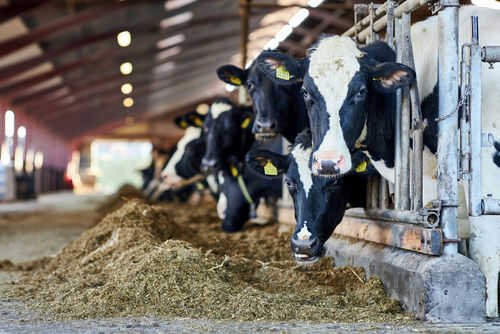
Washington is finally aiming its antitrust firepower at the “Big 4” beef packers—an industry so concentrated that a handful of firms can shape what ranchers earn and what families pay at the grocery store.
Quick Take
- The Justice Department has opened a criminal antitrust probe into major U.S. beef meatpacking companies focused on suspected collusion in cattle purchasing.
- President Trump publicly pressed for the investigation in November 2025 as beef prices climbed roughly 50% and household grocery budgets tightened.
- Four companies process about 85% of U.S. beef, a level of concentration that has drawn repeated scrutiny for decades.
- The new probe follows a similar investigation that was reportedly closed just weeks earlier, underscoring how quickly the federal approach shifted.
A criminal probe targets alleged collusion in cattle purchases
The Department of Justice’s Antitrust Division is pursuing a criminal investigation into the dominant beef meatpackers, focusing on whether they used illegal agreements or coordinated conduct when buying cattle from ranchers. The allegations center on the upstream side of the market—what producers are paid—while consumer beef prices have surged nearly 50% in recent years. The criminal posture matters because it signals the government is looking for intentional coordination, not merely aggressive pricing or hard competition.
Reports indicate the probe covers the major beef sellers, commonly described as the “Big 4”: Tyson Foods, Cargill, JBS, and National Beef. Ranchers have long argued that pricing benchmarks used in certain cattle contracts can be manipulated, leaving producers squeezed even as supermarket prices rise. DOJ has not announced charges, and the investigation’s timeline is described only as “recent,” leaving open questions about how fast any case could move—or whether evidence will meet the criminal bar.
Why the White House is leaning in: prices, pressure, and promises
President Trump called for the DOJ to investigate meatpackers in November 2025, framing the issue as both an affordability problem and a fairness issue for domestic producers. The political backdrop is straightforward: voters feel inflation at the checkout line, and beef is a kitchen-table staple. Trump also pledged lower beef prices by 2026, making enforcement action a measurable test. Democrats, meanwhile, are positioned to criticize outcomes either way—if prices stay high or if enforcement disrupts supply chains.
The reporting also highlights foreign ownership concerns, particularly around Brazilian-owned firms. That theme resonates with voters who distrust global consolidation and believe essential supply chains should be anchored to American interests. Still, the available sources do not establish that foreign ownership itself is the cause of price increases; the legal question remains whether any firm—domestic or foreign—entered unlawful agreements that restrained competition. The administration’s challenge is to prove conduct, not just point to concentration.
An 85% market share problem that neither party has solved
Four firms controlling roughly 85% of U.S. beef processing is not a new development; it has been a defining feature of the industry since at least the early 1990s. DOJ has repeatedly studied meatpacking markets, including earlier scrutiny that did not end in prosecution when investigators concluded price drops could be explained by supply-and-demand forces. That history cuts both ways: it shows government has been watching, but it also shows how difficult it can be to separate “unfair” from “illegal” in commodity markets.
That said, concentration creates obvious vulnerabilities that frustrate Americans across the political spectrum. Conservatives often see a system where Washington overregulates small producers but fails to police corporate power that can distort markets. Progressives see consolidation as evidence that big business writes the rules. If the DOJ can prove collusion, enforcement would fit a limited-government principle most voters understand: the state exists to stop fraud, coercion, and rigged markets—not to micromanage honest competition.
What comes next for ranchers, consumers, and the rule of law
In the short term, a criminal antitrust probe can force companies to preserve records, respond to subpoenas, and reassess contracting practices. If prosecutors find evidence of price-fixing or bid-rigging, penalties could include fines and other sanctions, and the market could shift quickly as firms try to reduce legal exposure. If prosecutors do not find sufficient evidence, the probe may still spotlight weaknesses in pricing transparency that policymakers from both parties claim to want to fix.
BREAKING: DOJ announces antitrust investigations on meatpacking https://t.co/vFvKq2uHif via @YouTube
— Lulu C (@LuluC49339189) May 4, 2026
The biggest unknown is whether enforcement translates into real relief at the grocery store. Beef prices are shaped by cattle supply, feed costs, drought conditions, labor, energy, and transportation—not only by packing margins. The sources also note processors have faced extended periods of losses tied to high cattle costs, a fact that could support the argument that market forces, not collusion, drove at least part of the price surge. For Americans tired of “performative” government, the test will be results rooted in evidence.
Sources:
Why the Justice Department has beef with the meatpacking industry
DOJ reportedly pursues criminal antitrust probe of beef meatpackers
Antitrust Enforcement in the Meat-Packing Industry
Antitrust Enforcement in the Meat-Packing Industry