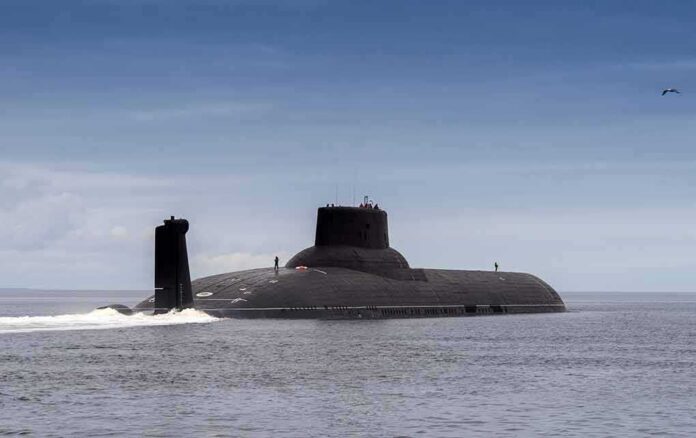
Britain’s entire Astute-class attack submarine fleet was reported alongside at once in June, exposing a NATO undersea gap when deterrence should be strongest.
Story Highlights
- Reports said all five Astute-class submarines were in port at the same time in June 2026.
- Maintenance backlogs, dock limits, and labor shortages drove the stand-down, not one design flaw.
- The Ministry of Defence was described as pursuing a submarine maintenance recovery plan.
- Analysts tied the crunch to scarce nuclear-certified docks and specialist workers.
What Happened To Britain’s Attack Submarines In June
British media reported that all five in-service Astute-class attack submarines were alongside or in port at the same time in June 2026. The Telegraph stated on June 7 that all five operational boats were inactive due to maintenance and technical issues. Follow-on outlets repeated the same picture through late June, describing a zero-availability window for the class. These reports named the boats as HMS Astute, HMS Ambush, HMS Artful, HMS Audacious, and HMS Anson.
Coverage said no single defect broke the fleet. Instead, several factors stacked up at once. Articles cited planned maintenance, repairs, and upgrades that overlapped, along with parts delays. They also noted workforce shortages and limited certified dock space for nuclear boats, which slowed throughput. A detailed explainer added that these industrial bottlenecks often hit small fleets hardest, where one delay can ripple across the class.
Why The Astute-Class Bottleneck Hit All At Once
Reporting linked the crunch to dockyard capacity at Devonport and base infrastructure at Faslane. Sources described too few nuclear-certified docks available at the same time, which forced maintenance to queue up. Shortages of skilled labor, including nuclear-qualified engineers and inspectors, compounded the delays. Those constraints lengthened refit cycles and pushed boats into overlapping layups, driving a rare window when all five were tied up. A former submarine captain echoed the labor and dock limits as the root causes.
The Ministry of Defence was described as acknowledging the availability pressure. Outlets said the department is working a “submarine maintenance recovery plan” to raise readiness. That effort reportedly aims to add capacity, streamline parts flow, and sequence work more tightly to avoid another all-at-once stand-down. One analysis said recent carrier and surface ship gaps show a wider sustainment strain, not just a submarine issue, reinforcing the need to rebuild the support base.
Why This Matters For The United States And NATO
NATO depends on allied attack submarines to track Russian boats, guard sea lanes, and protect undersea cables. A British zero-availability window means fewer allied hulls to cover the North Atlantic and the Arctic. That shifts more load to the United States Navy and other partners. It also highlights how past underinvestment, high energy costs, and weak industrial policy can hollow out Western strength. America cannot outsource deterrence when key allies stall at the pier.
British Combat Submarine Readiness Falls to Zero Again as Maintenance Crisis Worsens
The availability rate of the British Royal Navy’s nuclear-powered attack submarine fleet has again fallen to zero, with all of the service's Astute class submarines… https://t.co/NR2gkc9kQa
— David Scott (@Albion_Rover) August 11, 2026
For U.S. readers, the lesson is clear. Strong navies need steady budgets, reliable energy, and a skilled workforce. Policies that punish domestic industry or chase green fads raise costs and thin the trades. President Trump has pushed to rebuild American shipyards and supply chains. That work must continue so our fleet can surge when allies struggle. Peace needs victors, not maintenance backlogs. When docks are full and crews are short, enemies test the gaps and families pay the price.
Sources:
19fortyfive.com, meta-defense.fr, caliber.az, en.sedaily.com