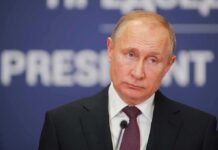

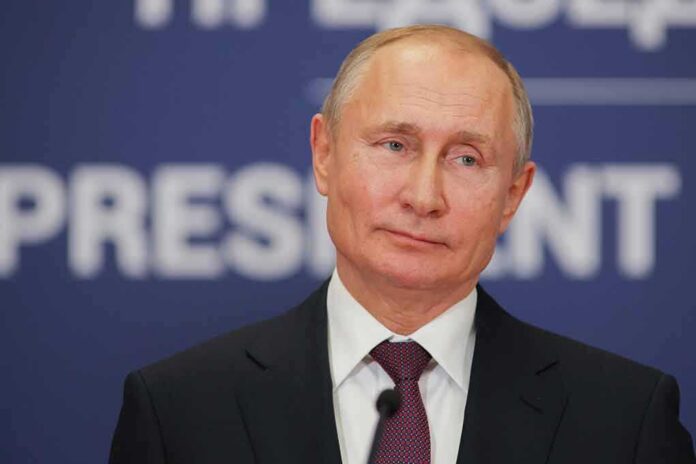
From a hospital room in Rome, Pope Leo XIV phoned Vladimir Putin and urged a ceasefire so aid can reach starving families in Oleshky, Ukraine.
Story Highlights
- The Vatican says Pope Leo XIV asked Putin for a ceasefire in Oleshky to allow food, medicine, and evacuations.
- The call focused on a dire humanitarian crisis in the Russian-occupied city, according to official statements.
- The Holy See framed the appeal as a limited truce for aid and civilian safety, not a political bargain.
- Past attempts at humanitarian pauses in Ukraine have faced breakdowns and blame from both sides.
Pope’s Direct Appeal to Putin for Humanitarian Ceasefire
Vatican officials reported that Pope Leo XIV spoke by phone with Russian President Vladimir Putin on October 16, 2026, and asked for a ceasefire in Oleshky. The Holy See said the Pope expressed deep concern about the city’s humanitarian crisis and urged a pause to let in food, medicine, and to move civilians to safety. Italian wire service reports echoed the Vatican account and placed the call while the Pope recovers from lung cancer surgery in a Rome hospital.
The Vatican’s summary centered on practical relief, not broader political terms. The request targeted a specific place and purpose: secure a pause in Oleshky so aid convoys and evacuations can proceed without shelling or checkpoints blocking routes. Agence France-Presse reporting, carried by regional outlets, repeated the same core points: a humanitarian truce, access for supplies, and concern for civilians trapped under occupation.
Why Oleshky Matters and What a Truce Could Do
Oleshky sits in the Kherson region and has faced long shortages under Russian control. A ceasefire there could let relief teams deliver food, medical kits, and fuel, and could allow the sick, the elderly, and families with children to leave. Even a brief pause can save lives by opening roads, clearing routes of mines, and giving doctors time to stabilize patients and move them to safer ground. The Pope’s call put a spotlight on those urgent needs.
Humanitarian pauses are narrow tools that aim to shield civilians, not settle borders or end the war. By asking for a limited truce, the Holy See stayed within its long practice of “positive neutrality,” which seeks to help the vulnerable while keeping doors open to every side. That posture lets church groups, charities, and local partners organize deliveries and evacuations without getting trapped in political fights over territory or battle lines.
The Track Record and the Risks of Humanitarian Ceasefires
Humanitarian corridors in Ukraine have a mixed history. Several attempts since March 2022 broke down amid renewed strikes, mistrust, and unclear routes. Independent reviews note that both sides have, at times, traded blame when pauses collapsed or convoys stalled. That pattern makes every local truce fragile and demands clear terms, verified routes, and real-time communications among military commanders and aid teams.
Given that record, the Pope’s appeal is only a first step. Relief requires consent on the ground, safe passage markers, and channels to resolve disputes fast. Even then, aid groups often face mines, damaged bridges, or checkpoints that slow or halt movement. The past shows that promises must turn into action to matter. That is why public focus on Oleshky could pressure field units to hold fire long enough for civilians to get help or get out.
What This Means for the United States and Our Values
American readers care about two things here: saving innocent lives and keeping our nation from endless wars. A narrow ceasefire that moves food and medicine aligns with core conservative values—protect the innocent, avoid mission creep, and demand results. This is not a blank check or a grand bargain. It is a test: will those holding the city allow aid to flow and families to leave without harassment or harm?
President Trump’s team has pressed allies to share burdens and to show real outcomes for any effort abroad. This episode fits that standard. If a short, verified pause in Oleshky lets children, seniors, and the wounded reach safety, it is a win for basic humanity without dragging America deeper into the fight. If the pause is ignored or abused, it proves again why tough verification and clear lines are non-negotiable for any aid plan.
What to Watch Next in Oleshky
Watch for on-the-ground confirmation that trucks enter, hospitals receive supplies, and buses carry out evacuees. Look for mapped routes shared with aid groups and clear time windows for safe movement. Reports from church networks, local councils, and medical workers will show whether the ceasefire is real or just talk. The Holy See’s statement put Oleshky on the world’s radar; now the outcome will rest on actions, not words.
If relief reaches Oleshky, pressure could build for similar pauses in other hard-hit towns. Success would not end the war, but it would save lives and restore a basic moral line: do not starve civilians or block doctors. That minimal standard should unite people across politics. It also honors the simple truth that mercy in war is not weakness; it is the floor of civilization.
Sources:
insiderpaper.com, unn.ua, ansa.it, ilfoglio.it