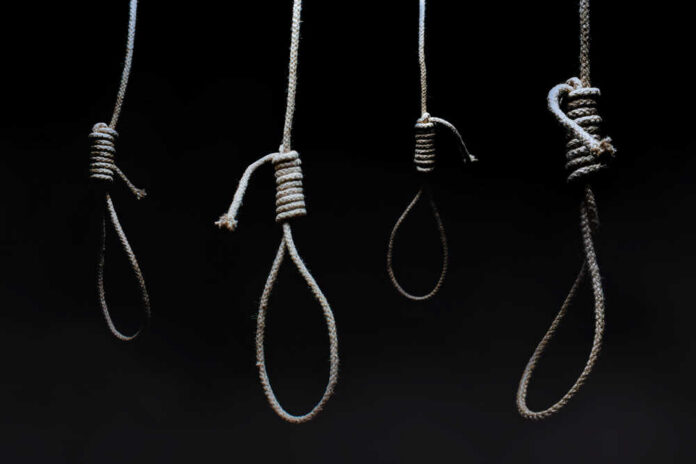
As Tehran quietly hangs political prisoners at record speed, the Biden-era Iran playbook of “talk first, look away later” is being tested like never before.
Story Snapshot
- Iran’s Islamist regime is rushing executions of protesters, dissidents, and alleged spies in the middle of indirect talks with the United States.
- Human rights groups say hundreds of people have been hanged after sham trials, secret hearings, and torture‑tainted “confessions.”[22]
- Tehran labels many victims as “terrorists” or “spies,” even when charges appear tied to protest activity and opposition politics.[3]
- The execution wave exposes how dictators use “law” as a weapon, and why U.S. policy must stop rewarding this behavior.[21]
Iran’s Execution Machine Goes Into Overdrive
Reports from multiple human rights groups show Iran has turned its prisons into execution lines, with numbers spiking sharply since 2023.[2] One major monitoring group counted at least 975 executions in 2024, the highest in more than two decades, and says over 8,800 people have been put to death since 2010.[2] Another report describes 853 executions in 2023, a forty‑eight percent jump from the year before, with many hangings carried out for drug offenses and vague “security” crimes.[7]
These grim totals only tell part of the story, because Tehran hides most of what it does.[2] Less than ten percent of known executions in 2024 were even announced by the regime, meaning nine out of ten deaths happened in the shadows.[2] United Nations officials now warn that the pattern shows a systematic use of the death penalty to intimidate and control the population, not just to punish crime.[8] Iran already executes more people per capita than any country except communist China.[21]
Political Prisoners, Protesters, and “Spies” on the Gallows
Behind the numbers are names and stories that look a lot more like political revenge than real justice. Rights groups say at least thirty‑one people in 2024 were executed on “security” charges such as “enmity against God” and “corruption on earth,” categories that often hit protesters and opposition supporters.[3] Independent monitors have tracked specific cases where Kurdish activists, humanitarian workers, and protest organizers were condemned after rushed, unfair hearings in Iran’s Revolutionary Courts.[3][4]
In one recent case, judiciary‑linked media boasted that political prisoner Erfan Shakourzadeh was executed for “cooperating with U.S. intelligence and Israel’s Mossad,” a label designed to paint dissent as foreign treason.[5] Amnesty International describes other executions, like those of Behrouz Ehsani and Mehdi Hassani, where men tied to a banned opposition group were hanged in secret after torture and charges so broad they could fit almost any opponent.[4] These courts often rely on forced “confessions” instead of hard evidence, then cut off appeals.
Wartime Cover and Secret Trials
Since the joint U.S.‑Israel strikes on Iran’s military sites in early 2026, the regime has used “wartime conditions” as an excuse to speed up repression.[22] Amnesty International reports more than 6,000 arbitrary arrests in just a few months, including protesters, journalists, lawyers, and minority activists, followed by “grossly unfair” trials that skip even basic due‑process standards.[22] During the same period, at least thirty‑nine people have been executed on political charges, including protesters, dissidents, and accused spies.[22]
Other monitors describe at least twenty‑two political prisoners hanged in just six weeks this spring, an average of one execution every two days, many tied to the January 2026 protests.[20] Families often receive no warning and only learn of a loved one’s death after the body is delivered or a brief note arrives from prison.[4][20] Iran Human Rights Monitor says that since late February 2026, at least thirty‑one political executions have been recorded, including eight supporters of the opposition group People’s Mojahedin Organization of Iran and twenty‑three protest‑related cases.[19]
Why Tehran Kills Faster When Washington Talks
Human rights advocates argue that the timing of these executions is no accident but part of a pressure game.[22] When Tehran faces outside heat or new Western outreach, it often doubles down on domestic terror to show strength at home while demanding concessions abroad. The same regime that insists every hanging is “legal” under its code also writes that code, staffs the courts, and blocks outside review, turning “law” into a tool of fear instead of justice.[6][10]
📍 Free Iran 2026 – Second Day Conference: Onward to a Democratic Republic
📅 June 21, 2026
🎤 Ingrid Betancourt, Former Colombian Presidential Candidate
“Tomorrow, somewhere in Iran, another young prisoner may hear footsteps approaching his cell. He will know what those…
— Iran News Update (@IranNewsUpdate1) June 21, 2026
For American conservatives, this matters for three reasons. First, the Iranian system shows what happens when an unaccountable state controls all levers of justice: rights vanish, and “national security” becomes a blank check to crush dissent.[6][8] Second, every dollar freed by sanctions relief or weak deals risks propping up the same machine that jails women for protest, hangs young men from cranes, and calls it order.[2][21] Third, if Washington looks the other way while talking “de‑escalation,” it signals to every tyrant that killing your opponents works.
Sources:
[2] Web – Texts adopted – Increased number of executions in Iran, in particular …
[3] Web – Annual Report on the Death Penalty in Iran 2024
[4] Web – [PDF] Annual Report on the Death Penalty in Iran (2024) – ECPM
[5] Web – Scores of Political Prisoners Will Be Executed in Iran Without an …
[6] Web – Iran executes another political prisoner on spying charges
[7] Web – Iran Sees 75% Increase in Executions During First Four Months of …
[8] Web – Iran executes 853 people in eight-year high amid repression, ‘war …
[10] Web – Iran has executed two political prisoners, identified as Abolhassan …
[19] Web – Human Rights Reports: Custom Report Excerpts – State Department
[20] Web – Iran’s Escalating Political Executions 2026 – Iran HRM
[21] Web – Iran’s Execution Machine: Political Hangings Surge as Dozens Face …
[22] Web – Executions and Other Barbarities in Iran’s Judicial System | UANI