

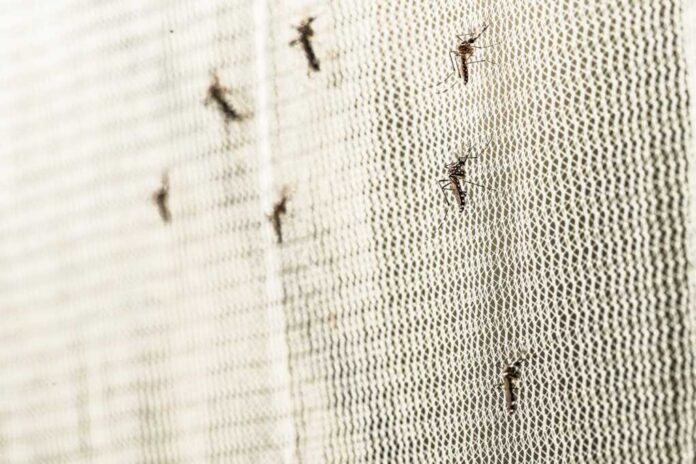
Google’s mosquito plan is turning into a familiar Washington-style gamble: a corporate-backed biotech pitch, a public-health promise, and a big question about who gets to decide what is released into American neighborhoods.
Quick Take
- Local California vector-control districts say sterile male mosquito releases cut invasive mosquito counts sharply in targeted neighborhoods.[1][2]
- The mosquitoes described in the field programs are non-biting males, which officials say do not directly increase human bite risk.[1][2]
- The public record in this research set shows mosquito suppression data, but not direct proof of fewer human dengue, Zika, or other disease cases.[1][4]
- The controversy is amplified by confusion between different mosquito technologies, including sterile-insect releases and genetically engineered approaches.[1][3]
What the California programs actually show
Southern California vector-control agencies have already used sterile male mosquito releases in defined neighborhoods, and the results they report are substantial. The Greater Los Angeles County Vector Control District says its Sunland-Tujunga pilot used non-biting, sterile male Aedes mosquitoes and produced a nearly 82 percent drop in wild adult mosquitoes compared with a control area.[2] The Los Angeles Times reported similar reductions in other districts, including a 44 percent average decline in parts of San Bernardino County.[1]
Those results matter because the target species is not a harmless backyard nuisance. The mosquitoes in these programs are invasive Aedes aegypti, the species linked to dengue, chikungunya, and Zika in public-health materials.[1][2][4] Officials say the basic mechanism is simple: sterile males mate with wild females, but the eggs do not hatch, which lowers the local population over time.[1][2] That is a narrow, targeted approach rather than a broad spray-and-pray pesticide campaign.
Why supporters say the strategy is attractive
Program operators argue that sterile male releases avoid some of the drawbacks of conventional insecticide use. The Greater Los Angeles County Vector Control District says sterile-insect technique is target-specific, reduces insecticide use, and lowers the chance of pesticide resistance.[2] The district also describes the method as cost-effective compared with chemical products.[2] That argument will resonate with conservatives who are skeptical of endless regulatory spending, but also want public agencies to use practical tools instead of reflexively expanding mandates and chemical applications.
The public-health logic is straightforward. California health officials say the state is experiencing an increase in diseases spread by mosquitoes, including West Nile virus and dengue, and advise residents to prevent bites and remove standing water.[4] In that environment, local officials are looking for methods that suppress the species most likely to spread disease without blanketing entire communities in chemicals.[1][2] That is why sterile releases have become a serious policy option instead of a science-fair novelty.
What remains unproven in the public record
The major limitation is that the available reporting documents mosquito-count reductions, not a measured fall in human disease. The sources in this research set do not show a direct decline in dengue, Zika, or chikungunya cases caused by the releases.[1][2][4] That distinction matters. A neighborhood can see fewer mosquitoes and still need multiple transmission seasons of data before anyone can claim a public-health victory. For now, the evidence is stronger on entomology than on long-term medical outcomes.
There is also a documentation gap around the broader Google-linked claim. The search results here mostly cover local vector-control programs and related genetically engineered mosquito discussions, but they do not include the actual federal application, review documents, or release protocol behind any Google proposal.[3] That leaves the public with a familiar problem: headlines race ahead while the underlying paperwork stays buried. For readers tired of opaque government-corporate collaborations, that lack of transparency is a legitimate concern.
Why the debate keeps getting muddled
Part of the confusion comes from different mosquito technologies being discussed as if they were the same thing. The California programs in the strongest sources use sterile males under sterile-insect technique, while other material in the set discusses genetically engineered mosquitoes and Wolbachia-based breeding interference.[1][3] Those approaches are related in purpose but not identical in method or risk profile. When media coverage collapses them into one sensational story about “millions of mosquitoes,” it becomes harder for the public to judge the actual science.
That matters because the public deserves precision, not slogans. The strongest sources here show localized releases, male-only mosquitoes, and measurable reductions in invasive populations.[1][2] They do not show a blank check for unlimited deployment, nor do they prove that every mosquito-control technology is equally safe or effective. For conservatives who want limited government and accountable public health policy, the right standard is simple: if officials want to expand a program, they should publish the data, spell out the risks, and show the results.
Sources:
[1] Web – Google planning to release millions of mosquitoes into California to …
[2] YouTube – Tech giant Google has applied with the EPA to release …
[3] Web – Mosquitoes Being Released In Lake Elsinore As Part Of … – Patch
[4] YouTube – Sacramento Just Released 400000 Mosquitoes Into The Streets…