
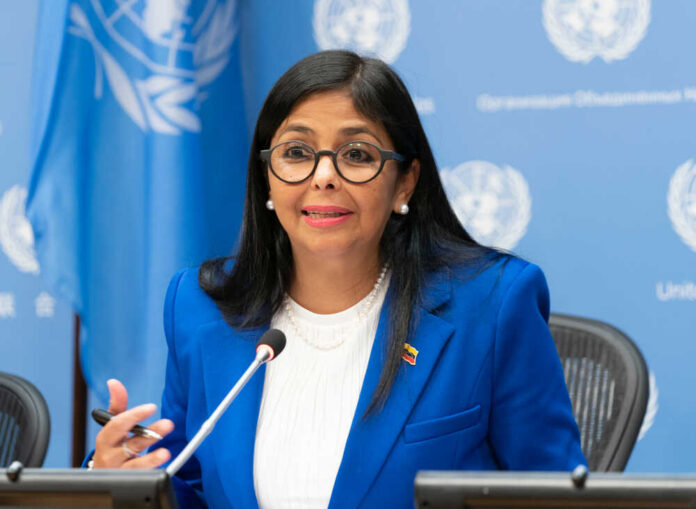
Trump’s second term delivers stunning policy reversal by lifting sanctions on Delcy Rodriguez, a former Maduro ally once blacklisted for corruption—raising questions on rewarding regime insiders after U.S. military intervention.
Story Highlights
- U.S. Treasury delists Venezuela’s acting president Delcy Rodriguez from SDN list on April 1, 2026, unlocking her frozen assets and U.S. business access.
- Move follows January 2026 special forces raid capturing predecessor Nicolás Maduro on drug charges, shifting U.S. policy from isolation to engagement.
- Trump publicly praises Rodriguez as cooperative, signaling embassy reopening and economic normalization amid Venezuela’s crisis.
- Critics among MAGA base question rewarding a sanctioned socialist, fearing it echoes past foreign entanglements despite no new wars.
Timeline of the Delisting
U.S. special forces raided and captured Nicolás Maduro and his wife in January 2026, extraditing them to New York where they pleaded not guilty to drug trafficking charges. Last month, in March 2026, the U.S. formally recognized Delcy Rodriguez as Venezuela’s interim leader. President Trump praised her cooperation publicly. On April 1, 2026, the Treasury Department’s Office of Foreign Assets Control posted the official notice removing Rodriguez from the SDN list. This sequence marks a rapid policy pivot post-military action.
Background on Rodriguez and Maduro Regime
Venezuela’s crisis deepened under Maduro since his disputed 2018 election, leading to economic collapse, human rights abuses, and U.S. sanctions from 2019. Delcy Rodriguez, Maduro’s former vice president and close ally, faced personal sanctions that year for corruption and narco-terrorism ties. The U.S. broke diplomatic relations then, recognizing opposition figure Juan Guaidó briefly. Trump’s first term imposed broad penalties; Biden maintained them. Now, with Maduro detained, Rodriguez steps forward as U.S.-backed transition figure, contrasting years of hostility.
Trump Administration’s Rationale
President Trump stated in March 2026 that Rodriguez is “doing a great job” and “working with U.S. Representatives very well.” Administration officials describe the delisting as support for economic recovery and democratic transition in Venezuela. Rodriguez praised the move on Telegram, calling it a step toward normalized relations and seeking broader sanctions relief. The White House frames this as enabling private U.S. investment to stabilize the oil-rich nation, reducing isolation risks without committing American troops.
Economic and Political Impacts
Short-term, Rodriguez regains access to blocked assets, paving way for U.S. firms to engage in Venezuelan markets, especially energy sectors devastated by years of mismanagement. Long-term, embassy reopening in Caracas could foster stability, validating the U.S.-backed government. Venezuelan citizens may see economic hope through private sector revival. However, Maduro loyalists could protest, and broader sanctions on Venezuela persist. For Americans, this promises cheaper energy without endless wars, aligning with promises of America First.
Conservative Concerns in Trump’s Second Term
MAGA supporters, weary of globalist interventions and fiscal waste, applaud Maduro’s capture as justice against socialism. Yet frustration brews over lifting sanctions on Rodriguez, a Maduro insider once banned for abuses. This risks eroding hardline stance on corrupt regimes, echoing neocon regime-change traps Trump vowed to avoid. While no boots on ground, rewarding allies of dictators tests promises of no new wars and limited government overreach abroad. Vigilance needed to protect taxpayer dollars and national interests.
Sources:
Trump administration lifts sanctions against Venezuela’s Delcy Rodriguez
Trump administration lifts sanctions on Delcy Rodriguez, Venezuela’s acting president