Chicago’s mayor just stood beside a snowplow named “Abolish ICE”—a political message that collides head-on with public safety and the rule of law.
Quick Take
- Chicago’s “You Name a Plow” contest crowned “Abolish ICE” as the top snowplow name after record participation.
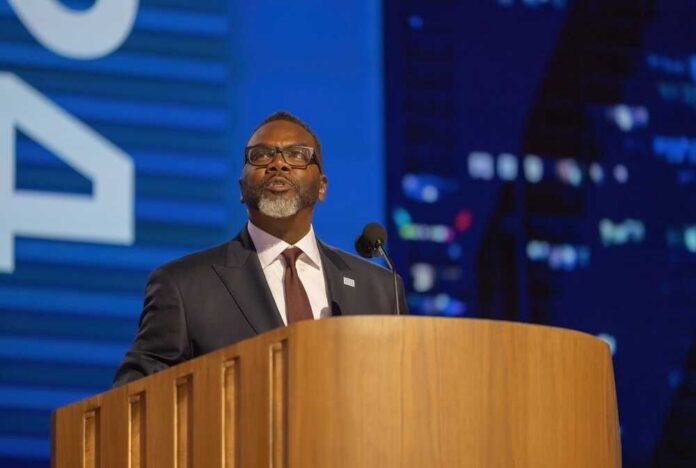
- Mayor Brandon Johnson attended the unveiling, turning a civic event into a flashpoint in the immigration enforcement debate.
- Available reporting confirms the plow contest details but does not substantiate claims tying the event to any specific student killing.
- Conservatives see the message as a symbol of sanctuary-style governance and resistance to federal immigration enforcement.
Chicago’s “Abolish ICE” Snowplow Becomes a Political Rorschach Test
Chicago’s annual “You Name a Plow” contest produced a headline-grabbing winner in 2026: “Abolish ICE.” Reporting describes a civic naming contest with 13,000 submissions and more than 39,000 votes, with the phrase finishing first among six winning names. Mayor Brandon Johnson attended the unveiling ceremony, giving the winning name an official spotlight and ensuring the message would travel far beyond a routine winter maintenance rollout.
City leaders and their supporters frame the contest as harmless public engagement, but the winning name is not a neutral pun or local joke. “Abolish ICE” is a national political slogan aimed at Immigration and Customs Enforcement, a federal agency responsible for interior immigration enforcement. When the top snowplow name is a call to dismantle that enforcement apparatus, critics argue the city is signaling not just policy preferences, but cultural contempt for the border and for immigration law.
What the Verified Reporting Shows—and What It Does Not
The core facts are straightforward: Chicago ran the contest, “Abolish ICE” won, and the mayor participated in the unveiling. Coverage also notes that the contest hit record participation. What the same reporting does not establish is a verified link between this naming ceremony and any particular homicide or a “student slaughtered by an illegal” narrative. With the citations provided, that allegation cannot be confirmed without additional, reliable documentation.
This distinction matters because readers are being asked to process two emotionally charged issues at once: public safety and immigration enforcement. Mixing an unverified claim into a confirmed city event creates heat without clarity. Conservatives can reasonably criticize the “Abolish ICE” branding as reckless and ideological, but the stronger argument rests on what is provable: the city elevated a slogan opposing federal enforcement and treated it as civic fun rather than a serious statement.
Why the “Abolish ICE” Message Lands Differently in 2026
In 2026, immigration enforcement is no longer a distant policy debate for many Americans; it is tied to household-level concerns about crime, overwhelmed services, and a government that often seems more interested in messaging than consequences. For voters who remember years of “sanctuary” rhetoric and selective enforcement, a city-backed moment celebrating “Abolish ICE” reads like a declaration that federal immigration law is optional. That perception erodes confidence in equal justice under law.
At the same time, many Trump voters are carrying fresh frustration from a different direction: the Iran war and the sense that Washington keeps finding new ways to spend money overseas while families face high energy costs at home. That creates a political squeeze—voters who want order at the border and restraint abroad. When big-city leaders platform abolitionist slogans about immigration enforcement, it can intensify the feeling that normal citizens are paying for chaos on multiple fronts.
Political Symbolism vs. Governance: The Public Safety Trust Problem
Local officials have every right to hold views on federal policy, but municipal branding choices still shape public trust. The practical question is whether city leadership is focused on outcomes—safer streets, functional services, cooperation with lawful processes—or focused on ideological signaling that plays well with activist networks. With the available reporting, the snowplow contest itself is legitimate civic engagement; the controversy comes from leadership embracing the most polarizing possible winner.
Just a reminder: A Chicago college student was killed by an illegal just days ago and Brandon Johnson is having a snowplow naming ceremony called "Abolish Ice"https://t.co/8Edknuz5Iw https://t.co/8MPLUJNhAW
— Just Mindy 🐊 (@just_mindy) March 25, 2026
For conservatives, the takeaway is less about a single snowplow and more about the governing posture it represents. If a city amplifies a message calling for the elimination of immigration enforcement, skeptics ask what else is being deprioritized in the name of ideology. The verified sources here document the city’s celebration and the contest’s scale; they do not prove claims about a specific student case. The safer conclusion, grounded in the evidence provided, is that Chicago’s leaders knowingly elevated an anti-ICE slogan and invited the backlash that follows.
Sources:
Chicago unveils new snowplow ‘Abolish ICE’
‘Abolish ICE’ Wins Annual Snowplow Naming Contest