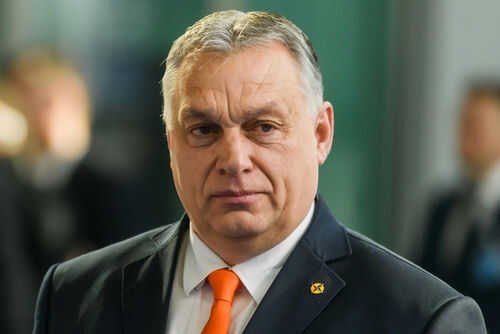
Hungary’s Viktor Orbán has blocked a critical €90 billion loan to Ukraine, holding the nation’s wartime survival hostage to demands for Russian oil deliveries—a move that exposes how EU bureaucratic rules enable single nations to undermine collective security and reward Putin’s aggression.
Story Snapshot
- Hungary vetoed a €90 billion EU loan to Ukraine and the 20th Russia sanctions package, breaking a December 2025 consensus just weeks before final approval
- Orbán demands Ukraine restore Russian oil flows through the war-damaged Druzhba pipeline as his condition for lifting the veto, tying Ukraine aid to Moscow’s energy interests
- German and Belgian foreign ministers issued sharp rebukes, calling Hungary’s obstruction a “red line” that exploits EU unanimity rules for domestic political gain ahead of April elections
- The veto delays critical funding for Ukraine’s 2026-2027 military and budgetary needs while undermining sanctions enforcement on the fourth anniversary of Russia’s invasion
Hungary Exploits EU Rules to Block Ukraine Aid
On February 23, 2026, Hungary vetoed a crucial amendment to EU budget rules required to release a €90 billion loan for Ukraine, alongside blocking the EU’s 20th sanctions package against Russia. This action contradicted Hungary’s December 2025 agreement not to obstruct the loan, which was designed to cover two-thirds of Ukraine’s budgetary and military needs through 2027. The EU requires unanimous consent for such measures, giving any single member state veto power—a structural flaw that Orbán has repeatedly exploited. The timing is particularly damaging: the loan’s first disbursement was targeted for early April, and the sanctions were planned to coincide with the invasion’s fourth anniversary.
Russian Oil Demands Drive Orbán’s Obstruction
Orbán conditions his approval on Ukraine reopening the Druzhba oil pipeline for Russian crude deliveries to Hungary. Russian attacks damaged the pipeline in early 2026, halting oil flows that Hungary relies on due to its failure to diversify energy sources after 2022. In a February 24 letter to EU leaders, Orbán framed this as an “energy emergency,” demanding pipeline restoration before supporting aid. This effectively makes Hungary’s energy dependence—rooted in its continued alignment with Moscow—a prerequisite for helping Ukraine defend itself against Russian aggression. Ukraine’s Foreign Minister Andrii Sybiha urged Hungary to redirect its ultimatums toward the Kremlin, the actual source of both the pipeline damage and Hungary’s predicament.
German and Belgian Leaders Issue Stark Warnings
German Foreign Minister Johann Wadephul and Belgian Foreign Minister Maxime Prévot held a joint press conference in Berlin on February 25, delivering unusually harsh criticism of Hungary. Prévot declared that “leveraging Ukraine’s fate crosses a red line,” while Wadephul noted the contradiction between Hungary’s veto and its own historical “freedom struggle” against Soviet oppression. Both ministers warned that EU patience is “wearing thin” with Orbán’s tactics. EU High Representative Kaja Kallas and European Council President António Costa had similarly rebuked Hungary the day prior, accusing it of violating “sincere cooperation” principles. European Commission President Ursula von der Leyen pledged the EU would find alternative ways to deliver the funds, though Germany ruled out using frozen Russian assets as a substitute mechanism.
Election Politics and Energy Dependency Fuel Crisis
Orbán faces elections on April 12, 2026, trailing the opposition by double digits in polling. His veto appears calibrated to appeal to voters by framing Hungary as defending its energy security against EU pressure, despite Hungary’s own lack of diversification leaving it vulnerable. This political maneuvering comes at Ukraine’s expense, delaying funds needed for active defense operations. Lithuania’s Foreign Minister Kęstutis Budrys called for voting reform to end Hungary’s “exploitation of unanimity,” while Sweden’s Foreign Minister Maria Malmer Stenergard labeled the veto a “disgrace” tied to electoral calculations. The standoff underscores how Hungary’s continued energy dependence on Russia—a choice reflecting Orbán’s alignment with Putin—now serves as leverage against the broader Western effort to support Ukraine and counter Russian expansion.
Implications for Ukraine and EU Credibility
The immediate impact is a funding shortfall for Ukraine during active combat operations, potentially weakening its defensive capacity at a critical moment. The veto also undermines EU credibility as a reliable security partner, demonstrating how internal rules can be weaponized by a single dissenting member. Long-term, this crisis may accelerate debates about reforming unanimity requirements to prevent future obstruction, though such changes face their own unanimity hurdles. For conservatives watching from America, this episode illustrates the dangers of supranational governance structures that subordinate sovereign national interests to bureaucratic consensus—where one nation’s bad-faith actors can paralyze collective action. It also highlights the consequences of energy policy failures: Hungary’s refusal to break from Russian oil after 2022 now enables Orbán to hold Ukraine’s survival hostage to Moscow’s interests, rewarding aggression and punishing those fighting for freedom.
Sources:
Germany, Belgium warn Hungary to drop veto on EU loan for Ukraine – The Straits Times
Belgium issues sharp rebuke to Hungary for blocking loan to Ukraine – Brussels Times
Germany, Belgium warn Hungary to drop veto on EU loan for Ukraine – TRT World
EU accuses Hungary of ‘disloyalty’ for vetoing €90 billion loan to Ukraine – Euronews
Germany says EU will not move forward with frozen Russian assets – RBC Ukraine
Belgium, Germany: Frozen Russian assets locked – Euromaidan Press
Germany, Belgium warn Hungary to drop veto on EU loan for Ukraine – Courthouse News