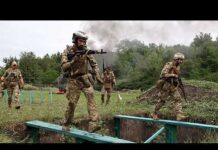

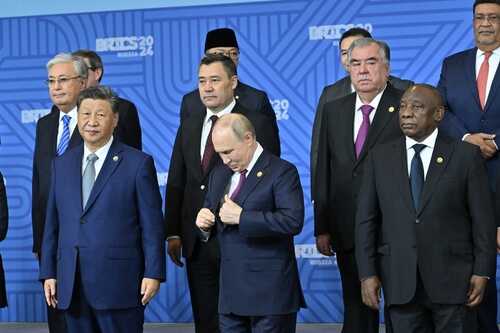
As China, Russia, and Iran sail warships off Cape Town under a BRICS flag, South Africa is openly stress-testing its already strained relationship with the United States. The China-led “Will for Peace 2026” naval drill brings together navies from four states locked in serious dispute with Washington, amplifying fears of an emerging anti-American security bloc. Despite South Africa’s claims of “non-alignment,” the exercise deepens military ties with U.S. adversaries and is expected to be cited by Washington to justify potential tougher tariffs and diplomatic downgrades.
Story Highlights
- China is leading a “Will for Peace 2026” naval drill off South Africa with Russian and Iranian warships while tensions with Washington are already high.
- All four core participants in the exercise are in serious dispute with the United States, amplifying fears of an emerging anti‑American security bloc.
- South Africa claims “non‑alignment,” yet keeps deepening military ties with U.S. adversaries under the BRICS+ label.
- Analysts expect Washington to use the drills to justify tougher tariffs, diplomatic downgrades, and security distancing from Pretoria.
China-Led War Games Challenge U.S. Influence
South Africa is hosting a China-led “Will for Peace 2026” naval exercise off Cape Town that brings together warships from China, Russia, and Iran at a moment when its ties with Washington are already badly strained. The drills are billed as BRICS maritime cooperation meant to protect sea lanes and promote regional stability, but their timing and participants send a very different message to American observers, especially with all four main navies locked in disputes with the United States.
Planning for the exercise began well before the latest spike in U.S. tensions with Venezuela, Russia, and Iran, according to South African officials, yet the current political backdrop makes the optics far more charged. The event was originally scheduled for November 2025 and postponed because it clashed with the G20 summit in Johannesburg, which the Trump administration boycotted over Pretoria’s ties with Moscow and Tehran. That delay unintentionally pushed the drill into an even more confrontational geopolitical moment.
Warships from some members of the BRICS group of developing nations gathered in Cape Town waters for a naval exercise that places host South Africa at risk of renewed US ire https://t.co/1L6ATrc5ls
— Bloomberg (@business) January 8, 2026
BRICS+ Security Signal and Anti-American Optics
The “Will for Peace 2026” war games are branded as a BRICS+ initiative involving navies from the expanded eleven-nation group, which President Trump has already labeled anti-American. Several BRICS partners, including Indonesia, Ethiopia, and Brazil, are present only as observers, while China, Russia, Iran, and South Africa conduct the actual maneuvers. That split undercuts Pretoria’s claim of simple BRICS cooperation and strengthens the impression of a tighter, security‑focused bloc of states that routinely challenge U.S. interests.
Chinese, Iranian, and then Russian vessels arrived in South African waters during the week leading up to January 9, when a Russian‑flagged corvette joined the others off Simon’s Town naval base in False Bay. South Africa’s defence force insists the purpose is to exchange best practices, improve joint operations, and safeguard shipping routes in the Indian and Atlantic Oceans. For many in Washington, however, images of sanctioned and adversarial states drilling together on a U.S. partner’s coast overshadow any technical training narrative.
Strained U.S.–South Africa Relationship Enters New Phase
The naval drills unfold against a backdrop of mounting U.S. frustration with Pretoria’s choices over Russia, Iran, and broader BRICS alignment. In 2025, the Trump administration expelled South Africa’s ambassador, imposed 30% tariffs on South African goods, and skipped the Johannesburg G20 summit in protest. Washington has simultaneously tightened pressure on Moscow and Tehran through sanctions, tanker seizures tied to Russian, Iranian, and Venezuelan oil, and warnings over Iran’s treatment of protesters facing rising living costs.
Trump officials view South Africa as a swing state in the so‑called Global South, one that still benefits from access to U.S. and European markets while increasingly signaling solidarity with America’s chief rivals. Analysts warn the current exercise will be cited in Washington as another prime example justifying reviews of trade preferences, diplomatic engagement, and security cooperation. That dynamic highlights an uncomfortable reality: Pretoria is leaning harder into BRICS symbolism while remaining economically vulnerable to U.S. retaliation, something American taxpayers ultimately shoulder when global instability disrupts trade.
Domestic Backlash Inside South Africa
Inside South Africa, the war games have sparked criticism from opposition politicians and civil society groups who argue the government is eroding its own democratic credentials and international standing. The Democratic Alliance accuses Pretoria of choosing deeper military ties with rogue and sanctioned states such as Russia and Iran while misleading the public by framing the drill as inclusive BRICS cooperation, even though key partners like India and Brazil declined full participation. Small protests by Ukrainian activists at the arrival of the Russian ship underscore those concerns.
South African officials defend the exercise as consistent with a long‑standing non‑aligned foreign policy that engages both Western powers and emerging partners. Deputy Defence Minister Bantu Holomisa argues that U.S. adversaries are not automatically South Africa’s enemies and stresses the plan predates current U.S.–Venezuela tensions. Yet by repeatedly hosting drills with Russia and China, while U.S. relations deteriorate, Pretoria has made its practical alignment look far less neutral, giving ammunition to critics who see a deliberate pivot toward a parallel, anti‑Western security architecture.
What This Means for American Conservatives
For American conservatives focused on protecting national sovereignty, defending strong borders, and resisting globalist entanglements, these developments highlight why a tougher stance on BRICS and especially China remains essential. A China-led exercise that features Russian and Iranian warships, hosted by a partner still benefiting from access to Western markets, illustrates how decades of globalist complacency allowed adversarial networks to grow. The Trump administration’s tariffs, diplomatic pressure, and refugee reforms are part of recalibrating that imbalance, yet South Africa’s choices show the contest is far from over.
Watch the report: China, Russia, Iran arrive in South African waters for naval drills
Sources:
- Russian naval vessel joins Chinese and Iranian warships for drills off South
- Africa
- Russia joins Chinese, Iran warships for drills off South Africa
- South Africa defends naval drills with Iran, Russia as ‘essential’ | National |
- South Africa hosts BRICS warships for naval exercise, risks renewed US backlash